Delhi sightseeing by cab
Places to visit in Delhi, in what order
See Old Delhi and South Delhi on separate days. The Old Delhi day is the Red Fort, Raj Ghat, Chandni Chowk and the Jama Masjid, ending at Gurdwara Bangla Sahib and India Gate. The south day is the Qutub Minar, the Lotus Temple, Humayun's Tomb and Akshardham. A third day adds the National Museum, Gandhi Smriti, Nizamuddin, Hauz Khas and Lodhi Garden. Many sights, the Red Fort included, are closed on Mondays.
25 placesroutes from road routing, timed against opening hours
How many days do you need?
Each plan is a real route by cab, timed against opening hours.
© OpenStreetMap contributors
1 day
Qutub Minar to the Red Fort
5 places · 45 km by cab
See the plan →© OpenStreetMap contributors
Most people
2 days
Old Delhi and India Gate · Qutub Minar, Humayun's Tomb and Akshardham
10 places · 73 km by cab
See the plan →© OpenStreetMap contributors
3 days
Old Delhi and Akshardham · New Delhi, Humayun's Tomb and Nizamuddin · Qutub Minar, Hauz Khas and the Lotus Temple
19 places · 113 km by cab
See the plan →Cab for Delhi sightseeing
Call or message a local Delhi operator with this plan. Tell them your hotel and dates, and they send a price for the car and driver.
Full day, 8 h / 80 kmSedan, SUV or InnovaPrice from the operator
Opening times of Delhi's top sights
With the best time to go and how long to stay.
| Place | Open | Best time | Visit |
|---|---|---|---|
| Red Fort | 09:30 to 16:30, closed on Mondays. Indians ₹35 online or ₹50 at the counter, foreigners ₹550 online or ₹600; under 15 free. Closed every year from about mid-July to mid-August for Independence Day, and on some event days | As it opens at 09:30, before the queues and the heat. | 1 h 30 min |
| Chandni Chowk and Sis Ganj Gurdwara | Most shops open from about 10:00 or 11:00 to about 20:00; many close on Sundays. Sis Ganj Gurdwara is open from early morning to late night, free | Late morning to afternoon, when the shops are open. Sunday is quieter, with many shops shut. | 1 h 30 min |
| Jama Masjid | About 07:00 to sunset; visitors are kept out during prayers (about 12:15 to 13:45) and the half hour before sunset. Free for Indians; a camera or phone fee (about ₹200 to ₹300) is charged; foreigners may be charged entry. Remove shoes; robes for hire at the gate. Fridays are busy with prayers | Mid-morning before the midday prayer, or the afternoon after it. | 45 min |
| Raj Ghat | Open every day; listings give 09:30 to 17:30 or longer (05:00 to 19:30), so plan inside 09:30 to 17:30. Free. Remove shoes at the memorial. The Gandhi Museum across the road closes on Mondays? | Any time in the day. | 30 min |
| India Gate and the National War Memorial | India Gate is open all the time and free. The National War Memorial is open every day, 09:00 to 19:30 from November to March and to 20:30 from April to October, free, with a security check | Late afternoon into dusk, when the arch is lit and families come out. | 1 h |
| Gurdwara Bangla Sahib | Open day and night, free; the langar (free kitchen) runs all day. Cover your head (scarves at the gate) and leave your shoes | Any time. The langar hall is busiest at lunch. | 45 min |
| Agrasen ki Baoli | 09:00 to 17:30, every day, free? | Morning, before it gets busy. | 30 min |
| Birla Mandir (Lakshminarayan Temple) | 04:30 to 13:30 and 14:30 to 21:00, free. No phones or cameras inside; lockers at the gate. Aarti at about 06:00 and 18:45 | Morning or evening aarti. | 30 min |
| Jantar Mantar | Sunrise to sunset, every day (modelled with winter times). Small ASI ticket? | Midday, when the sun shows how the instruments work. | 30 min |
| National Museum | Tuesday to Sunday 10:00 to 18:00, closed on Mondays and national holidays. Indians ₹20, foreigners ₹500 to ₹650 (the official pages differ) | From opening at 10:00, for two unhurried hours. | 2 h |
All 25 places to visit in Delhi
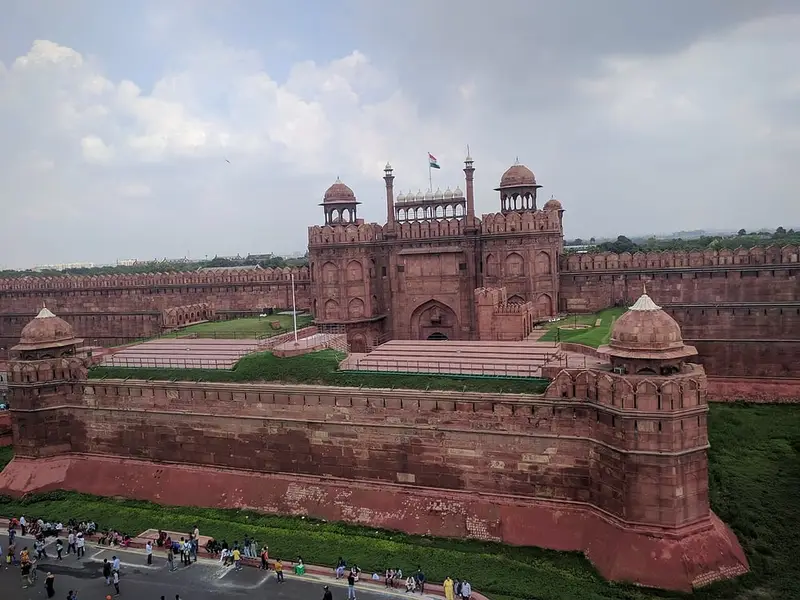

Red Fort
1 h 30 minThe red sandstone fort Shah Jahan built in 1639 to 1648 when he moved the Mughal capital from Agra to Delhi. You go in through the Lahori Gate and the covered Chhatta Chowk bazaar, then on to the halls where the emperor met his people (Diwan-i-Aam) and his nobles (Diwan-i-Khas), the marble palaces along the old river front and the small Moti Masjid. The Prime Minister raises the flag here every Independence Day.
In the 1-day plan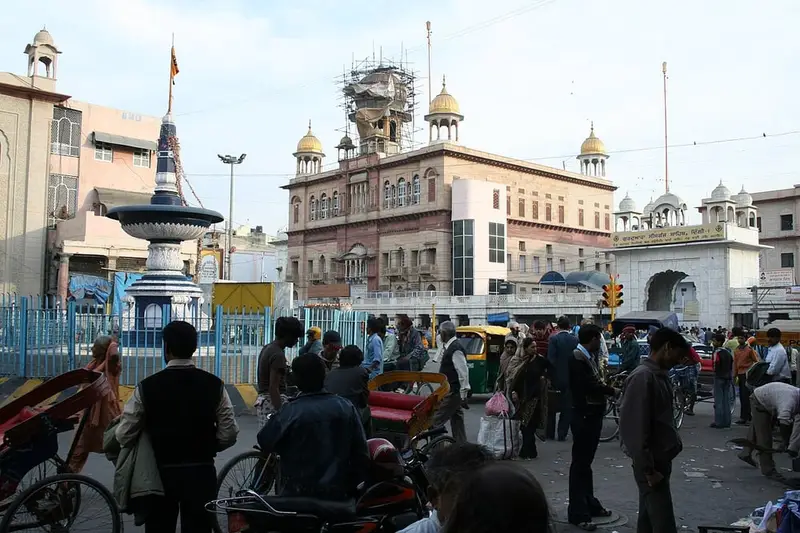

Chandni Chowk and Sis Ganj Gurdwara
1 h 30 minThe main street of Shah Jahan's walled city, laid out in the 1650s and now a 1.3 km run of sweet shops, temples and wholesale lanes. Gurdwara Sis Ganj Sahib, halfway along, marks where the ninth Sikh Guru, Guru Tegh Bahadur, was killed in 1675. Side lanes lead to the spice market of Khari Baoli, Parathe Wali Gali and the silver shops of Dariba Kalan.
Day 1 of the 2-day plan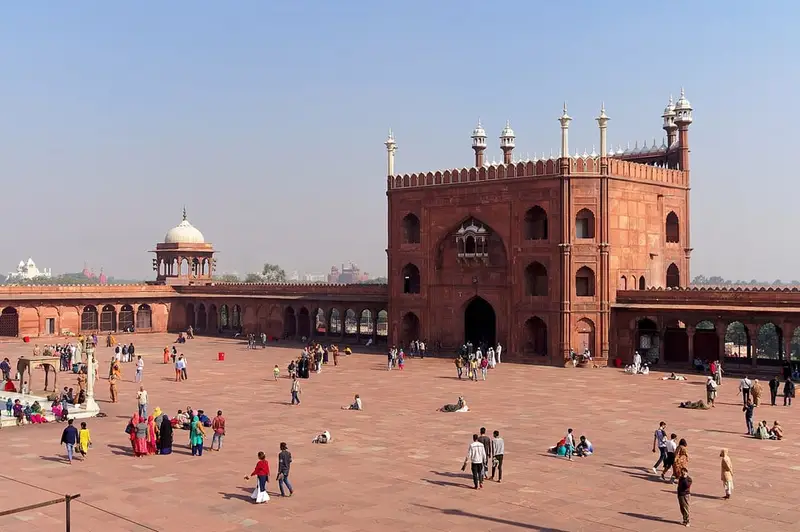

Jama Masjid
45 minIndia's biggest mosque, built by Shah Jahan from 1650 to 1656 on a rise facing the Red Fort. The courtyard holds about 25,000 people, and three marble domes and two 40 m minarets rise above it. You can climb the south minaret for a view over the Old Delhi rooftops to the fort.
In the 1-day plan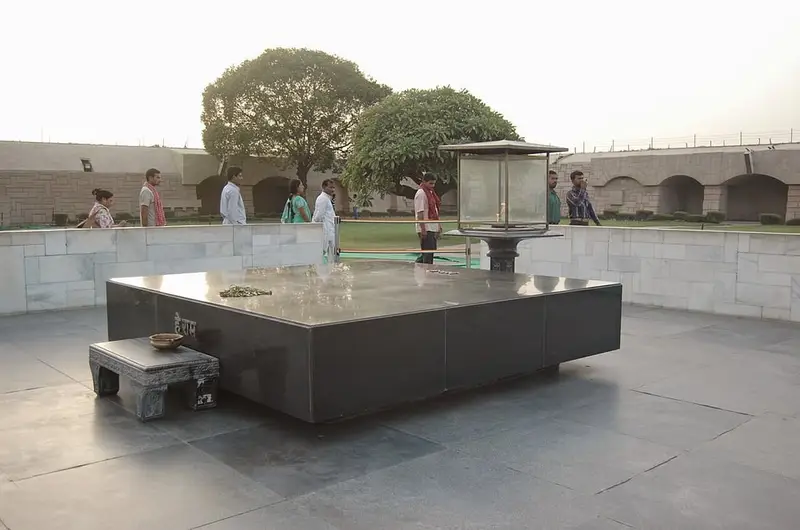

Raj Ghat
30 minThe black marble platform in a walled lawn by the Yamuna that marks where Mahatma Gandhi was cremated on 31 January 1948. An eternal flame burns at one end, and his last words, "He Ram", are cut into the stone. Visiting leaders lay wreaths here.
Day 1 of the 2-day plan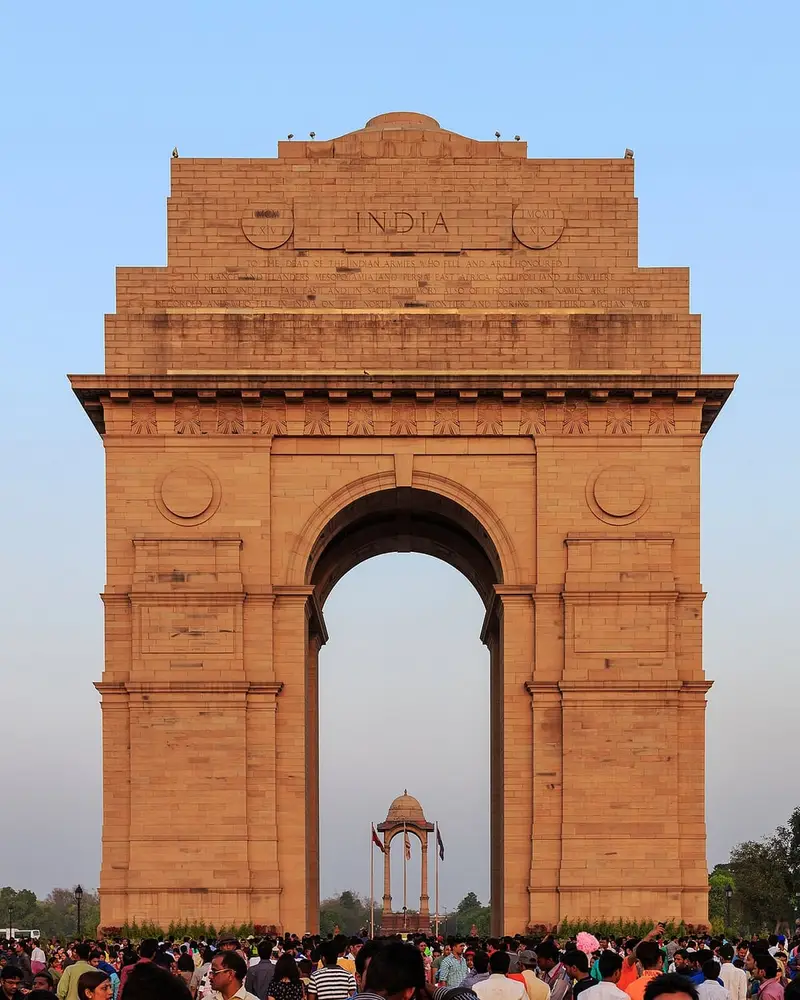

India Gate and the National War Memorial
1 hThe 42 m arch at the end of Kartavya Path, built in 1921 to 1931 for the Indian soldiers who died in the First World War; their names are carved on it. Since 2019 the National War Memorial just east of it holds the names of the soldiers who have died since 1947, in rings round an eternal flame. The statue of Subhas Chandra Bose stands under the canopy nearby.
In the 1-day plan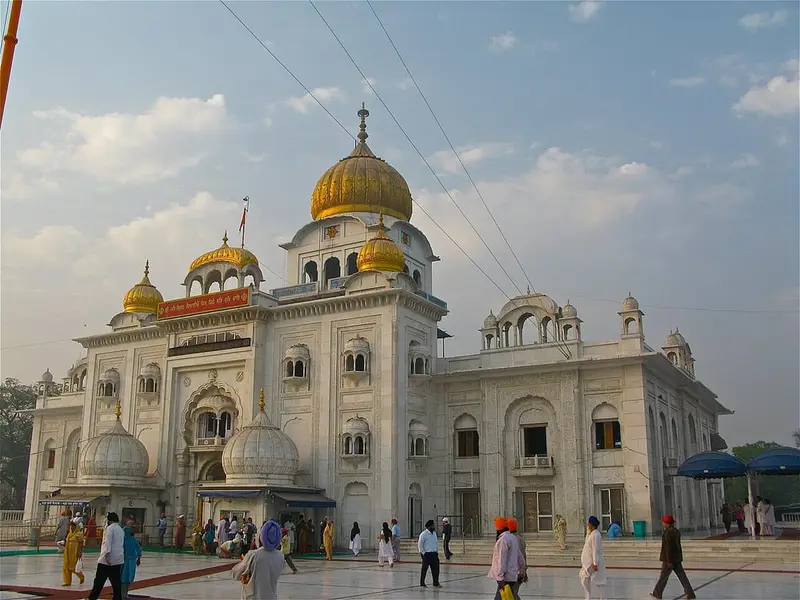

Gurdwara Bangla Sahib
45 minDelhi's best-known Sikh temple, with a gold dome, white marble halls and a large tank of water (the sarovar). It stands where the eighth Guru, Guru Har Krishan, stayed in 1664 and helped the sick in a smallpox outbreak. Anyone can sit down to the free meal in the langar hall, cooked by volunteers.
Day 1 of the 2-day plan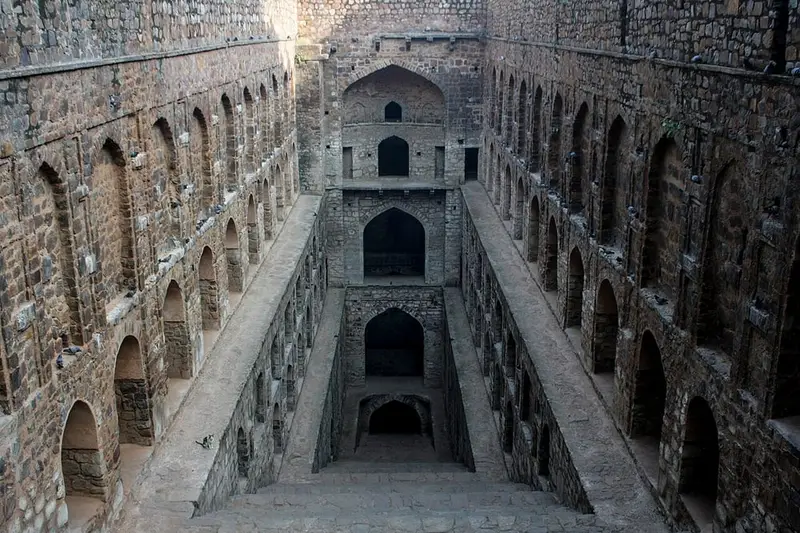

Agrasen ki Baoli
30 minAn old stepwell hidden between office blocks near Connaught Place: 108 stone steps go down between arched walls, 60 m long, to where the water used to be. It is probably from the 14th century, though the builder is not known.
Day 2 of the 3-day plan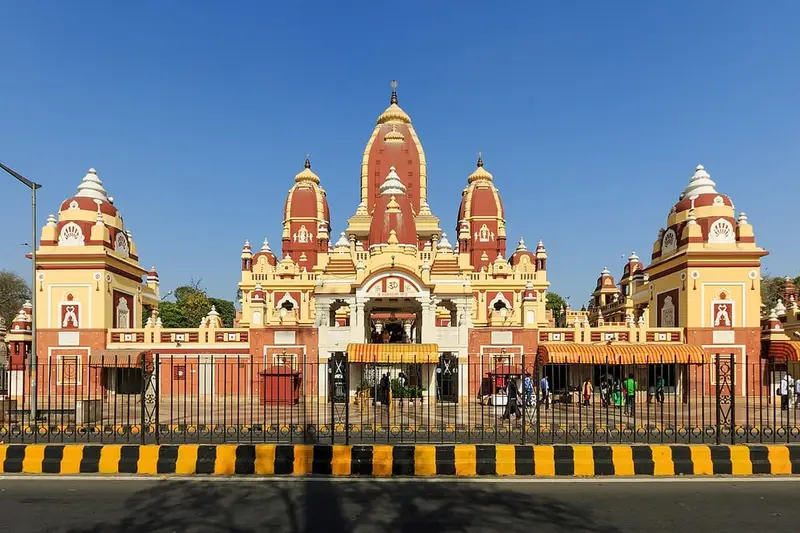

Birla Mandir (Lakshminarayan Temple)
30 minA large temple to Lakshmi and Narayan built by the Birla family and opened by Mahatma Gandhi in 1939, on condition that it was open to people of every caste. The cream and red towers, gardens and wall paintings make it a calm stop west of Connaught Place.
Not in our plans. Add it if you have time.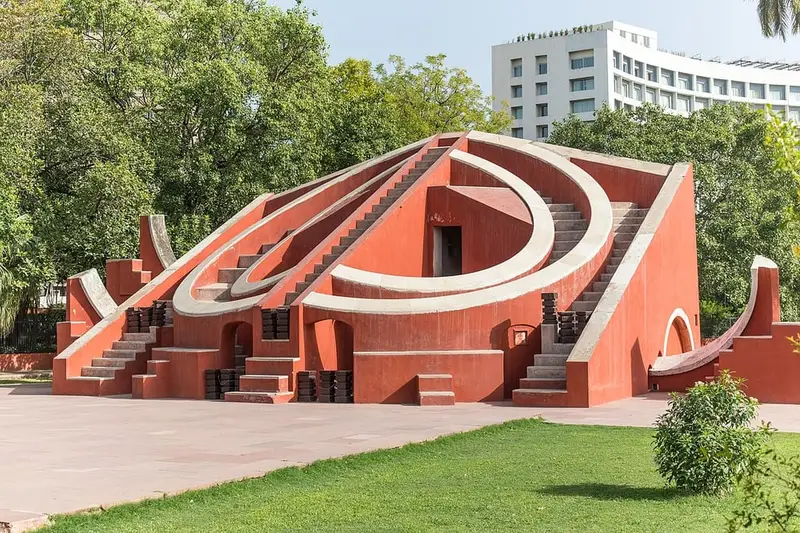

Jantar Mantar
30 minAn observatory of giant stone instruments built by Maharaja Jai Singh II of Jaipur in 1724 to measure time and track the sun and stars. The big sundial, the Samrat Yantra, still tells the time to within a few minutes.
Not in our plans. Add it if you have time.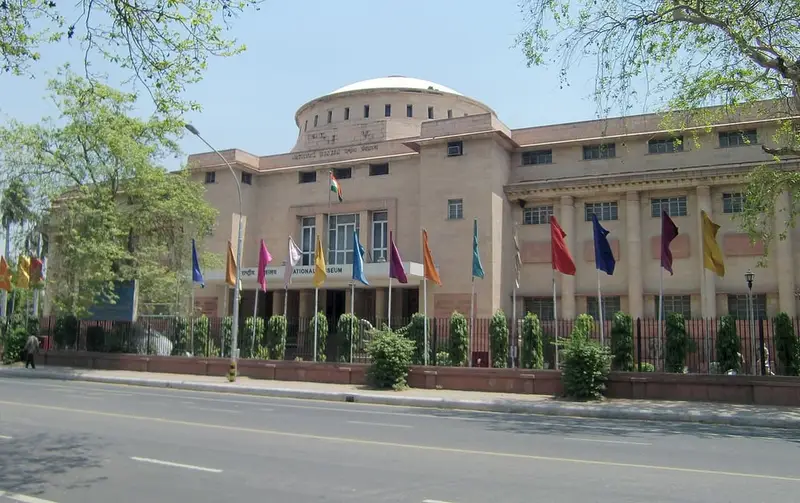

National Museum
2 hIndia's largest museum, with about 200,000 objects across 5,000 years: the Harappan gallery with the bronze "dancing girl", Buddhist relics, Chola bronzes, Mughal paintings, armour and jewellery. It sits on Janpath, a few minutes from India Gate.
Day 2 of the 3-day plan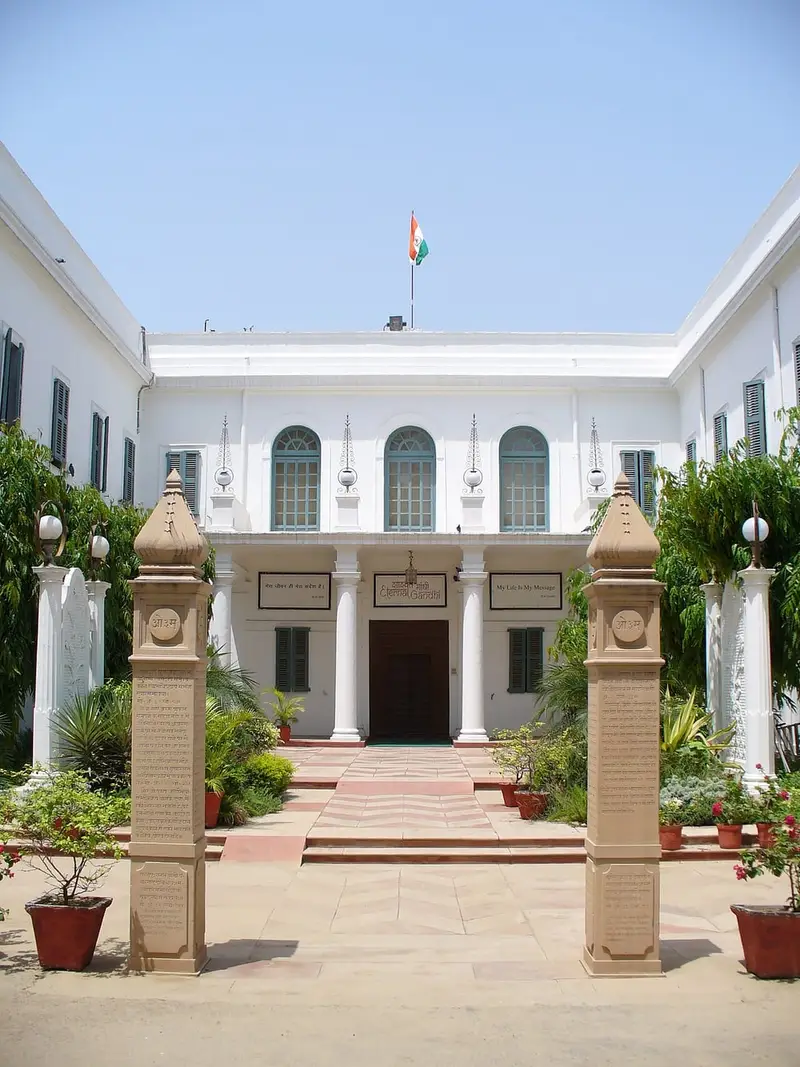

Gandhi Smriti
1 hThe house where Mahatma Gandhi spent his last 144 days and where he was shot on 30 January 1948. Stone footprints lead across the lawn to the spot where he fell. Inside are his room, kept as he left it, and galleries on his life.
Day 2 of the 3-day plan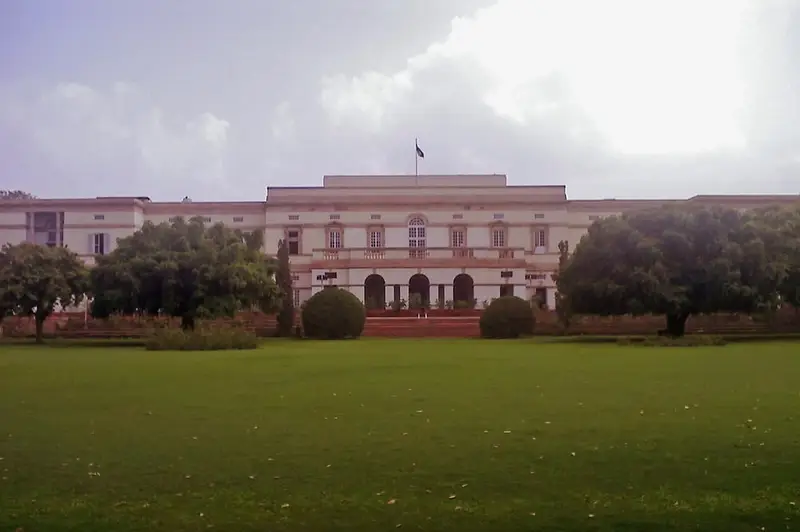

Pradhanmantri Sangrahalaya
2 hA museum of India's prime ministers since 1947, in Teen Murti Bhavan, Nehru's home, and a new building beside it. Galleries use film, holograms and objects to tell each prime minister's time in office.
Not in our plans. Add it if you have time.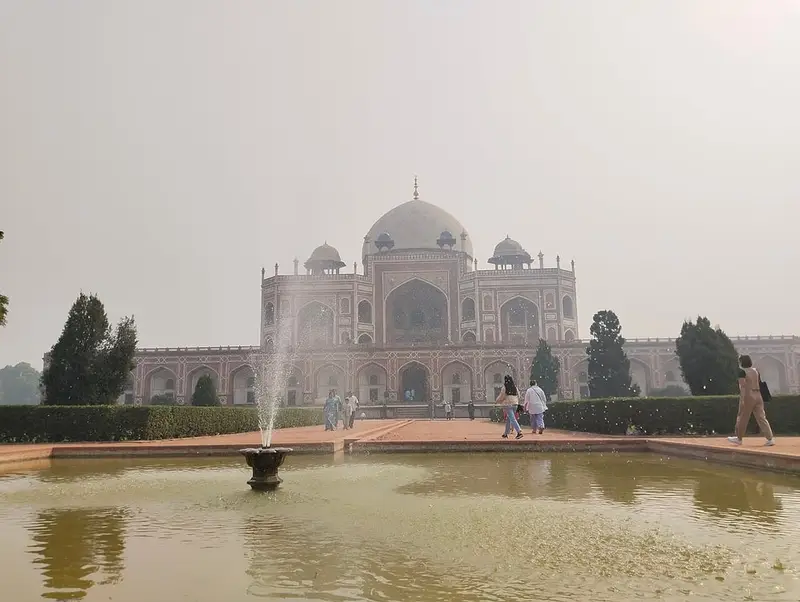

Humayun's Tomb
1 h 15 minThe tomb of the Mughal emperor Humayun, built in the 1560s by his widow, and the first great garden tomb in India: the plan the Taj Mahal followed 80 years later. Red sandstone and white marble rise from a garden cut into four by water channels. Smaller tombs, like Isa Khan's, stand in the same grounds.
In the 1-day plan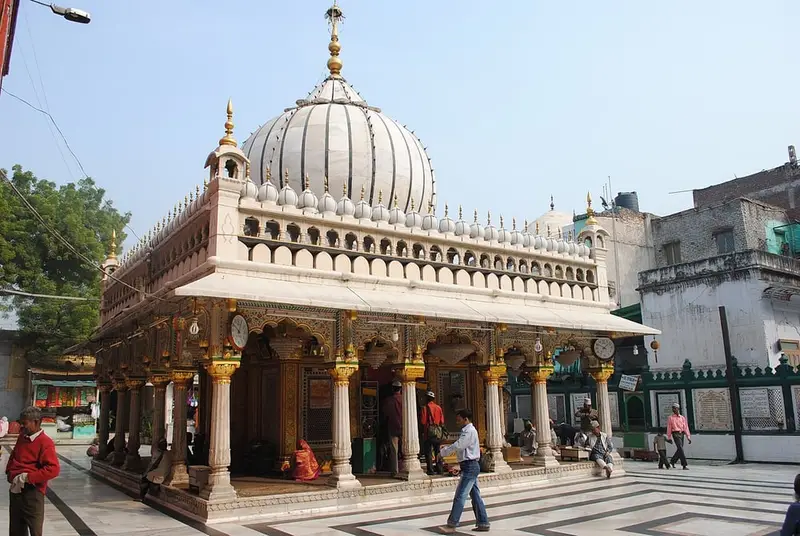

Nizamuddin Dargah
45 minThe shrine of the Sufi saint Nizamuddin Auliya, who died in 1325, at the heart of a busy old neighbourhood. You walk in down a lane of flower and sweet stalls to a small marble courtyard. On Thursday evenings qawwali singers perform in front of the tomb.
Day 2 of the 3-day plan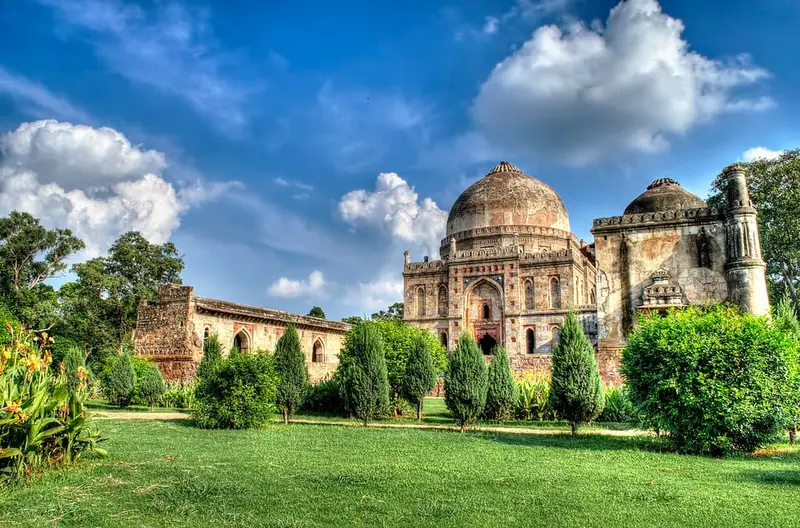

Lodhi Garden
45 minA 36 hectare park round the 15th and 16th century tombs of the Sayyid and Lodi sultans: Mohammad Shah's octagon tomb, the Bara Gumbad and Sheesh Gumbad, with a stone bridge over a pond. Delhi comes here to walk, jog and picnic.
Day 3 of the 3-day plan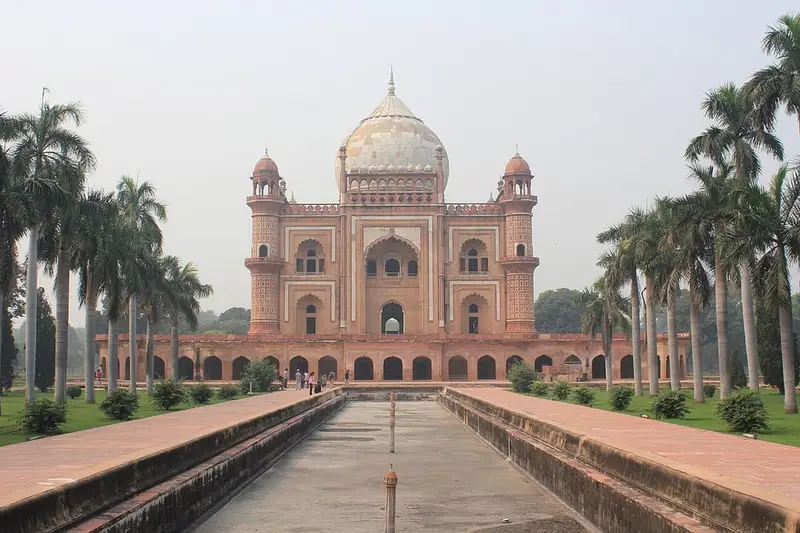

Safdarjung's Tomb
45 minThe last big Mughal garden tomb, built in 1754 for Safdarjung, a minister of the Mughal court. It follows the plan of Humayun's Tomb, with a central dome over a raised platform, in a quieter garden.
Day 3 of the 3-day plan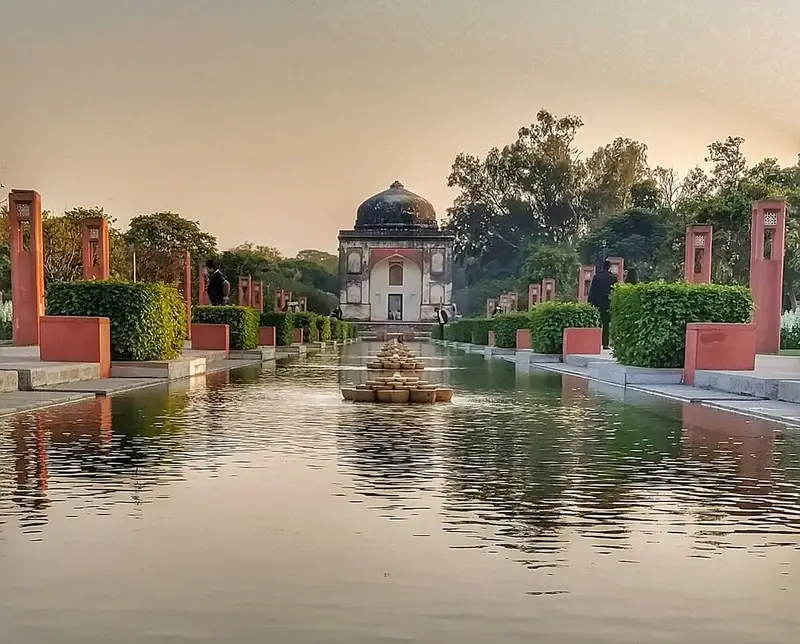

Sunder Nursery
1 hA 36 hectare park beside Humayun's Tomb, restored by the Aga Khan Trust and opened in 2018: 16th century tombs, Mughal style water gardens, a lake and a bonsai house.
Not in our plans. Add it if you have time.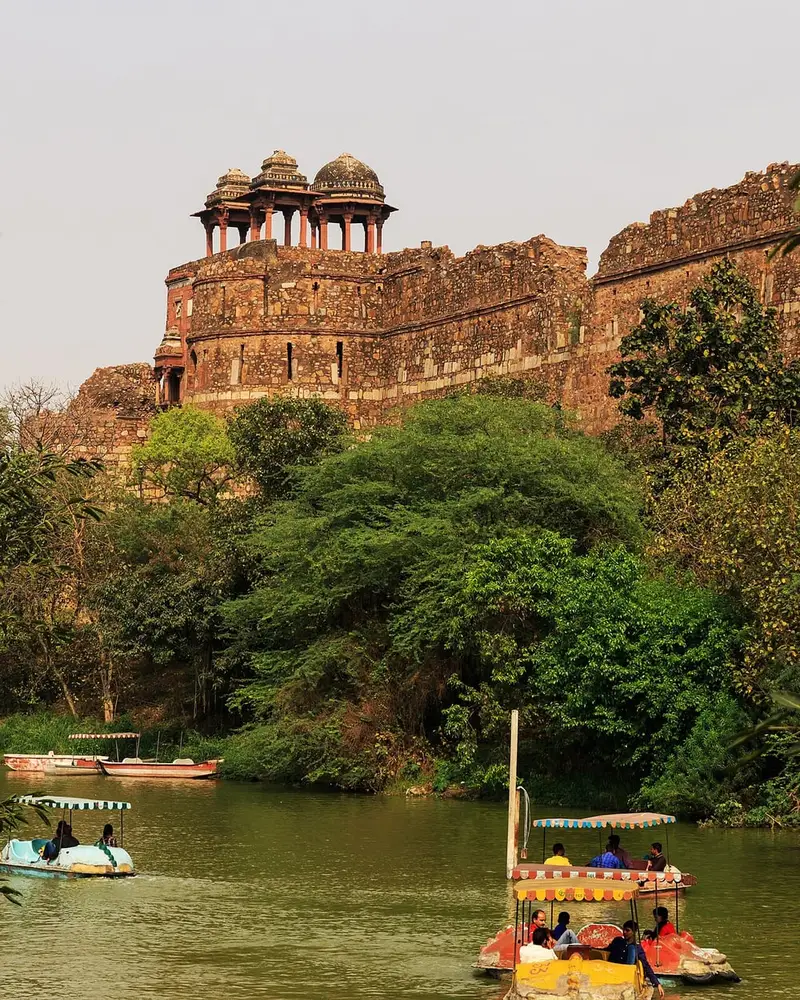

Purana Qila
1 hThe Old Fort, built by Humayun and Sher Shah Suri in the 1530s and 1540s on a site lived in for 2,500 years. Inside its massive gates are the Qila-i-Kuhna mosque and the Sher Mandal, the tower where Humayun fell down the stairs and died.
Not in our plans. Add it if you have time.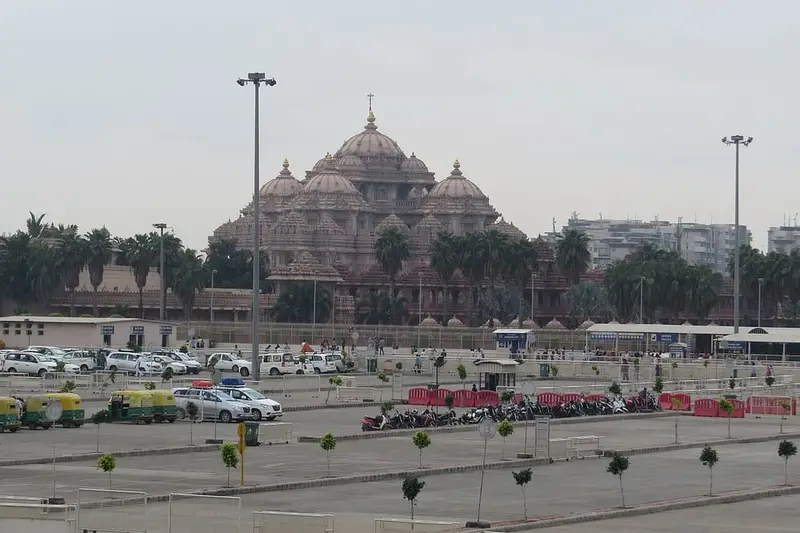

Swaminarayan Akshardham
3 hA huge Hindu temple of pink sandstone and white marble opened in 2005 on the east bank of the Yamuna. The main monument is carved all over with 20,000 figures and stands on a plinth ringed by 148 stone elephants. Exhibitions, a boat ride through Indian history and a giant-screen film are on a separate ticket, and the musical fountain show runs after sunset.
Day 2 of the 2-day plan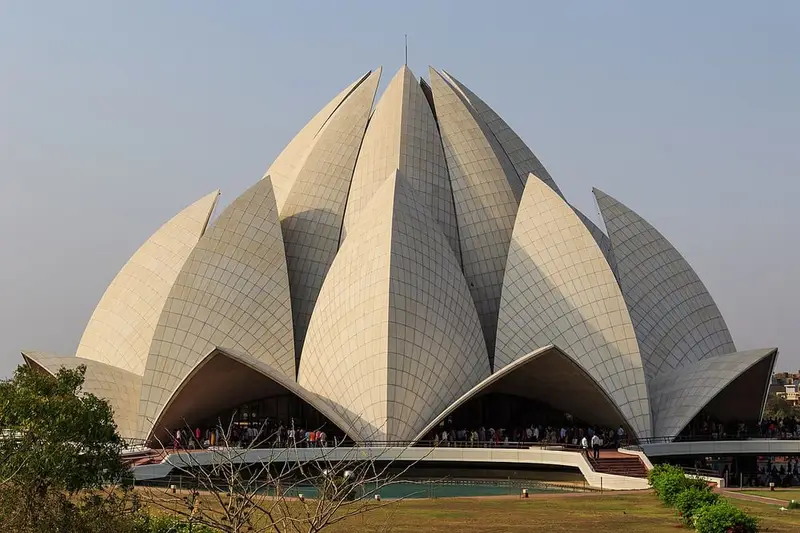

Lotus Temple
45 minThe Bahá'í House of Worship, opened in 1986: 27 white marble petals in the shape of a lotus flower, surrounded by nine pools. People of any faith can sit in silence in the hall inside.
Day 2 of the 2-day plan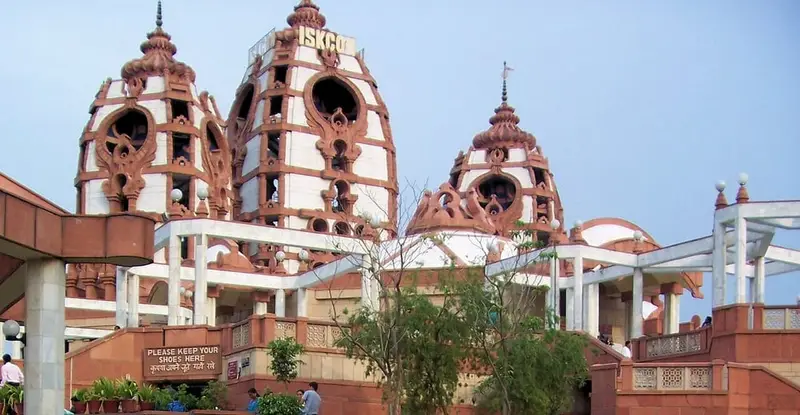

ISKCON Temple
45 minThe Krishna temple on a hill at East of Kailash, opened in 1998, with tall red and cream towers and a lively hall of chanting. A Vedic culture show with robots and a light show runs inside, and the Govinda's restaurant serves vegetarian lunch.
Day 3 of the 3-day plan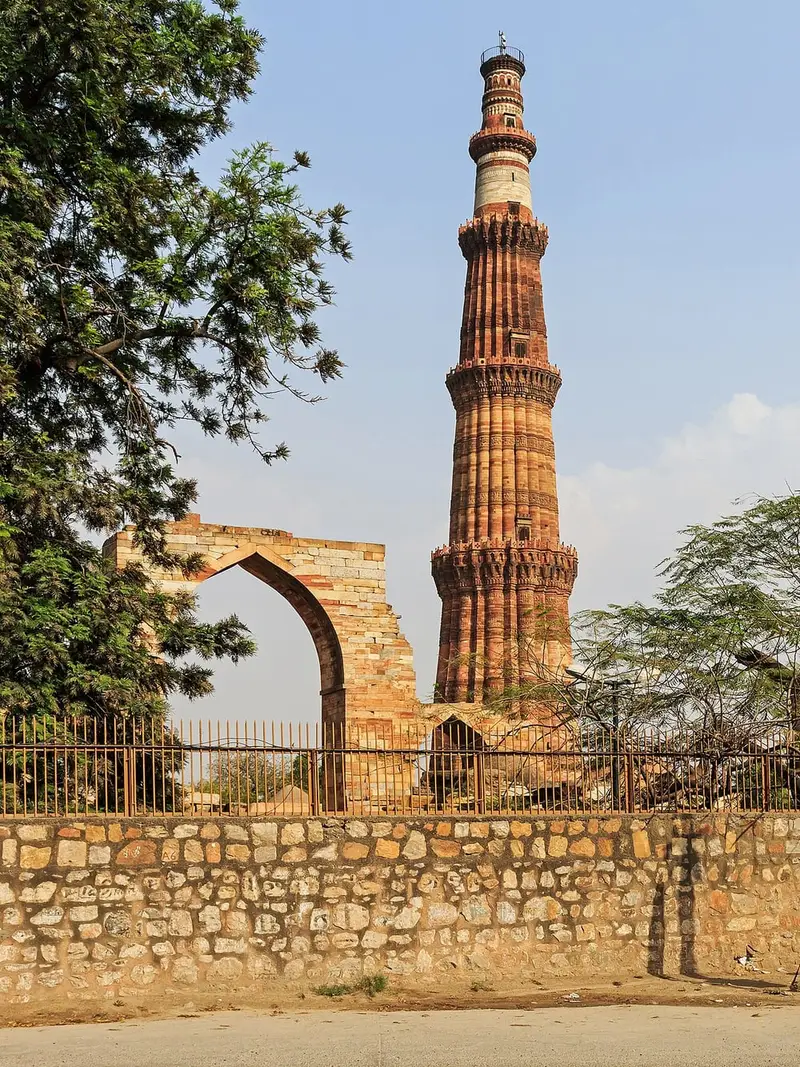

Qutub Minar
1 h 30 minThe 73 m tower of red and buff stone started in 1199 by Qutb-ud-din Aibak, the first Delhi sultan, and finished by his successors. Around it are the ruins of Delhi's first mosque, built from the stones of older temples, the 1,600 year old iron pillar that has not rusted, and the Alai Darwaza gateway.
In the 1-day plan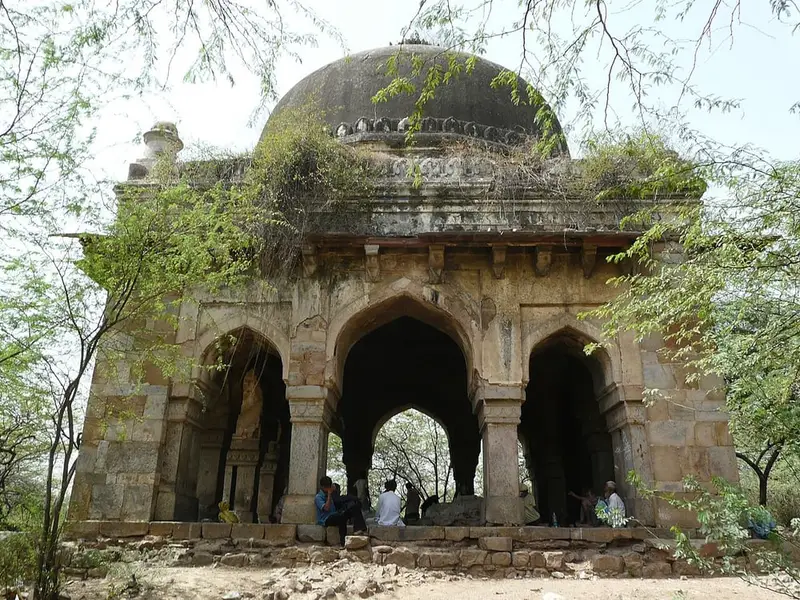

Mehrauli Archaeological Park
1 hA wooded park of about 80 monuments right next to the Qutub Minar: Jamali Kamali's mosque and tomb, Balban's tomb and Rajon ki Baoli stepwell, with walking paths between them.
Not in our plans. Add it if you have time.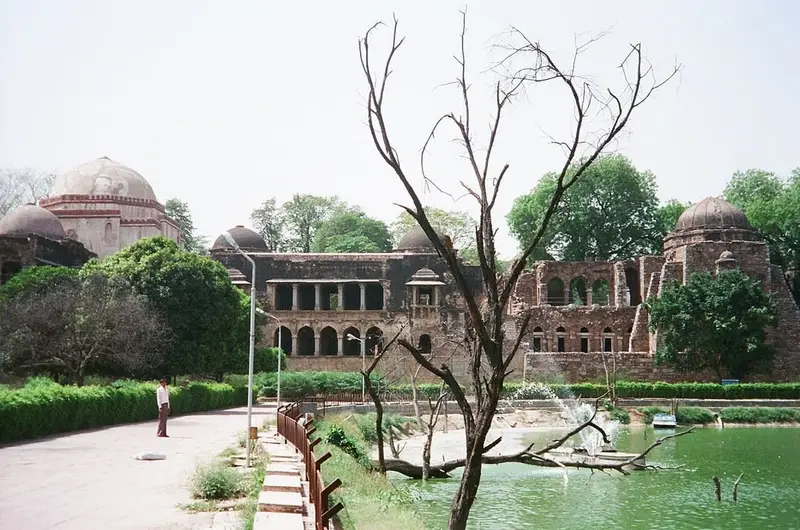

Hauz Khas Fort and Deer Park
1 hA big 13th century water tank, now a lake, with the domed tomb of Sultan Firoz Shah Tughlaq and the arcades of his 14th century college along its bank. Next to it is the Deer Park, with deer, peacocks and paths. Hauz Khas Village, the lane outside, is full of cafes and small shops.
Day 3 of the 3-day plan

Dilli Haat
1 hAn open-air crafts market run by Delhi Tourism, where stalls from every state rotate every two weeks: shawls, block prints, pottery, brass and jewellery. Food stalls from the different states serve momos, Rajasthani thalis and Kashmiri wazwan.
Day 3 of the 3-day planCab routes from and to Delhi
Delhi to Agra by cabAgra is the city of the Taj Mahal, about 213 km from Delhi.
Delhi to Haridwar by cabHaridwar is one of the holiest towns on the Ganga, where the river leaves the hills, about 228 km from Delhi.
Delhi to Jaipur by cabJaipur is the Pink City of Rajasthan, with its forts, palaces and bazaars, about 295 km from Delhi.
Delhi to Lansdowne by cabLansdowne is a quiet army hill town in Uttarakhand, about 250 km from Delhi.
Delhi to Manali by cabManali, the hill town at the top of the Kullu valley, is about 550 km from Delhi.
Delhi to Rishikesh by cabRishikesh is the yoga and temple town where the Ganga leaves the hills, about 251 km from Delhi.
Delhi to Shimla by cabShimla is the old summer capital of British India, a hill town in Himachal about 368 km from Delhi.
Questions people ask
How many days do you need for Delhi?
Two days covers the main sights: one for Old Delhi (the Red Fort, Chandni Chowk, the Jama Masjid) with India Gate, and one for the Qutub Minar, the Lotus Temple, Humayun's Tomb and Akshardham. A third day adds the National Museum, Gandhi Smriti, Nizamuddin, Hauz Khas and Lodhi Garden.
Which Delhi sights are closed on Mondays?
The Red Fort, Akshardham, the Lotus Temple, the National Museum, Gandhi Smriti and the Pradhanmantri Sangrahalaya are all closed on Mondays. On a Monday, see the Qutub Minar, Humayun's Tomb, Safdarjung's Tomb, Hauz Khas, Lodhi Garden, India Gate, the gurdwaras and the Jama Masjid, which are open every day.
Can a cab drive into Chandni Chowk?
No. The main street of Chandni Chowk is closed to cars in the day. The cab drops you at the Red Fort end on Netaji Subhash Marg and waits there; walk or take a cycle rickshaw to Sis Ganj Gurdwara, Parathe Wali Gali and the spice market, and agree the rickshaw price first.
When is the Jama Masjid open to visitors?
From about 07:00 to sunset, but visitors are kept out during prayers, about 12:15 to 13:45, and in the half hour before sunset. The plans reach it after the midday prayer. Shoulders and legs must be covered (robes are lent at the gate), and a camera or phone fee is charged.
Can I visit Rashtrapati Bhavan?
Yes, on a booked tour. Tours of the main building and the museum run Tuesday to Sunday, booked online at visit.rashtrapatibhavan.gov.in up to 7 days ahead, about ₹50 a person, with photo ID (foreigners bring the passport they booked with). The Changing of the Guard is on Saturdays from 07:00, also booked online. The Amrit Udyan gardens open only in February to March and August to September.
Are phones allowed at Akshardham?
No. Phones, cameras, bags and any electronics are not allowed anywhere inside Akshardham. Leave them in the cab or the free cloakroom before the security check. Shoulders and knees must be covered.
Is the Chhatarpur temple worth adding?
It is a big marble temple complex about 5 km south of the Qutub Minar, busiest at Navratri. Its listed hours vary a lot from source to source, so it is not in the plans; if you want to go, add it after the Qutub Minar and check the timings locally.
What about the Agra day trip from Delhi?
Agra is about 230 km each way, so it is a full outstation day, not part of Delhi sightseeing. See the Delhi to Agra cab page for fares, and the Agra plans for what to see there; remember the Taj Mahal is closed on Fridays.