Places to visit in Visakhapatnam, and the order to see them
Start at Kailasagiri when it opens at 10:00 for the view over the coast, then Tenneti Park, lunch and Rushikonda Beach. In the afternoon, the INS Kursura submarine and the TU-142 aircraft museum on Beach Road, and the evening on RK Beach. That is about 35 km by cab. A second day goes up to the Borra Caves and Araku Valley, about 257 km there and back, and a third to Simhachalam and the coast road to Bheemili. The submarine museum is closed on Mondays.
19 placesroutes from road routing, timed against opening hours
How many days do you need?
Each plan is a real route by cab, timed against opening hours.
Call or message a local Visakhapatnam operator with this plan. Tell them your hotel and dates, and they send a price for the car and driver.
Full day, 8 h / 80 kmSedan, SUV or InnovaPrice from the operator
We are still listing Visakhapatnam operators. Write to [email protected] and we will put you in touch.
Opening times of Visakhapatnam's top sights
With the best time to go and how long to stay.
Place
Open
Best time
Visit
Simhachalam Temple
About 07:00 to 21:00, with short closures for rituals (about 11:30 to 12:15, and again in the afternoon and early evening). Free and paid darshan queues. Special timings and very large crowds on Chandanotsavam (Akshaya Tritiya, April or May)?
Early morning, before the queues and the heat.
1 h 15 min
Kailasagiri
Park about 10:00 to 20:00, small entry ticket. The ropeway from the foot of the hill runs about 11:00 to 13:00 and 14:00 to 20:00 (one source). The glass skywalk and the toy train have their own tickets
Late morning for the clearest view of the coast, or late afternoon.
2 h
Tenneti Park
Open-air park, open in daylight?
Any time in daylight.
30 min
Rushikonda Beach
Open beach; lifeguards on duty about 06:00 to 20:00. A small beach entry fee may apply?
Morning, before the sand gets hot.
1 h
INS Kursura Submarine Museum
14:00 to 20:30, closed on Mondays. About ₹40 adults, ₹20 children. Some listings add a Sunday morning slot
Afternoon, when it opens; it gets busy after 17:00.
45 min
TU-142 Aircraft Museum
About 14:00 to 20:00 on weekdays, from 10:00 at weekends. About ₹70 adults, ₹40 children; the Sea Harrier museum next door has its own ticket. No photos inside the aircraft
Afternoon, with the submarine across the road.
1 h
Visakha Museum
About 11:00 to 19:00 (some listings say from 10:00), closed on Mondays; one listing says Fridays instead. Small ticket?
Afternoon, before the submarine.
45 min
RK Beach
Open beach with a promenade; busiest in the evening?
Evening, when the promenade fills up and the food stalls open.
1 h
Indira Gandhi Zoological Park
09:00 to 17:00, closed on Mondays. Tickets from about ₹30; battery cars and bicycles for hire inside
Opening time, when the animals are most active and it is cooler.
2 h 30 min
Thotlakonda Buddhist Complex
09:00 to 17:00, every day. Free entry, small parking fee
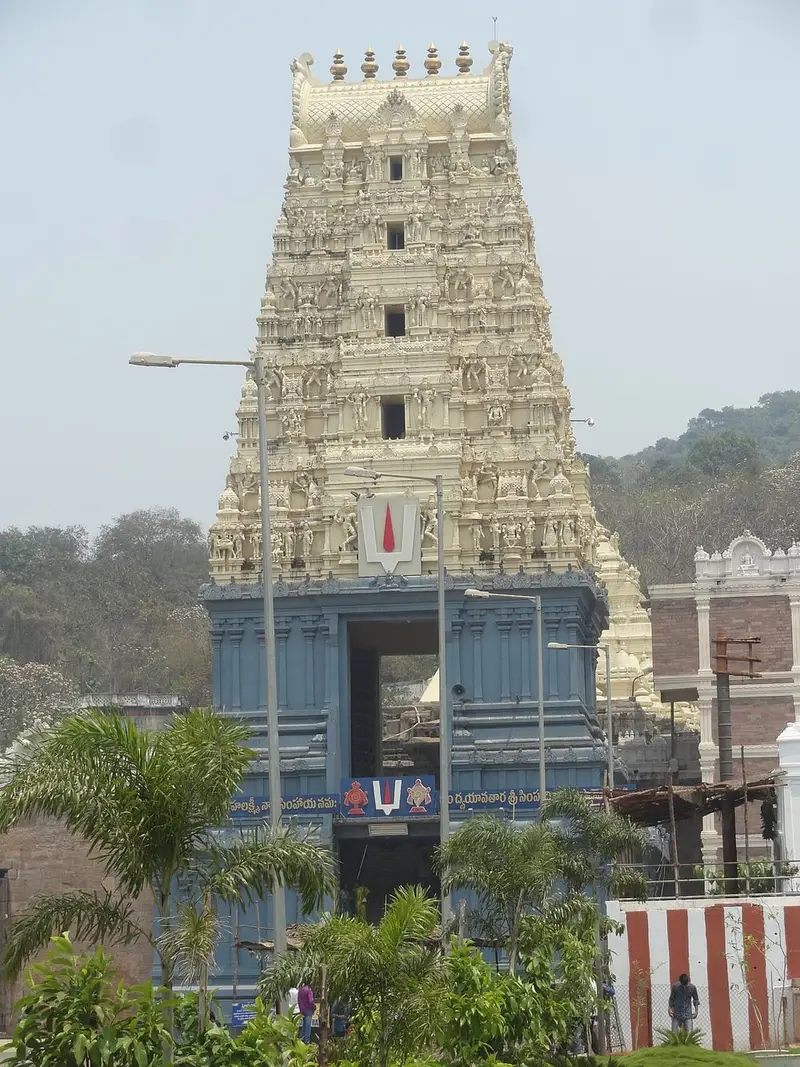
A hilltop temple to Varaha Lakshmi Narasimha, a form of Vishnu, about 16 km north-west of the city. The stone temple is in the Kalinga style, with carved pillars and inscriptions going back about 900 years. The idol is kept covered in sandalwood paste all year and is seen without it on one day only, at the Chandanotsavam festival. A ghat road climbs the hill to the temple.
Day 2 of the 3-day planPhoto: kmdangi, CC BY-SA 3.0
Kailasagiri
2 h
Hills, parks & caves
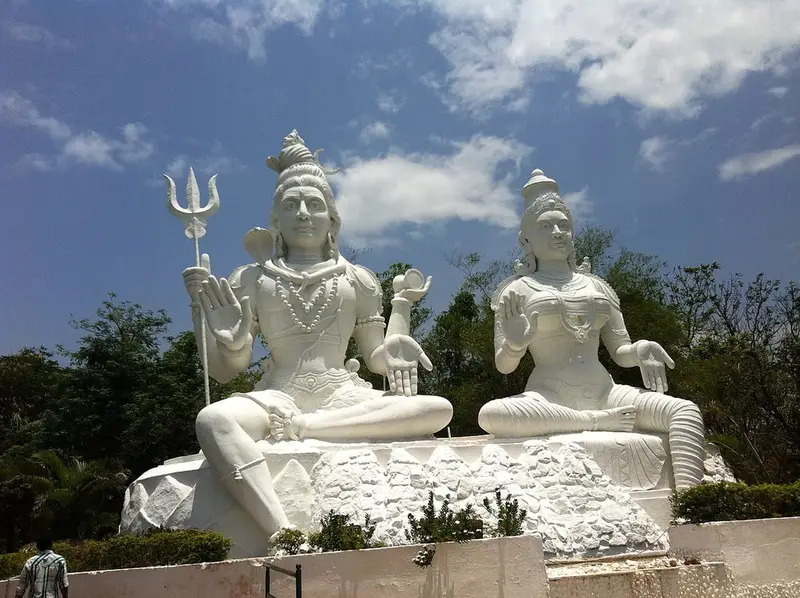
A park on a hill at the north end of Beach Road, with the best view in the city: the long curve of the coast, the beaches and the port. At the top are large white statues of Shiva and Parvati, gardens, viewpoints and a small toy train that runs round the hilltop. A glass skywalk sticks out from the hillside, and a ropeway runs up from the foot of the hill.
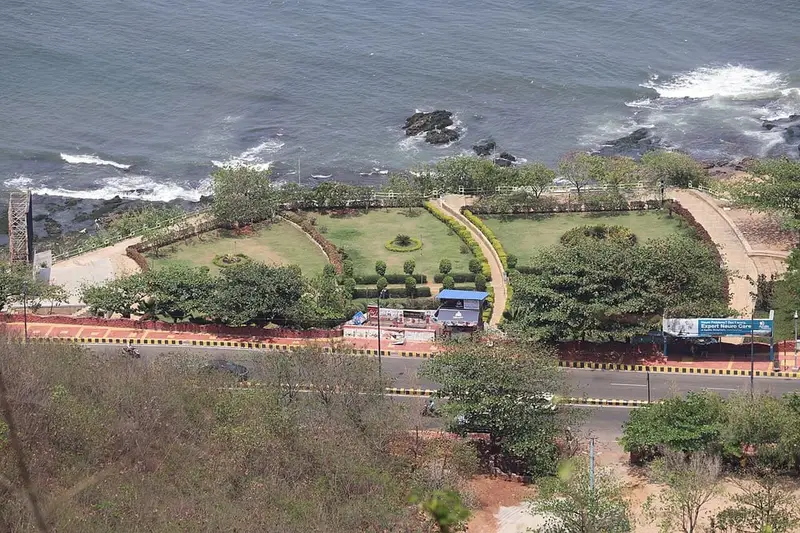
A small park on the cliff where Beach Road runs below Kailasagiri, with benches, lawns and an open view of the sea and the rocks below. It is quieter than the beaches in the city.
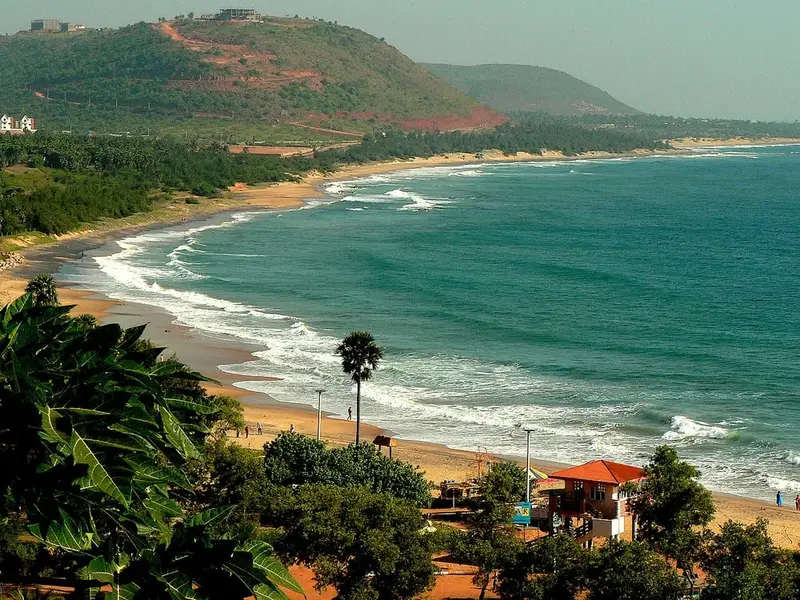
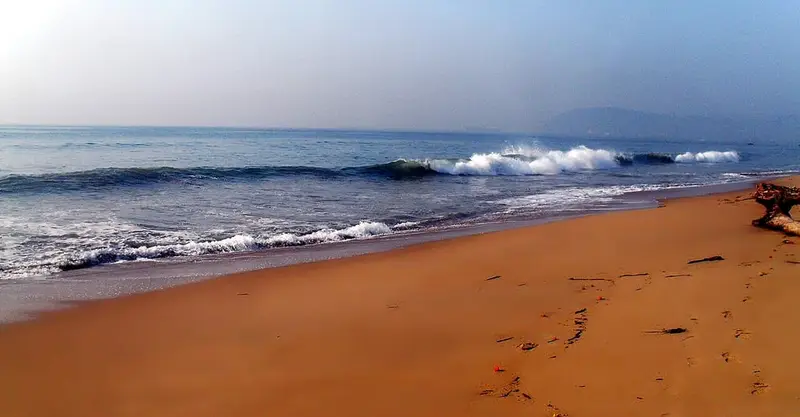
A wide, golden beach between green hills about 10 km north of the city, and the cleanest beach near Visakhapatnam. It holds the Blue Flag, an international label for clean, safe beaches. There are changing rooms, lifeguards and water sports such as jet skis and kayaks.
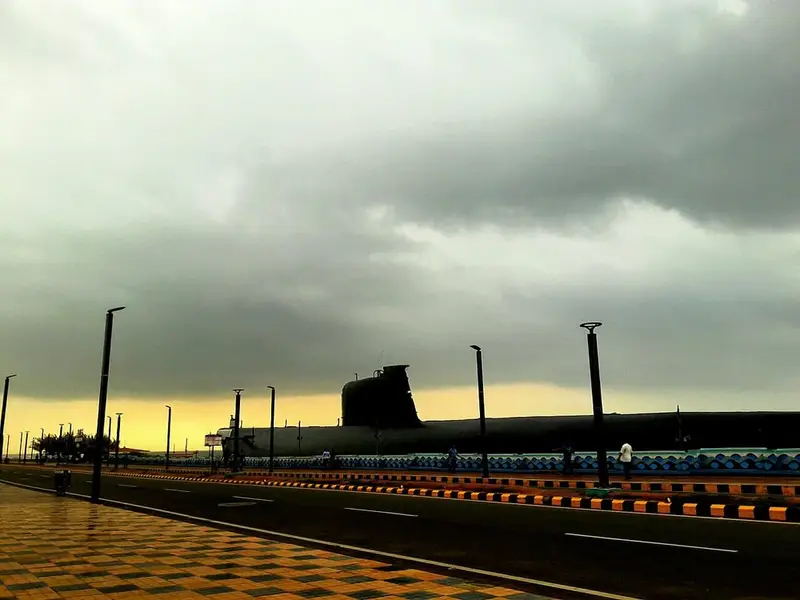
A real Indian Navy submarine pulled up onto the sand of RK Beach. INS Kursura served from 1969 to 2001, including in the 1971 war, and became a museum in 2002. You walk through it end to end: the torpedo room, the control room, the bunks and the engines, with retired sailors on hand to explain. The Victory at Sea war memorial is just across Beach Road.
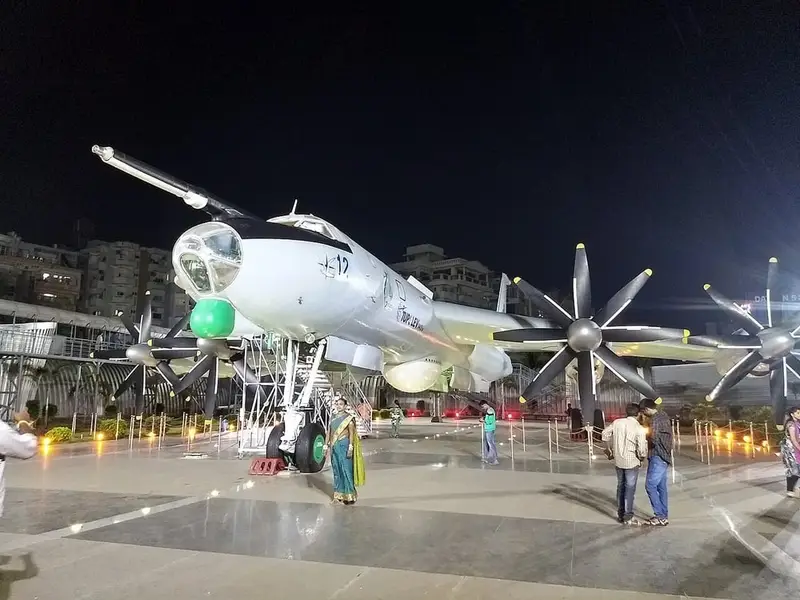
A huge Russian-built Tupolev TU-142 that flew long sea patrols for the Indian Navy for about 29 years. You walk inside the plane, past the cockpit and the crew stations, and a sound and light show tells its story. Beside it, a newer museum shows a Sea Harrier jet from the Navy's old aircraft carriers.
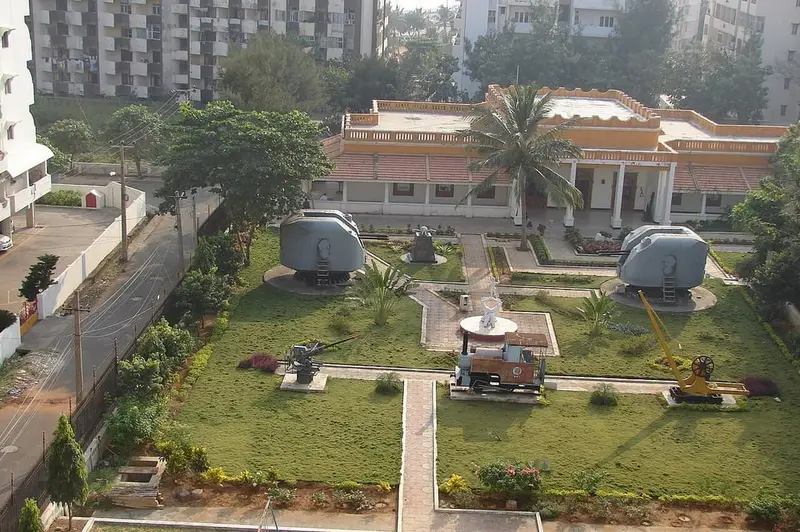
A small history museum in an old Dutch-era bungalow on Beach Road. It tells the story of the city and the coast: old coins, weapons, maps, models of ships and the Navy's part in the 1971 war.
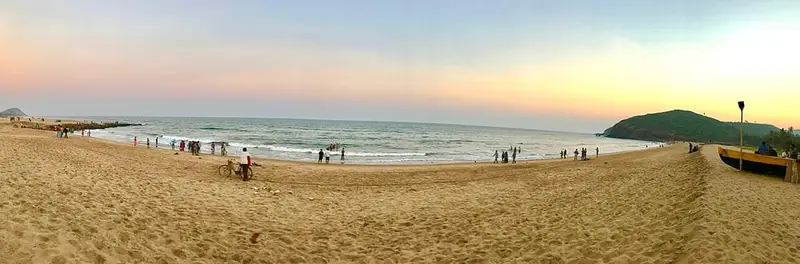
Ramakrishna Beach, the city's main beach, runs along Beach Road below the old town. In the evening the promenade fills with families, snack stalls and walkers, with the lights of the port to the south. The submarine museum, the Victory at Sea memorial and a small Kali temple are along the same stretch.
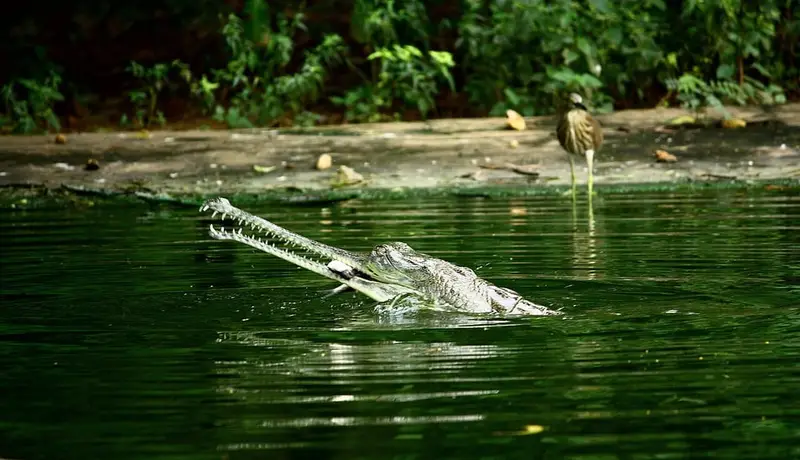
A large zoo in forest between the Kambalakonda hills and the sea, about 8 km north of the centre. Big open enclosures hold tigers, lions, elephants, deer, bears and many birds, along long shady roads.
Not in our plans. Add it if you have time.Photo: Pinakpani, CC BY 4.0
Thotlakonda Buddhist Complex
1 h
Temples & Buddhist sites
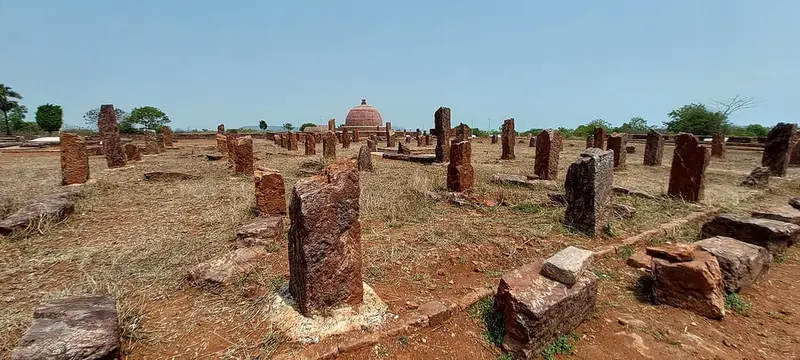
The remains of a Buddhist monastery on a hilltop above the sea, used for about 400 years from around the 3rd century BC. You walk among the brick base of a large stupa, prayer halls, monks' cells and rock-cut water tanks, with a wide view over the coast. The Navy spotted the site from the air in the 1970s.
Day 2 of the 3-day planPhoto: Adityamadhav83, CC BY-SA 3.0
Bavikonda Buddhist Site
45 min
Temples & Buddhist sites
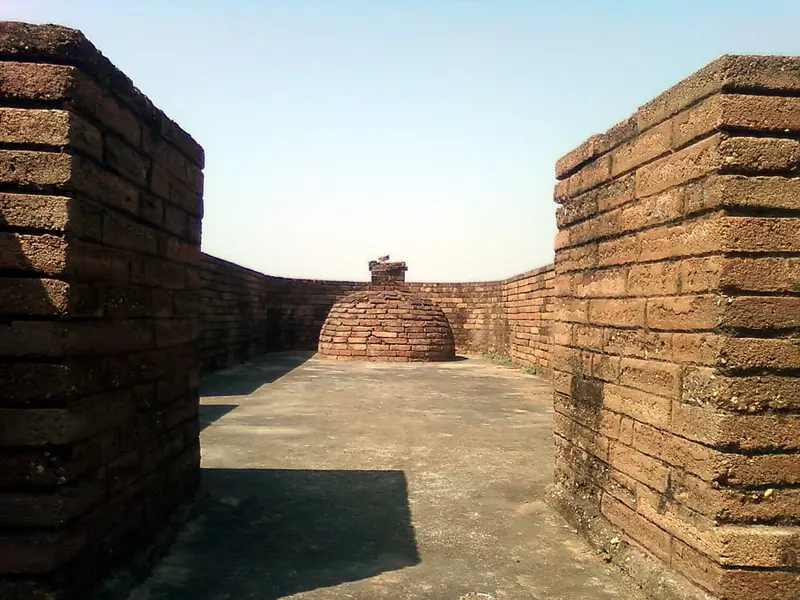
Another hilltop Buddhist monastery, on the next hill west of Thotlakonda, from about the 3rd century BC. The name means hill of wells, after its rock-cut water tanks. Digs here found a stupa, monks' cells and a relic casket said to hold a piece of bone of the Buddha.
Day 2 of the 3-day planPhoto: Adityamadhav83, CC BY-SA 3.0
Erra Matti Dibbalu
45 min
Hills, parks & caves
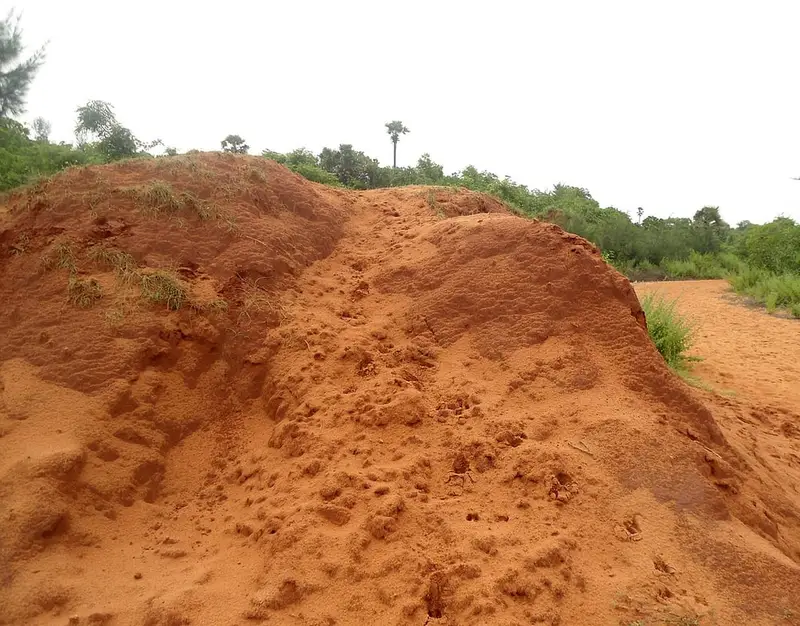
Red sand dunes on the coast between the city and Bheemili, cut by wind and rain into gullies and ridges. They formed thousands of years ago, as the sea level changed, and are a protected National Geological Monument. The red and the green scrub against the blue sea make it a favourite spot for photos and film shoots.
Day 2 of the 3-day planPhoto: Adityamadhav83, CC BY-SA 3.0
Bheemili Beach and Dutch Cemetery
1 h 15 min
Temples & Buddhist sites
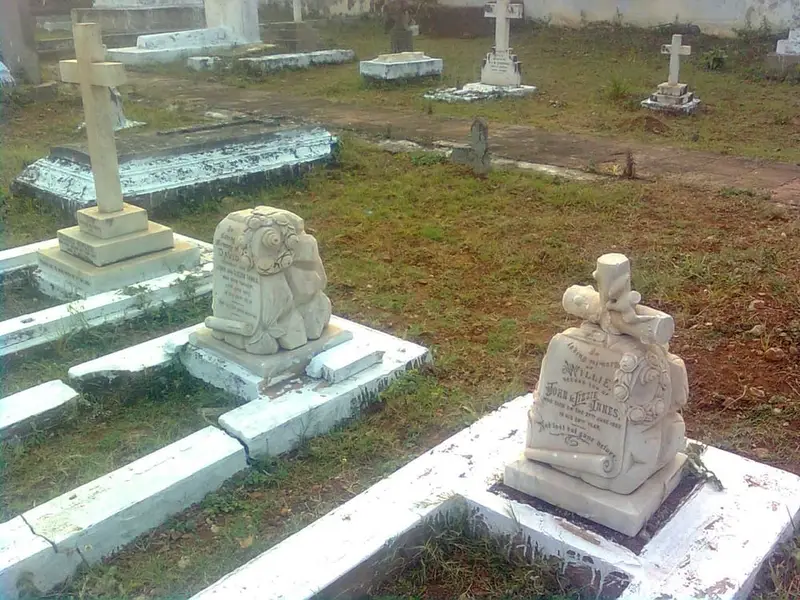
Bheemunipatnam, or Bheemili, is a small old town where the Gosthani river meets the sea, about 30 km north of the city. The Dutch had a trading post here from the 1600s. Their cemetery, with old tombs and carved gravestones, sits by the beach next to a 19th-century lighthouse, and the beach itself is calm and less crowded than the city ones.
Day 2 of the 3-day planPhoto: Pinakpani, CC BY-SA 4.0
Araku Tribal Museum
1 h
Ships & museums
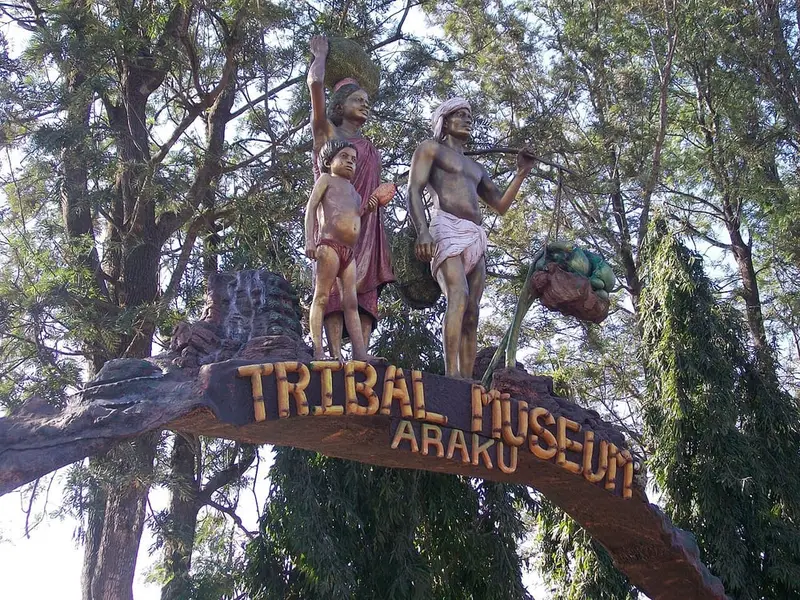
A museum in the middle of Araku about the hill tribes of the Eastern Ghats, who make up most of the valley's people. Life-size clay figures show their homes, farming, hunting, weddings and the Dhimsa dance, with their tools, jewellery and musical instruments. The garden around it has shops selling tribal crafts and Araku coffee.
Day 2 of the 2-day plan
Araku Coffee Museum
30 min
Ships & museums
A small museum on how coffee came to the Araku hills and how it is grown and roasted here, mostly by tribal farmers. The best part is the café, with fresh Araku coffee and coffee chocolates.
Day 2 of the 2-day planPhoto: Robbygrine, Public domain
Borra Caves
1 h 30 min
Hills, parks & caves
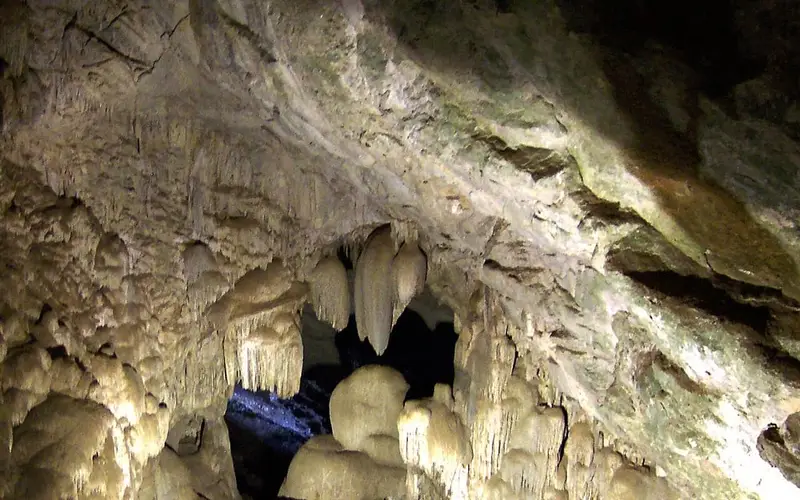
Huge limestone caves in the Ananthagiri hills, among the largest in India, found by William King of the Geological Survey in 1807. Steps lead down into tall chambers full of stalactites and stalagmites, lit in colours, with a stream running through. Local people see a natural stone shape inside as a Shiva lingam, and there is a small shrine.
Day 2 of the 2-day planPhoto: Drashokk, CC BY-SA 4.0
Kambalakonda Eco Park
1 h 30 min
Hills, parks & caves
An eco park at the edge of the Kambalakonda wildlife sanctuary, the forested hills behind the zoo. It has short nature trails, a lake, boating and a small adventure area, and is a quiet, green break from the beaches.
Not in our plans. Add it if you have time.Photo: IM3847, CC BY-SA 4.0
Yarada Beach
1 h
Beaches & coast
A quiet cove south of the port, with hills on three sides and the sea on the fourth. The road there climbs over the hill past Dolphin's Nose, with views back over the harbour.
Not in our plans. Add it if you have time.
Chaparai Water Cascade
45 min
Hills, parks & caves
A stream that tumbles over a wide spread of flat rocks in a forest about 13 km past Araku, a favourite picnic spot. The water is shallow in places and fun to wade.
Not in our plans. Add it if you have time.
Questions people ask
How many days do you need for Visakhapatnam?+
Two days for most visitors: one for Kailasagiri, the beaches and the Beach Road museums, one for the Borra Caves and Araku Valley. A third day adds Simhachalam, the Buddhist sites on the north coast and Bheemili.
Is Araku a day trip from Visakhapatnam?+
Yes, but a long one: about 257 km with the Borra Caves, on a narrow ghat road. Leave at 07:00 and expect to be back at about 18:30 to 19:00. Many people take the morning train up for the views and come back by cab, or stay a night in Araku.
Which places are closed on Mondays?+
The INS Kursura submarine museum, the Visakha Museum and the zoo. The TU-142 aircraft museum, Kailasagiri, the beaches, the Borra Caves and the Araku museums open every day, so Monday is a good day for Araku or the north coast.
Can you swim at the beaches in Visakhapatnam?+
Swimming is not safe at RK Beach: the sea has strong currents and drownings happen most years. Rushikonda has lifeguards and flags; swim only between them, and only in calm sea. Paddling at the edge is fine elsewhere.
Can you visit Dolphin's Nose?+
Not really. Dolphin's Nose, the rocky headland south of the port, is Navy land, and its lighthouse is not regularly open to visitors. You see it from the road to Yarada Beach and from Kailasagiri on a clear day.
Where are the Katiki waterfalls?+
Near the Borra Caves, but cars stop at Gatevalasa and the last few kilometres are by jeep, about ₹1,500 a jeep, then a slippery walk. It does not fit the Araku day; add it if you stay a night in the hills.
When is the best time to visit Visakhapatnam?+
October to March, when it is dry and not too hot. April to June is hot and humid, and the monsoon (June to September) brings heavy rain, which makes the Araku ghat road slow but the hills green. Storms from the Bay of Bengal can hit the coast in October and November.