Cabs
Aurangabad sightseeing by cab

Aurangabad in 3 days: what to see, in what order

Day one is the city: Bibi Ka Maqbara, the Aurangabad Caves, Soneri Mahal, Panchakki and Daulatabad Fort, back by about 17:40. Day two is Bhadra Maruti, Grishneshwar and the Ellora Caves, back by about 13:30. Day three is Ajanta: leave at 07:00, about 4 hours at the caves, back by about 17:30.

9 places316 km by cabtimed against opening hours
Day 1

Bibi Ka Maqbara, the Aurangabad Caves and Daulatabad

Bibi Ka Maqbara at about 08:45, before the crowds, then the Aurangabad Caves on the hill behind it and Soneri Mahal before lunch. After lunch, Panchakki, then Daulatabad Fort from about 14:45 for the climb to the top. About 46 km by cab, back by about 17:40. Not on a Monday, when Soneri Mahal may be closed.

08:30 to 17:375 places46 km by cab
  1. 1Bibi Ka Maqbara
  2. 2Aurangabad Caves
  3. 3Soneri Mahal
  4. Lunch
  5. 4Panchakki
  6. 5Daulatabad Fort
  7. Back
  1. Leave central Aurangabad
  2. 1

    Bibi Ka Maqbara

    1 h here
    Bibi Ka Maqbara
    Photo: Sailko, CC BY 3.0

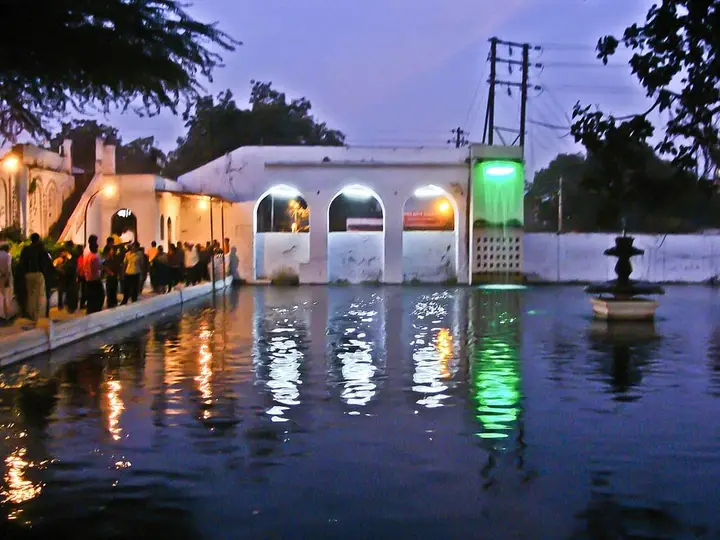
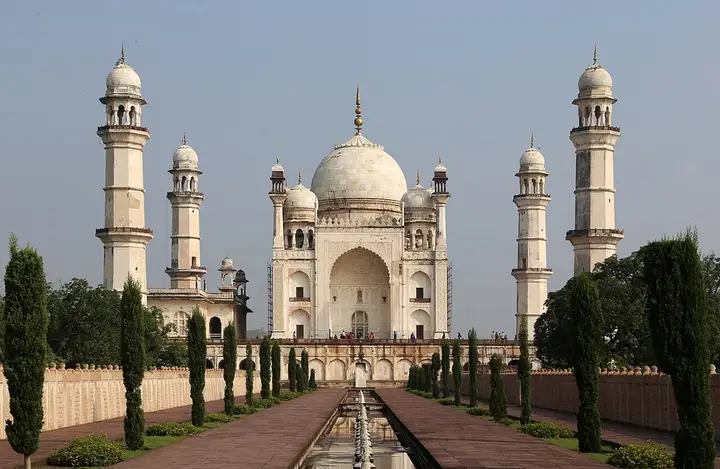
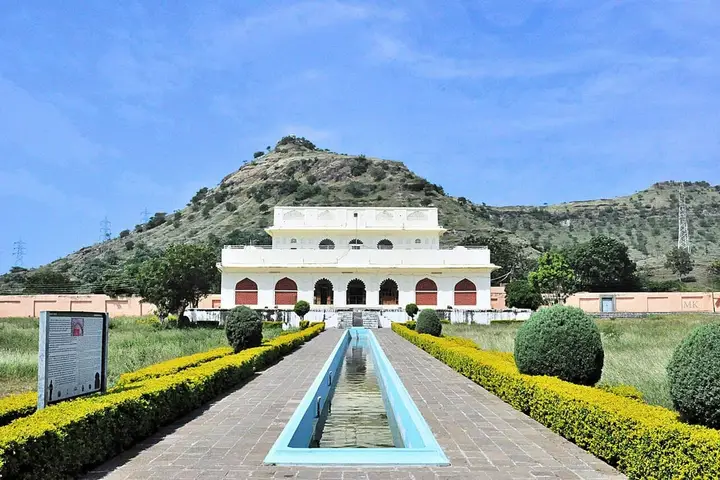
    A white tomb in a walled Mughal garden, built in the 1660s by Aurangzeb's son Azam Shah for his mother, Dilras Banu Begum. It was modelled on the Taj Mahal, so it is often called the Taj of the Deccan, but it is smaller and only the lower part is marble; the rest is plaster.

    Forts & monumentsAbout 08:00 to 20:00, every day, and lit up after dark. Indians about ₹25, foreigners ₹300

    Tip: Walk round to the back of the tomb for a quieter view. The Aurangabad Caves are on the hill behind, about 10 minutes by cab.
  3. 2

    Aurangabad Caves

    1 h 15 min here
    Aurangabad Caves
    Photo: Photo Dharma from Sadao, Thailand, CC BY 2.0

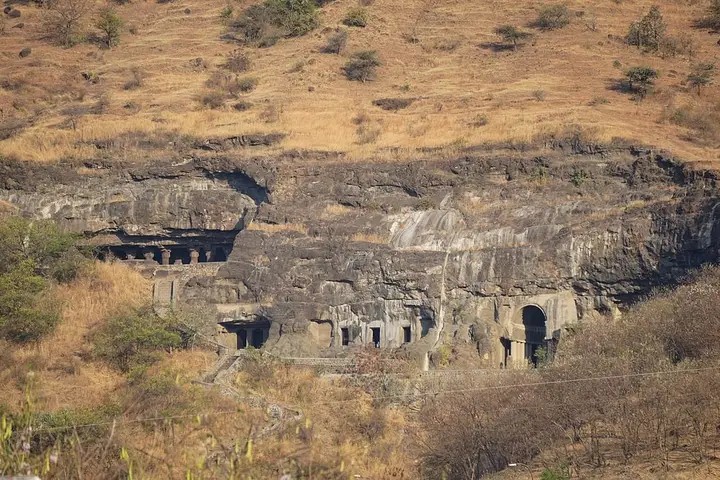
    Twelve Buddhist caves cut into the hill behind Bibi Ka Maqbara, from about the 6th and 7th centuries, in two groups about 1.5 km apart. Cave 7 has some of the finest carvings of women in Indian art, including dancers and musicians beside the Buddha. Far fewer people come here than to Ellora.

    CavesAbout 09:00 to 17:00, every day. Indians about ₹25?

    Tip: Both groups have steps up from the road. The view back over the city and Bibi Ka Maqbara is good from cave 7.

  4. 3

    Soneri Mahal

    1 h here
    Closed on Mondays
    Soneri Mahal
    Photo: मयुरेश खडके, CC BY-SA 4.0

    A small 17th-century palace of a Bundela chief, named for the gold paint once used in its rooms. It is now a museum of local finds: stone sculptures, old coins, Paithani textiles and paintings. The garden in front is calm and shady.

    Forts & monumentsOpen 09:00 to 17:00. One listing says closed on Mondays

    Tip: It is on the university campus road, about 1.5 km from the Aurangabad Caves. Most people need under an hour.

  5. Lunch, about 1 h. Your driver will know a place nearby. The times after this include it.
  6. 4

    Panchakki

    45 min here
    Panchakki
    Photo: Anjan05, CC BY-SA 3.0

    A 17th-century water mill beside the shrine of the Sufi saint Baba Shah Musafir. Water was brought by an underground clay pipe from a spring about 6 km away and dropped in a small waterfall to turn a millstone that ground grain for pilgrims. The big tank with fish and the old banyan tree make it a pleasant short stop.

    Forts & monumentsListings give 07:00 to 21:00 or 09:00 to 17:00; plan inside 09:00 to 17:00. Indians about ₹10?

    Tip: Dress modestly, as it is part of a shrine. It is a few minutes from Bibi Ka Maqbara and the old city gates.

  7. 5

    Daulatabad Fort

    2 h 30 min here
    Daulatabad Fort
    Photo: Udaykumar PR, CC BY 3.0

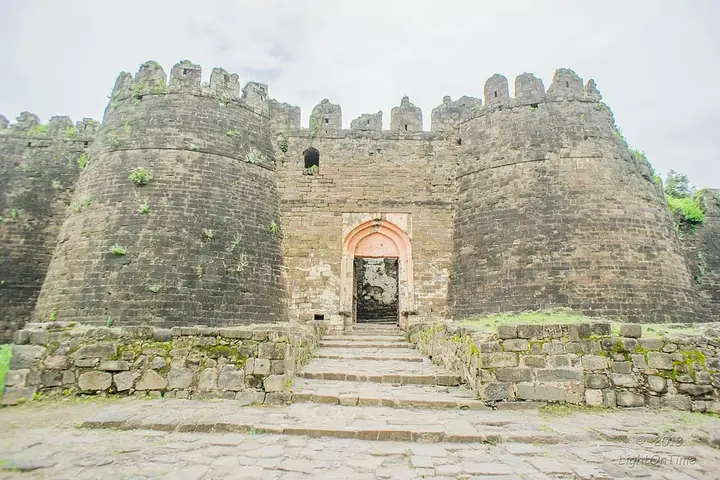
    A fort on a cone-shaped hill, once called Devagiri, about 15 km from the city on the Ellora road. In 1327 Sultan Muhammad bin Tughlaq moved his whole capital here from Delhi, then moved it back. Inside the walls are the 60 m Chand Minar tower and the Chini Mahal, and the path to the top goes through a pitch-dark, twisting tunnel built to confuse attackers.

    Forts & monumentsOpen 09:00 to 18:00, every day. Indians about ₹25

    Tip: The climb to the top is steep with about 750 steps, and takes about 2 hours up and down. Carry water and a torch or phone light for the tunnel. If you skip the climb, the lower walls and Chand Minar take about 45 minutes.

  8. Back at central Aurangabad
Day 2

Khuldabad, Grishneshwar and Ellora

Bhadra Maruti in Khuldabad at about 08:05 and Grishneshwar at about 08:40, both calm in the morning. Then the Ellora Caves from about 09:25 to 13:00. About 62 km by cab, back by about 13:30 for a late lunch in town, with the afternoon free. Not on a Tuesday, when Ellora is closed.

07:30 to 13:273 places62 km by cab
  1. 1Bhadra Maruti temple, Khuldabad
  2. 2Grishneshwar Jyotirlinga
  3. 3Ellora Caves and the Kailasa temple
  4. Back
  1. Leave central Aurangabad
  2. 1

    Bhadra Maruti temple, Khuldabad

    30 min here
    Bhadra Maruti temple, Khuldabad
    Photo: Balurbala, CC BY-SA 4.0

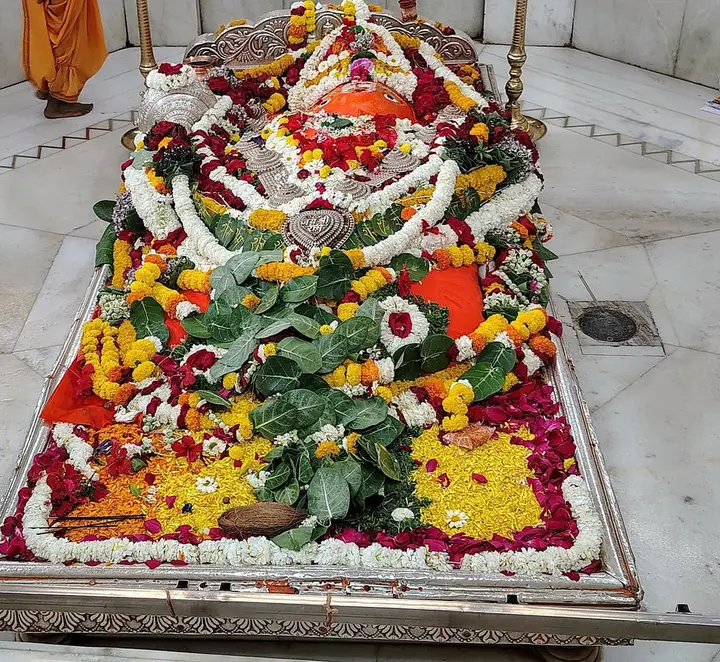
    A Hanuman temple in Khuldabad, 4 km before Ellora, known for its rare image of Hanuman lying down, as if resting. Local belief says Hanuman rested here after hearing a king sing Ram's praises.

    TemplesAbout 06:00 to 20:00. One listing gives a closure from 12:00 to 16:00, so go in the morning or evening. Free?

    Tip: Saturdays and Hanuman Jayanti bring long queues. The temple is on the main road through Khuldabad, so it is a quick stop.

  3. 2

    Grishneshwar Jyotirlinga

    45 min here
    Grishneshwar Jyotirlinga
    Photo: Rashmi.parab, CC BY-SA 3.0

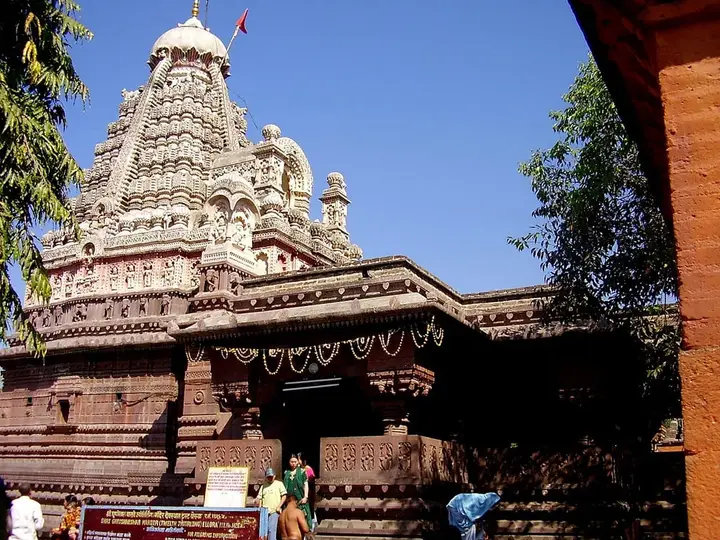
    One of the 12 Jyotirlinga temples of Shiva, about 1.5 km from the Ellora Caves. The red stone temple was rebuilt in the 18th century by Ahilyabai Holkar, and its walls are carved with gods and animals. Unlike most big temples, you can touch the linga yourself.

    TemplesAbout 05:30 to 21:30. Some listings say darshan is quieter or paused from about 12:00 to 16:00, so go in the morning or after 16:00. Free

    Tip: Men take off their shirt and vest to enter the inner shrine. Phones and cameras stay outside: leave them in the cab or at the counters. Mondays, and every day in the Shravan month, are very crowded.

  4. 3

    Ellora Caves and the Kailasa temple

    3 h 30 min here
    Closed on Tuesdays
    Ellora Caves and the Kailasa temple
    Photo: G41rn8, CC BY-SA 4.0

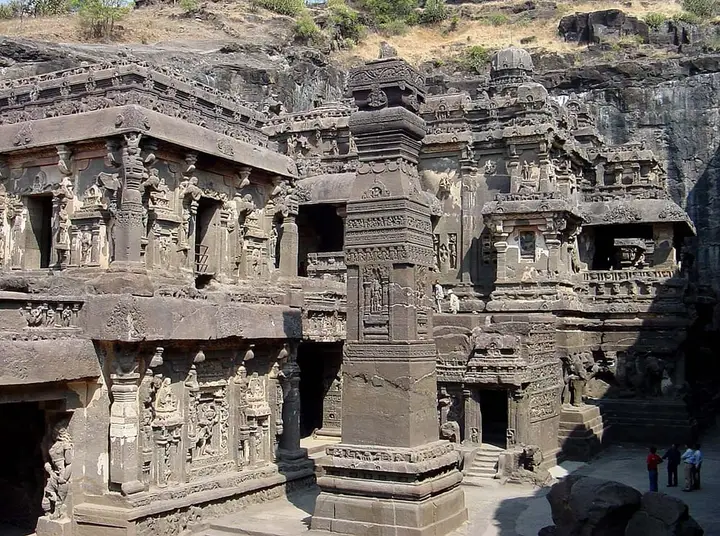
    34 caves along 2 km of cliff, made by Buddhists, Hindus and Jains between about the 6th and 10th centuries. The star is cave 16, the Kailasa temple: a whole temple, with elephants, towers and bridges, carved downwards from a single rock. Caves 10 (a Buddhist prayer hall with a ribbed ceiling) and the Jain caves 32 to 34 at the north end are worth the walk.

    CavesAbout 06:00 to 18:00 in some listings and 09:00 to 17:30 in others; plan inside 09:00 to 17:30. Closed on Tuesdays. Indians ₹40, foreigners ₹600, under 15 free. One ticket covers every cave

    Tip: Walk to the rock above the Kailasa temple for the view down into it. The Jain caves are about 1 km from the gate; an electric shuttle runs inside the site for a small fee. In the monsoon, small waterfalls come down over the caves.

  5. Back at central Aurangabad
Day 3

The Ajanta Caves

Leave at 07:00 for the Ajanta T-point near Fardapur, about 104 km away, and take the electric bus to the caves. The map says about 2 hours each way; allow 2.5 to 3 hours. About 4 hours at the caves, then lunch at the T-point before the drive back. About 208 km by cab, so with lunch and real road times expect to be back by about 17:30, not the 14:50 the map gives. With time to spare, the viewpoint across the gorge is 19 km round by road. Not on a Monday, when Ajanta is closed.

07:00 to 14:521 places208 km by cab
  1. 1Ajanta Caves
  2. Back
  1. Leave central Aurangabad
  2. 1

    Ajanta Caves

    4 h here
    Closed on Mondays
    Ajanta Caves
    Photo: Marcin Białek, CC BY-SA 4.0

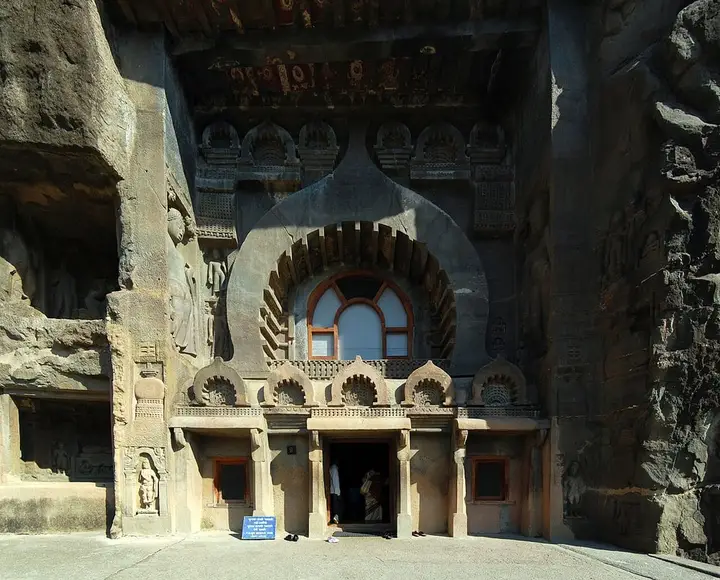
    About 30 Buddhist caves cut into a horseshoe-shaped cliff above the Waghora river, made between about the 2nd century BC and the 5th century AD. They were forgotten for centuries until a British officer out hunting spotted them in 1819. The walls are covered in paintings of the Buddha's lives, princes, dancers and animals, the finest old paintings in India. Caves 1, 2, 16 and 17 have the best of them; caves 19 and 26 are carved prayer halls.

    CavesOpen 09:00 to 17:00, closed on Mondays. Indians ₹40, foreigners ₹600, under 15 free. The bus from the T-point is about ₹25 to ₹30 each way

    Tip: Your cab stops at the T-point visitor centre near Fardapur, and electric buses run the last 4 km to the caves. Buy the bus ticket there. The path along the caves has steps; carry water. Flash photography is not allowed, and some caves let in only a few people at a time.

  3. Back at central Aurangabad

Drive times come from road routing without traffic. The road to Ajanta is about 100 km each way and usually takes 2.5 to 3 hours with town traffic and the ghat near the caves, longer than the map shows. Private cars stop at the Ajanta T-point near Fardapur; electric buses run the last 4 km to the caves. Ellora and Grishneshwar get very crowded on weekends, Mondays in Shravan and Mahashivratri. Opening hours marked ? are not yet confirmed, so check them before you go.

Book a cab for these 3 days

Call or message a local Aurangabad operator with this plan. Tell them your hotel and dates, and they send a price for the car and driver.

3 × full day, 8 h / 80 kmSedan, SUV or InnovaPrice from the operator

Opening times for this plan

The hours we planned around. Check before you go on a public holiday.

PlaceOpenBest timeVisit
Bibi Ka MaqbaraAbout 08:00 to 20:00, every day, and lit up after dark. Indians about ₹25, foreigners ₹300Early evening, when the marble turns gold and then the lights come on.1 h
Aurangabad CavesAbout 09:00 to 17:00, every day. Indians about ₹25?Morning, when the hill is cool and you often have the caves to yourself.1 h 15 min
Soneri Mahal09:00 to 17:00. One listing says closed on MondaysLate morning, between the caves and lunch.1 h
PanchakkiListings give 07:00 to 21:00 or 09:00 to 17:00; plan inside 09:00 to 17:00. Indians about ₹10?Any time of day; it is shady and close to the old city.45 min
Daulatabad Fort09:00 to 18:00, every day. Indians about ₹25Morning or late afternoon; the climb is hot at midday.2 h 30 min
Bhadra Maruti temple, KhuldabadAbout 06:00 to 20:00. One listing gives a closure from 12:00 to 16:00, so go in the morning or evening. Free?Early morning, on the way to Ellora.30 min
Grishneshwar JyotirlingaAbout 05:30 to 21:30. Some listings say darshan is quieter or paused from about 12:00 to 16:00, so go in the morning or after 16:00. FreeEarly morning, before Ellora opens.45 min
Ellora Caves and the Kailasa templeAbout 06:00 to 18:00 in some listings and 09:00 to 17:30 in others; plan inside 09:00 to 17:30. Closed on Tuesdays. Indians ₹40, foreigners ₹600, under 15 free. One ticket covers every caveMorning, before the rock heats up and the weekend crowds come.3 h 30 min
Ajanta Caves09:00 to 17:00, closed on Mondays. Indians ₹40, foreigners ₹600, under 15 free. The bus from the T-point is about ₹25 to ₹30 each wayArrive soon after 09:00, before the tour buses. The monsoon (July to September) brings the waterfall at the end of the gorge.4 h

More or less time in Aurangabad?

Questions people ask

Is 3 days too much for Aurangabad?

No. Three days lets you see Ellora and Ajanta without rushing, plus the city sights that most visitors skip. The Ellora day is a half day, so you have an afternoon free after the caves.

Which order should the three days go in?

Keep the city day off a Monday (Soneri Mahal), the Ellora day off a Tuesday and the Ajanta day off a Monday. Monday as the Ellora day, Tuesday as the Ajanta day and any day but Monday for the city works well.

Why is Daulatabad on the city day, not the Ellora day?

It keeps the Ellora day short. Daulatabad is 15 km from the city on the Ellora road, and the climb takes about 2 hours, so it fits after lunch on the city day.