Places to visit in Dharamshala, and the order to see them
Dharamshala's main sights fit in two days by cab. One day covers McLeodganj: Bhagsunag Temple and waterfall, the Dalai Lama temple, St John in the Wilderness, Naddi and the Tibet Museum. The other goes down to the HPCA cricket stadium, Norbulingka, Gyuto Monastery and the Chamunda Devi Temple. A third day reaches Kangra Fort. Triund is a full-day trek on foot.
18 placesroutes from road routing, timed against opening hours
How many days do you need?
Each plan is a real route by cab, timed against opening hours.
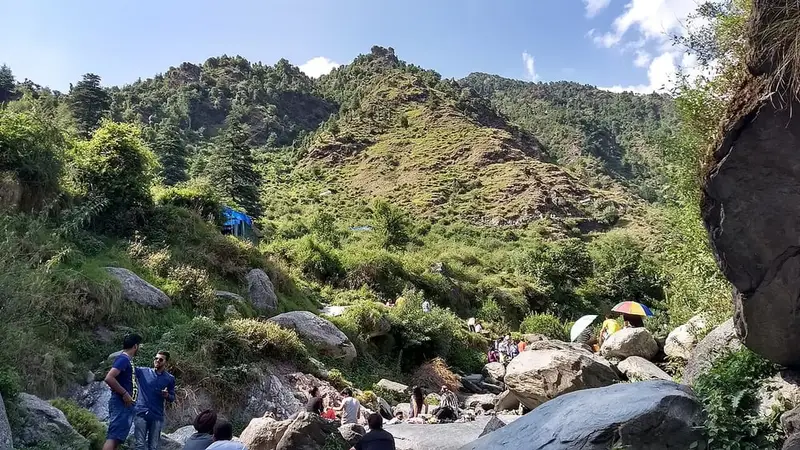
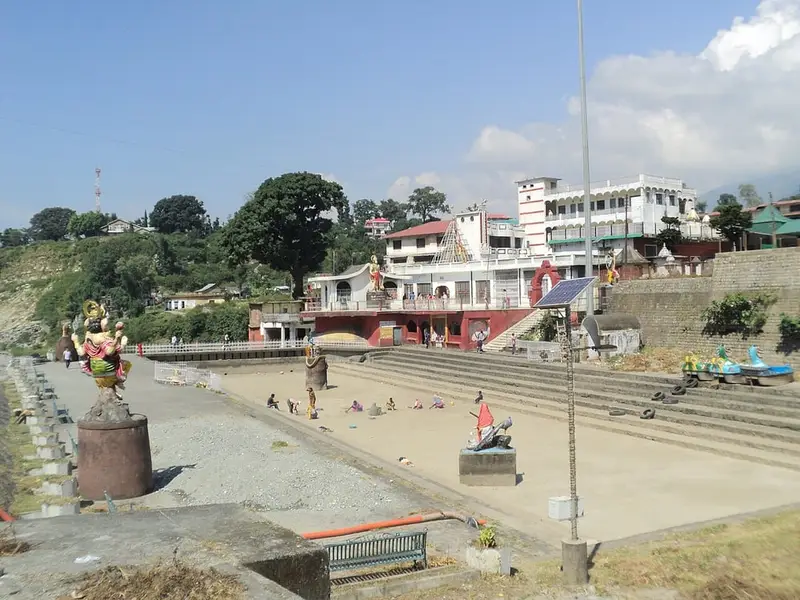
An old Shiva temple in Bhagsu village, 2 km east of McLeodganj, with two stone pools fed by a mountain spring. From the temple a paved path climbs about 1.5 km to the Bhagsu waterfall, which drops down a rock face above the village. There are small cafés along the way.
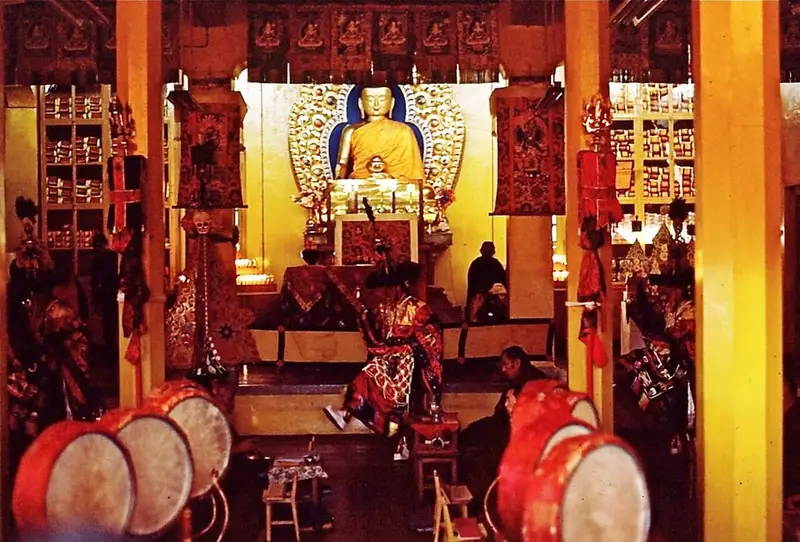
The main temple of the Dalai Lama, who lives next door. The complex holds a large gold Buddha, the Namgyal Monastery and a courtyard where young monks debate with loud claps. Pilgrims walk the kora, a path round the hill with prayer wheels and flags.
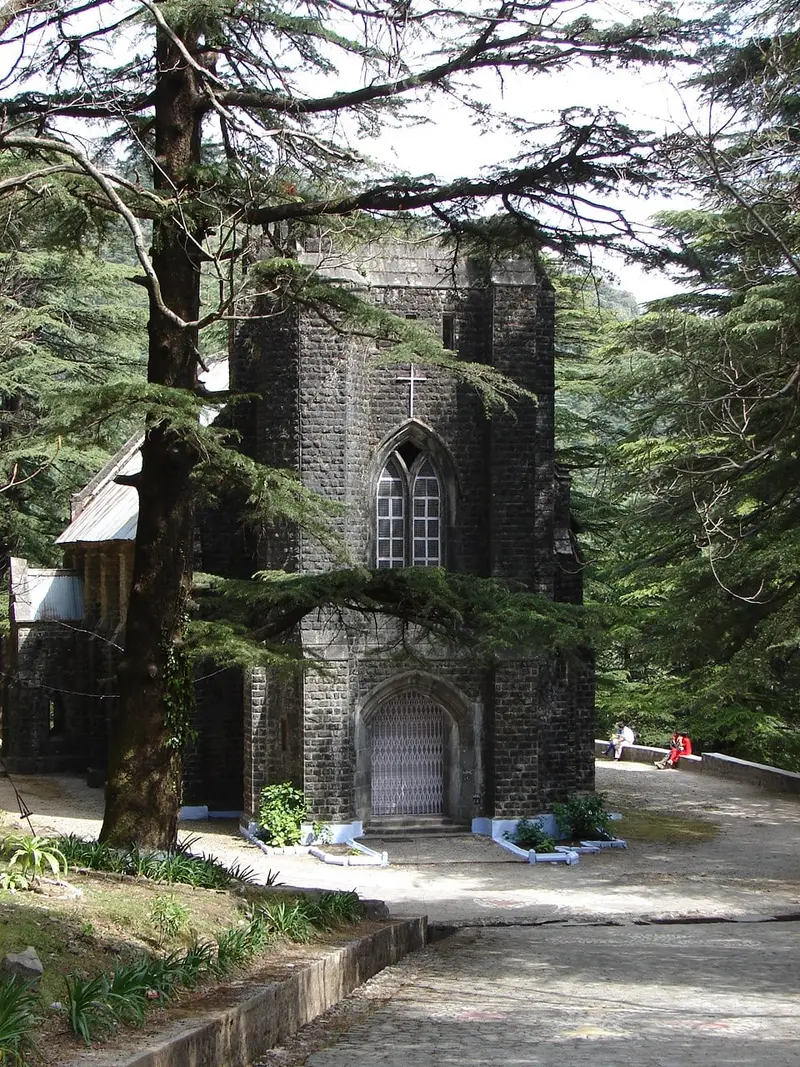
A grey stone church from 1852, in deodar forest on the road between McLeodganj and the Dharamshala cantonment. It has Belgian stained-glass windows, and Lord Elgin, a Viceroy of India who died here in 1863, is buried in the churchyard.
In the 1-day plan
Dal Lake, Tota Rani
20 min
Lakes & viewpoints
A small lake ringed by deodar trees on the road from McLeodganj to Naddi, with a Shiva temple on its bank. It is shallow and can be low on water before the monsoon. A fair is held here in early September.
Day 1 of the 2-day plan
Naddi viewpoint
40 min
Lakes & viewpoints
A village at the top of the road above McLeodganj, with the best view in town of the Dhauladhar range. The snow peaks look close enough to touch, and the Kangra valley falls away on the other side. Cafés along the road have terraces facing the peaks.
In the 1-day plan
Tibet Museum, Gangchen Kyishong
1 h
Forts & museums
The story of Tibet and its people in exile, told with photos, films and objects. Since 2022 it has been in a new building in Gangchen Kyishong, the Tibetan government's campus halfway down the hill, next to the Library of Tibetan Works and Archives.
Day 1 of the 2-day plan
McLeodganj market
1 h 30 min
Walks & markets
The streets that run off McLeodganj's main square: Jogiwara Road, Temple Road and Bhagsu Road. They are lined with Tibetan stalls selling prayer flags, singing bowls and woollens, and with cafés serving momos and thukpa.
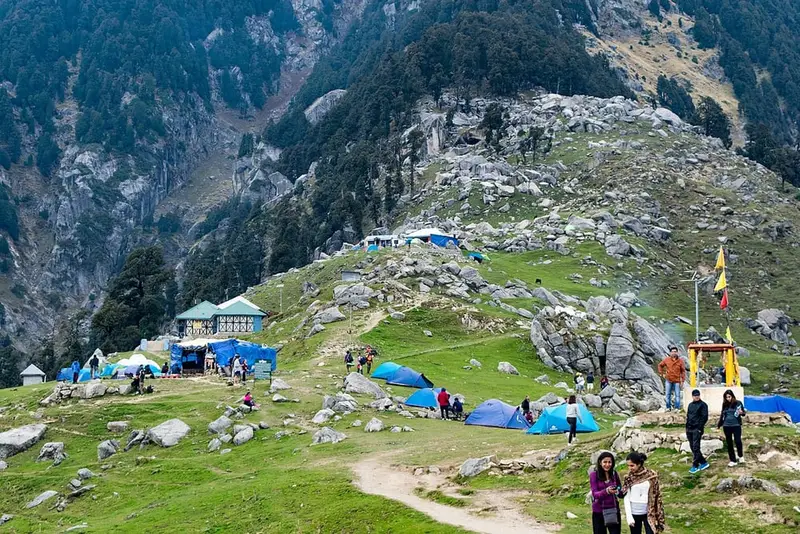
The most popular day trek in Himachal: a stone path from Gallu Devi above Dharamkot up to the Triund ridge at about 2,850 m, right under the Dhauladhar snow peaks. It is about 6 km each way.
Not in our plans. Add it if you have time.Photo: Brahmavadini, CC BY-SA 4.0
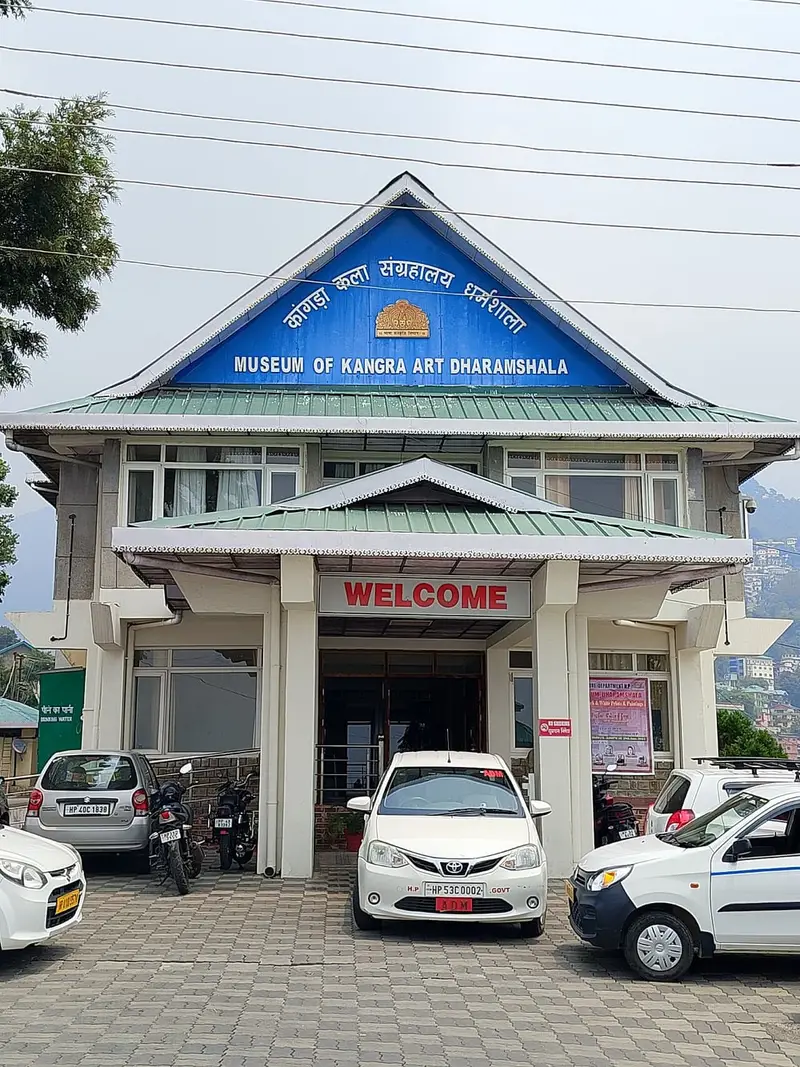
Kangra Art Museum
45 min
Forts & museums
A small state museum in Kotwali Bazaar, the main market of lower Dharamshala. It shows Kangra miniature paintings, the fine, bright court paintings this valley is known for, along with old coins, wood carving and tribal dress.
Day 2 of the 2-day plan
Dharamshala War Memorial
30 min
Forts & museums
A memorial garden in pine forest at the entrance to Dharamshala, for the soldiers of Himachal who died in India's wars. The names are cut into black stone panels round a tall monument, and there is a small museum.
Day 2 of the 2-day planPhoto: TheSereneRebel, CC BY-SA 4.0
HPCA Cricket Stadium
45 min
Walks & markets
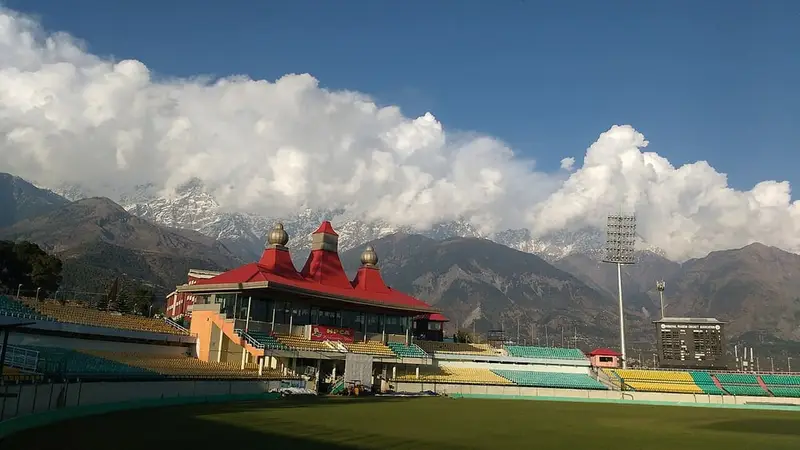
One of the highest international cricket grounds in the world, at about 1,450 m, with the Dhauladhar range rising straight behind the stands. India has played Tests, one-day games and IPL matches here.
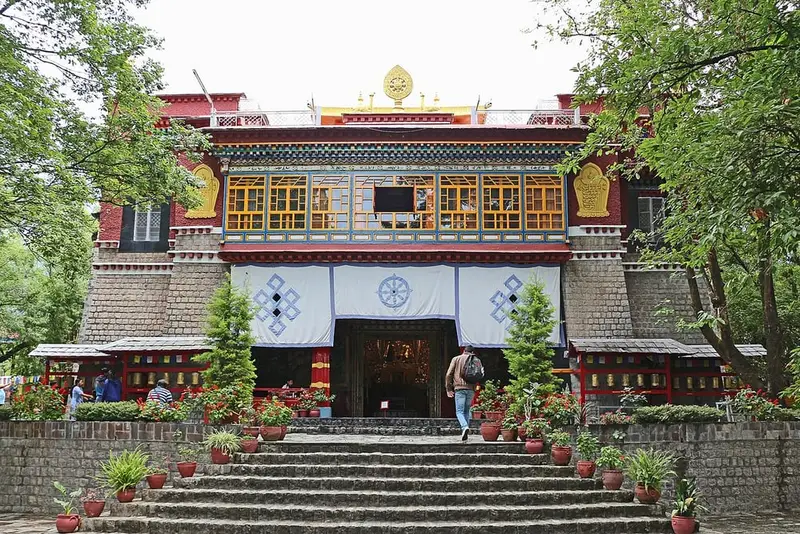
A centre for Tibetan arts in Japanese-style gardens with streams and small bridges, near Sidhbari. You can watch thangka painters, wood carvers and metal workers at work, see a temple with a large gold Buddha, and visit a doll museum of Tibetan dress.
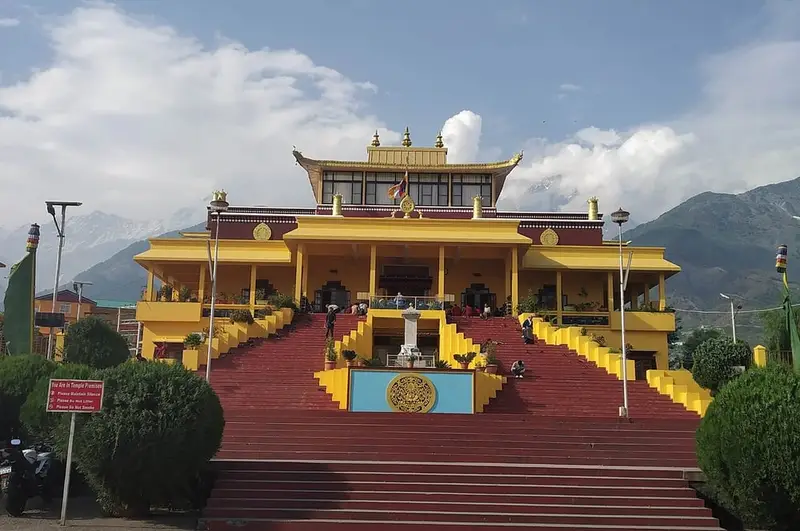
A large monastery in Sidhbari, home to monks known for their deep, low chanting. The big prayer hall has a gold Buddha, and the building stands in front of the Dhauladhar snow peaks.
Day 2 of the 2-day plan
Aghanjar Mahadev Temple
45 min
Temples & monasteries
A Shiva cave temple in Khaniyara village, east of Dharamshala, beside a mountain stream. Local people say Arjuna prayed here in the Mahabharata.
Not in our plans. Add it if you have time.Photo: Ashish3724, CC BY-SA 3.0
Chamunda Devi Temple
45 min
Temples & monasteries
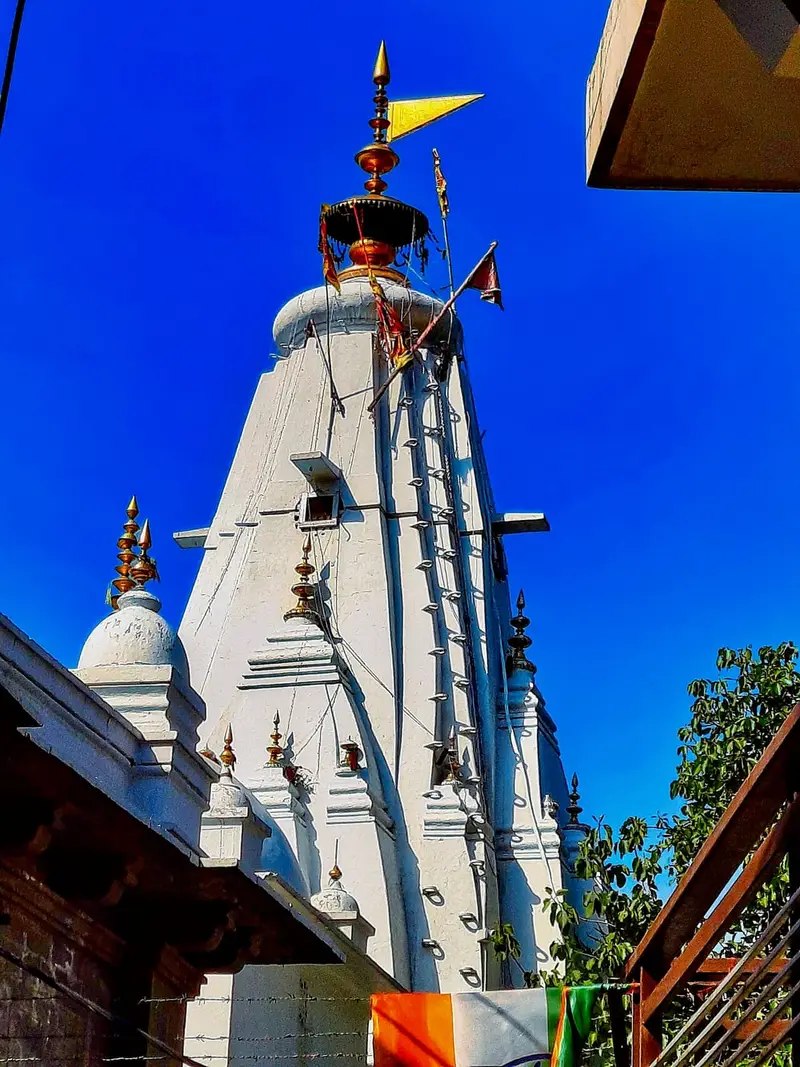
A big temple to the goddess Chamunda on the bank of the Baner river, about 15 km south-east of Dharamshala. It is one of the main pilgrim temples of Kangra, with a Shiva cave shrine and ghats by the river.
The main temple of Kangra town, to the goddess Vajreshwari, with silver-plated doors and a courtyard full of bells. It is one of the Shakti Peeths, and the lanes leading to it are lined with stalls selling offerings.
Day 3 of the 3-day planPhoto: Ajay Kumar, CC BY-SA 4.0
Kangra Fort
2 h
Forts & museums
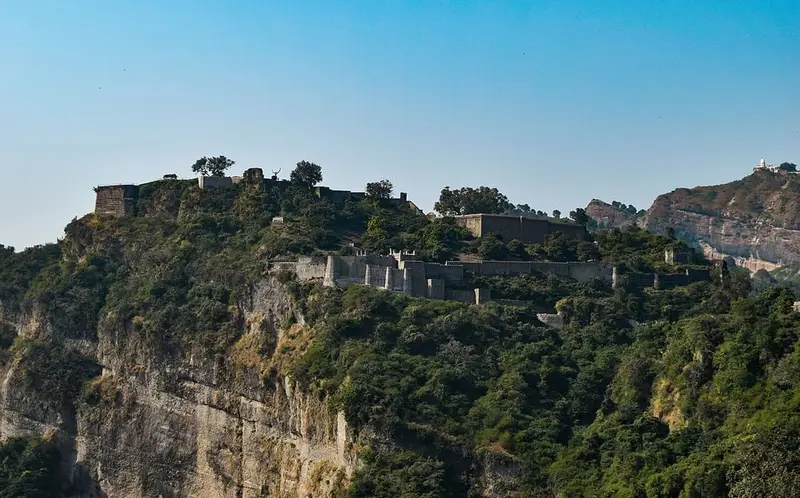
One of the oldest forts in India, on a ridge where the Banganga and Majhi rivers meet below Kangra town. Rajas, Mughals and Sikhs all held it. Much of it fell in the 1905 earthquake, but the gates, walls and temples on top still stand. The Maharaja Sansar Chand Museum is a few minutes' walk from the gate.
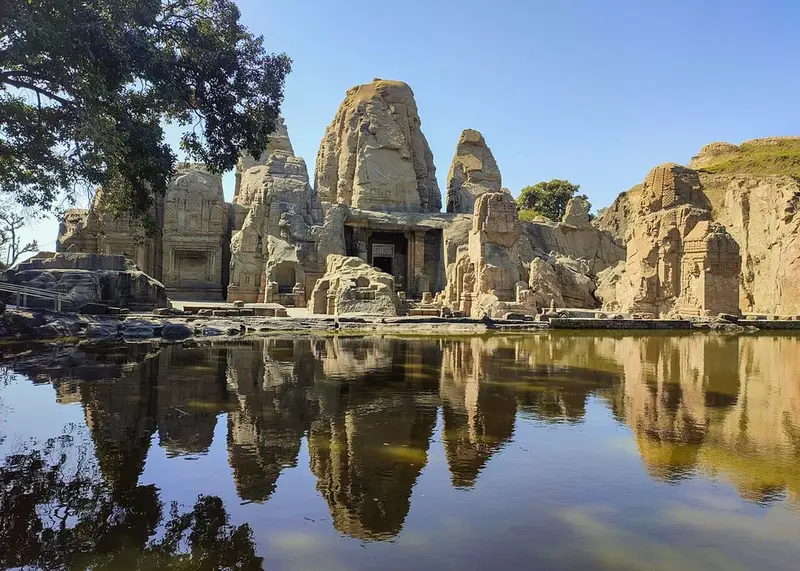
A group of temples carved out of one sandstone hill in the 8th century, often compared with Ellora. A pool in front holds their reflection, and stairs inside lead up to the roof for a view of the Dhauladhar range.
Not in our plans. Add it if you have time.
Questions people ask
How many days do you need for Dharamshala sightseeing?+
Two days covers it: one for McLeodganj, Bhagsu, Naddi and the Tibet Museum, one for the cricket stadium, Norbulingka, Gyuto and Chamunda. Add a third day for Kangra Fort, and a day on foot if you want to trek to Triund.
Is McLeodganj the same as Dharamshala?+
McLeodganj is upper Dharamshala, about 10 km above the lower town by road. It is where the Dalai Lama lives and where most visitors stay. The cricket stadium, the War Memorial and the main bus stand are in lower Dharamshala.
Can a cab drive into McLeodganj market?+
Only to the main square and the bus stand. The lanes off it, Jogiwara Road and Temple Road, are narrow and often one-way, so walk the market in the evening.
Can I do the Triund trek on a sightseeing day?+
No, it takes a full day on foot: about 6 km each way from Gallu Devi above Dharamkot. A cab can drop you at the start early in the morning. The forest entry fee is ₹100 per person.
Can I add Palampur or Baijnath?+
Palampur's tea gardens are about 35 km from Dharamshala and the Baijnath Temple about 50 km, so together they make a long day of their own. They do not fit on these plans.
Are the Masroor rock-cut temples worth it?+
Yes, if you like old temples: they were carved out of one hill in the 8th century. They are about 45 km past Kangra Fort, so the Kangra day would grow to over 130 km. Go on a separate day with the fort.
When do the snow peaks look best?+
On clear days from October to March. The peaks carry snow from about December to April. In the monsoon, July to September, clouds hide them most afternoons and the roads see landslides.