Amritsar sightseeing by cab
Places to visit in Amritsar, and the order to see them
Amritsar's main sights fit in one long day: the Golden Temple early, then Jallianwala Bagh and the Partition Museum on foot, Durgiana Temple, and the Wagah border ceremony in the evening. With two days, keep the old city with Ram Bagh and Gobindgarh Fort for one day, and Ram Tirath, Pul Kanjari and Wagah for the other. A third day goes south to the gurdwaras of Tarn Taran, Khadoor Sahib and Goindwal.
13 placesroutes from road routing, timed against opening hours
How many days do you need?
Each plan is a real route by cab, timed against opening hours.
© OpenStreetMap contributors
1 day
Golden Temple, Jallianwala Bagh and the Wagah border
5 places · 64 km by cab
See the plan →© OpenStreetMap contributors
Most people
2 days
The Golden Temple and the old city · Ram Tirath, Pul Kanjari and the Wagah border
10 places · 98 km by cab
See the plan →© OpenStreetMap contributors
3 days
The Golden Temple and the old city · Ram Tirath, Pul Kanjari and the Wagah border · Tarn Taran, Khadoor Sahib and Goindwal
13 places · 196 km by cab
See the plan →Cab for Amritsar sightseeing
Call or message a local Amritsar operator with this plan. Tell them your hotel and dates, and they send a price for the car and driver.
Full day, 8 h / 80 kmSedan, SUV or InnovaPrice from the operator
Opening times of Amritsar's top sights
With the best time to go and how long to stay.
| Place | Open | Best time | Visit |
|---|---|---|---|
| Golden Temple (Sri Harmandir Sahib) | The complex and the langar are open day and night, every day. The sanctum opens at about 03:00 in winter (02:00 in summer) and the Guru Granth Sahib is carried back to the Akal Takht at about 21:45 in winter (about 22:45 in summer). Free | Early morning, when the marble is cool and the queue is short, or late evening, when the temple is lit up. | 2 h 30 min |
| Jallianwala Bagh | About 06:30 to 19:00 (19:30 in one listing); winter hours may be shorter. Free | Morning, straight after the Golden Temple. It is a few minutes' walk away. | 45 min |
| Partition Museum, Town Hall | 10:00 to 18:00, closed on Mondays and on 26 January, 15 August and 2 October. Indians ₹10, foreigners ₹250 | Late morning, after the Golden Temple and Jallianwala Bagh. | 1 h 15 min |
| Durgiana Temple | About 06:00 to 22:00 every day. Free | Any time; the evening aarti is the liveliest. | 45 min |
| Gobindgarh Fort | About 10:00 to 22:00 every day. The light and sound show starts after dark, at about 20:15. Ticket packages from about ₹200 to ₹650 | Afternoon, or after dark for the light and sound show. | 1 h 30 min |
| Maharaja Ranjit Singh Panorama and Ram Bagh | About 10:00 to 17:00, closed on Mondays and public holidays. About ₹10 to ₹40. The garden itself is open all day | Early afternoon, when the old city is hot and crowded. | 1 h |
| Mata Lal Devi Temple | About 05:00 to 23:00 every day. Free | Morning, before the afternoon crowds. | 40 min |
| Ram Tirath (Bhagwan Valmiki Tirath) | About 06:00 to 20:00 every day. Free | Late morning, when it is quiet. | 1 h |
| Pul Kanjari | About 10:00 to 17:30. Free? | Early afternoon, on the way to the Wagah border. | 30 min |
| Wagah border retreat ceremony (Attari) | Every day. From 16 October 2026 the ceremony is 17:00 to 17:30; in summer (from May) it moves to about 18:00. Get through security 1.5 to 2 hours before it starts. Free, no booking | Afternoon: be at the gate by 15:00 in winter, or an hour later in summer. | 3 h |
All 13 places to visit in Amritsar
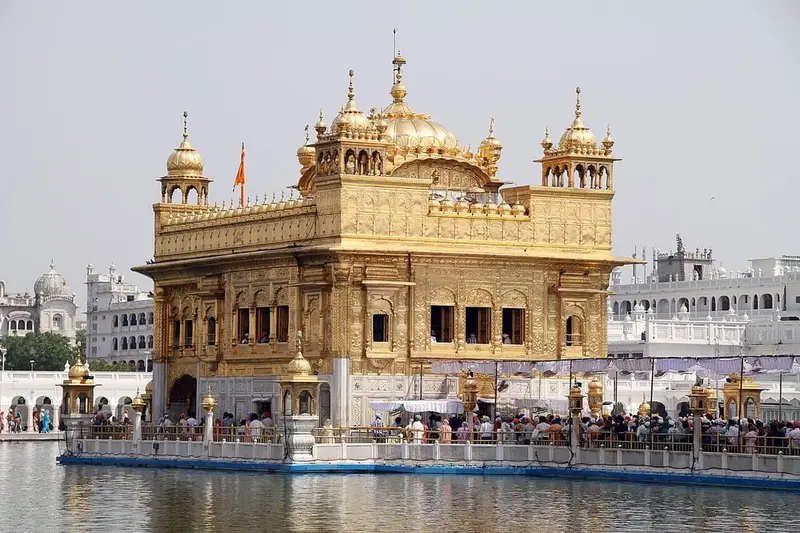

Golden Temple (Sri Harmandir Sahib)
2 h 30 minThe holiest gurdwara of the Sikhs: a gold-covered temple in the middle of a large pool, the Amrit Sarovar, reached by a marble causeway. Hymns from the Guru Granth Sahib are sung inside all day. Around the pool are the Akal Takht, the seat of Sikh authority, and the Central Sikh Museum. The langar, the free kitchen, serves a simple meal to tens of thousands of people a day, whoever they are, and you can sit on the floor and eat with everyone else.
In the 1-day plan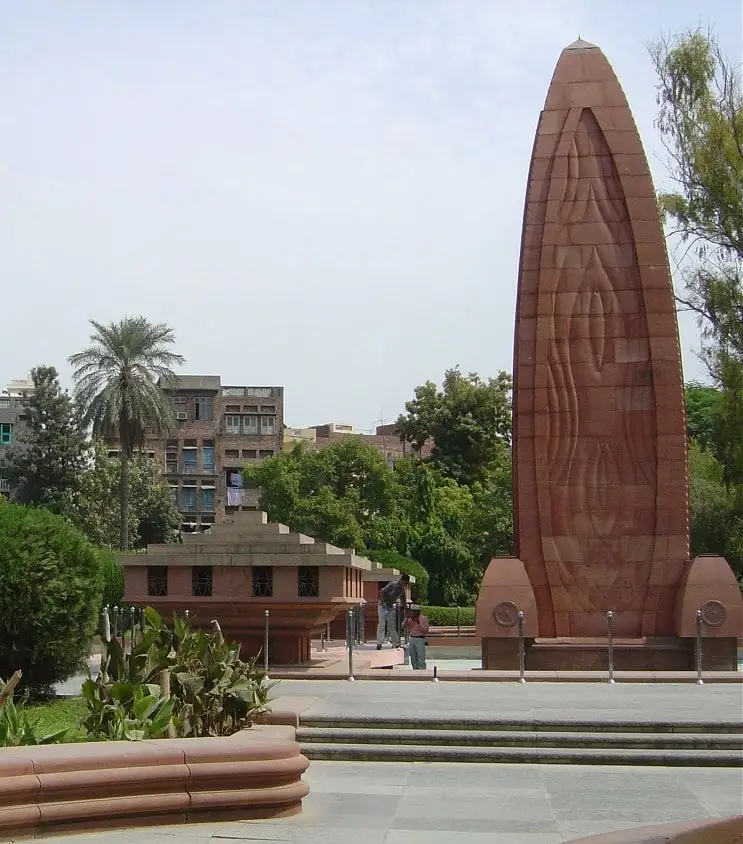

Jallianwala Bagh
45 minThe walled garden where, on 13 April 1919, British troops under General Dyer fired on a peaceful crowd with no warning, killing hundreds of people. The only way out was a narrow lane, now the entrance. You can still see bullet marks in the walls and the Martyrs' Well, where many jumped to escape. A tall red stone memorial stands in the middle, and galleries tell the story.
In the 1-day plan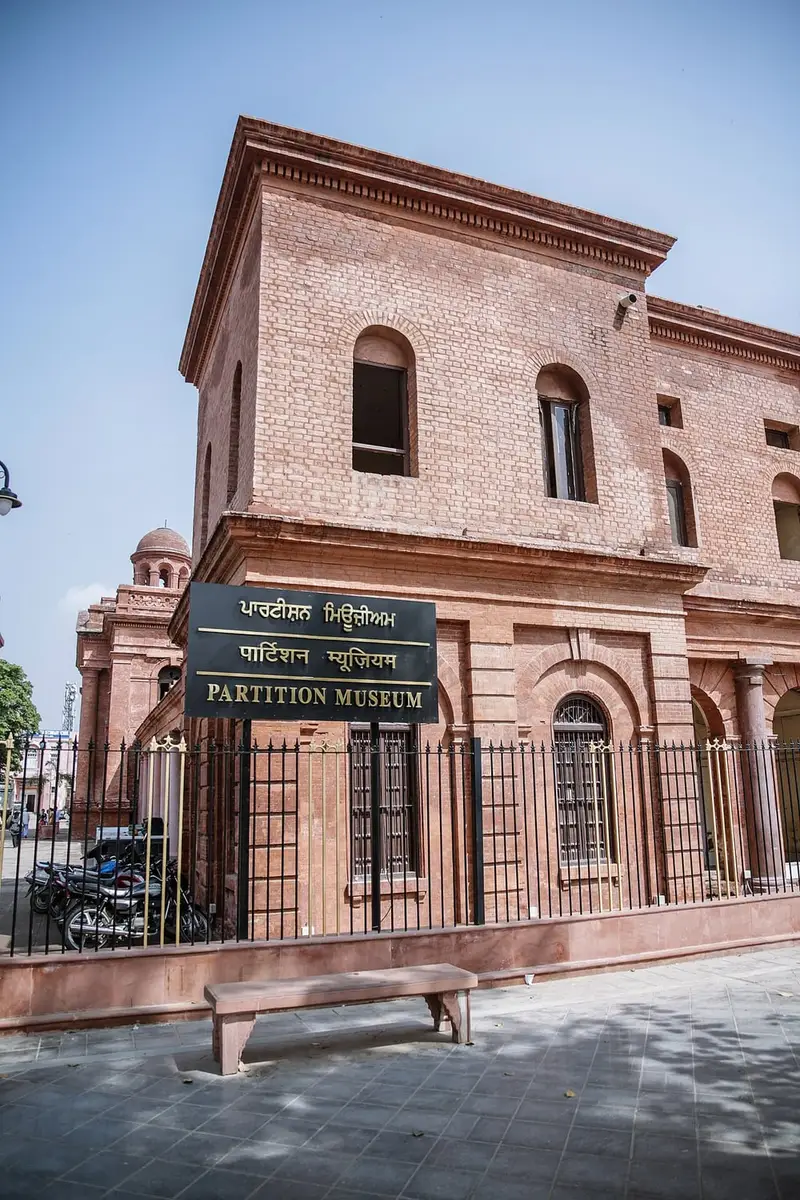

Partition Museum, Town Hall
1 h 15 minA museum in the old red-brick Town Hall about the 1947 Partition of India, when Punjab was cut in two and millions of people crossed the new border. It tells the story through letters, suitcases, photos and the recorded voices of people who lived through it. Amritsar was the first big city on the Indian side, which is why the museum is here.
In the 1-day plan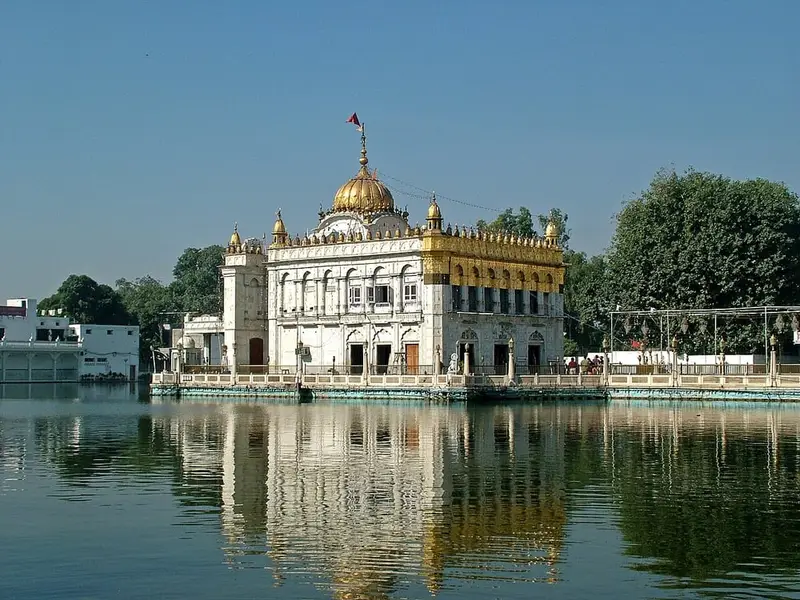

Durgiana Temple
45 minA Hindu temple to Lakshmi and Narayan, also called the Lakshmi Narayan or Silver Temple. Like the Golden Temple, it sits in the middle of a large tank and is reached by a bridge, and its domes are gilded. The silver doors carved with Hindu stories give it its other name. Near it are the Bada Hanuman temple and the Sita Mata temple.
In the 1-day plan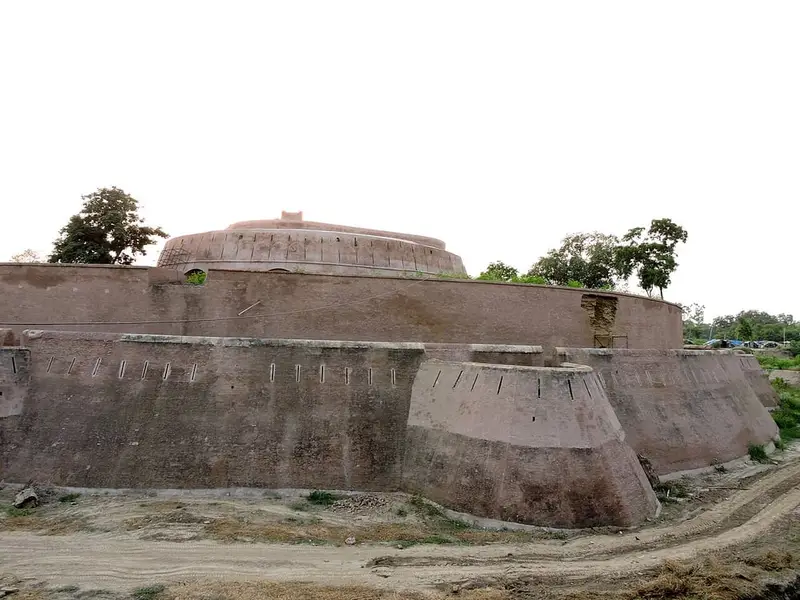

Gobindgarh Fort
1 h 30 minAn 18th-century brick fort that Maharaja Ranjit Singh made strong enough to hold the Koh-i-Noor diamond in its treasury. The army used it until 2006; it is now a living museum with a coin museum, a Toshakhana (treasure house), Punjabi folk dances, food stalls and a 7D film on Ranjit Singh. In the evening a light and sound show tells its story on the walls.
Day 1 of the 2-day plan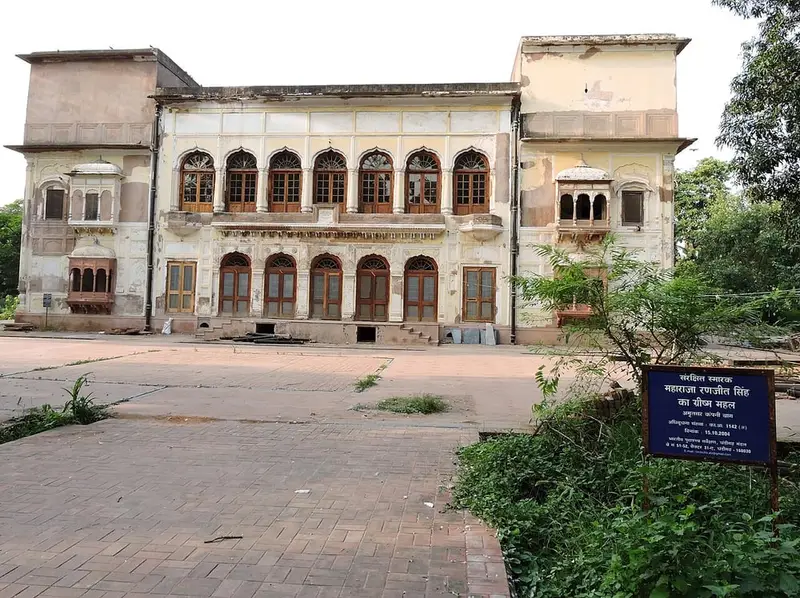

Maharaja Ranjit Singh Panorama and Ram Bagh
1 hRam Bagh is a large garden laid out by Maharaja Ranjit Singh, the Sikh ruler of Punjab, with his summer palace inside. The Panorama is a round building with a huge painted scene of his battles all the way round, with life-size figures in front, and a sound track that tells the story of his rule.
Day 1 of the 2-day plan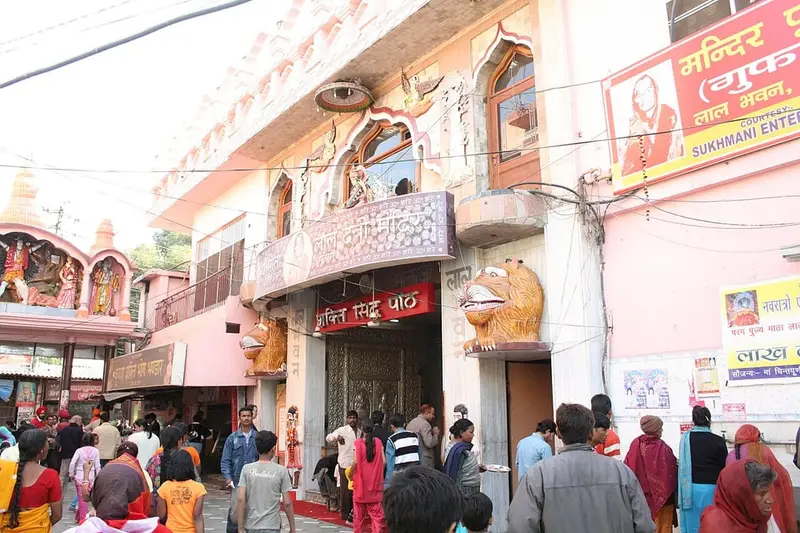

Mata Lal Devi Temple
40 minA temple to Lal Devi, a woman saint of the 20th century, built like the cave shrine of Vaishno Devi. You walk through low tunnels and caves, sometimes ankle-deep in water, past shrines to many goddesses. Many couples come here to pray for a child.
Day 2 of the 2-day plan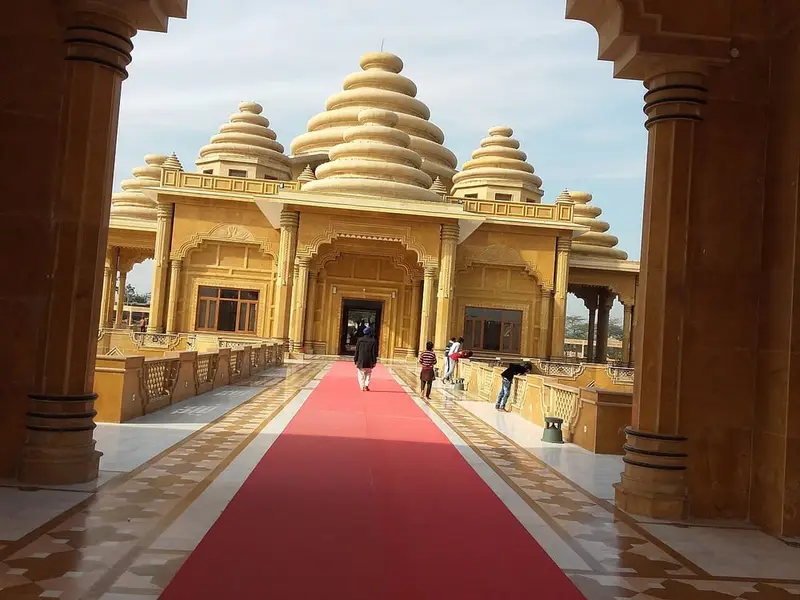

Ram Tirath (Bhagwan Valmiki Tirath)
1 hThe place where the sage Valmiki is said to have had his ashram, and where Sita gave birth to Luv and Kush. A large new temple to Valmiki, finished in 2016, stands beside a big tank with old shrines round it. A fair is held here in November.
Day 2 of the 2-day plan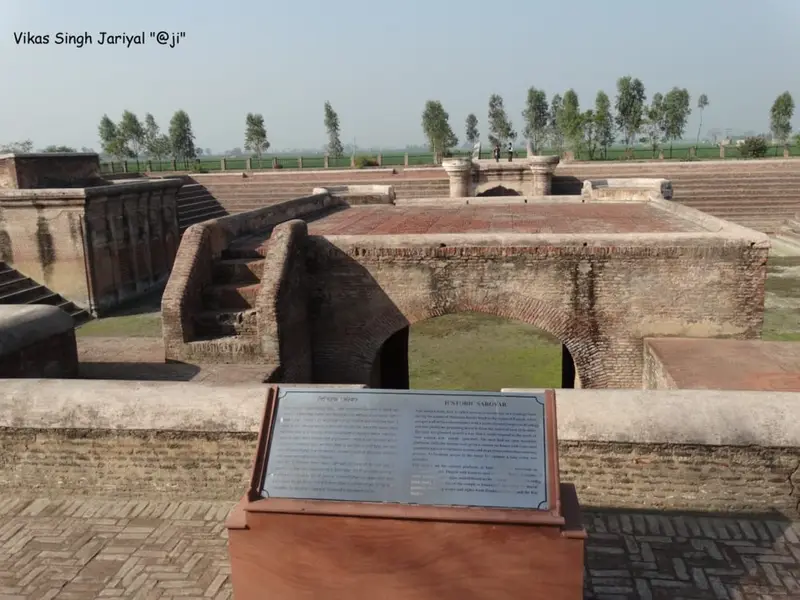

Pul Kanjari
30 minA small heritage village a few kilometres from the border, where Maharaja Ranjit Singh stopped to rest on his way to Lahore. He built a bridge, a pool for bathing, a baradari (an open pavilion), a temple, a gurdwara and a mosque, side by side. A memorial nearby remembers the soldiers who fought here in the 1971 war.
Day 2 of the 2-day plan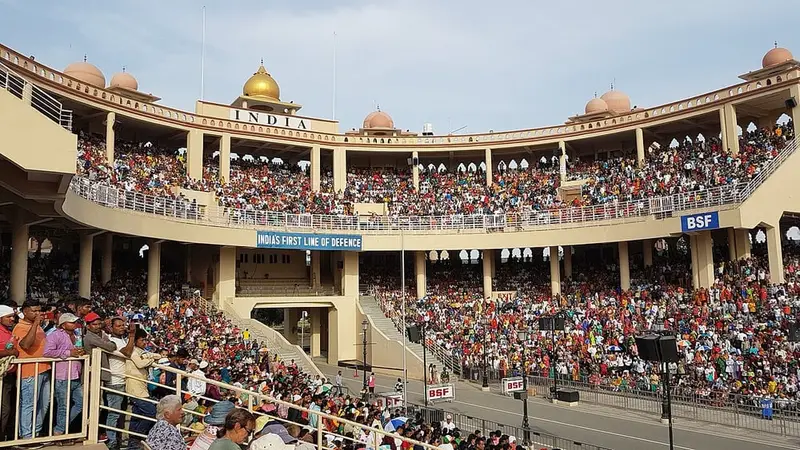

Wagah border retreat ceremony (Attari)
3 hEvery evening Indian and Pakistani soldiers lower their flags at the border in a loud, high-kicking parade, with crowds cheering from stands on both sides. On the Indian side there is music and dancing before it starts. Since May 2025 the ceremony has been shorter: the gates stay shut and there is no handshake between the two sides.
In the 1-day plan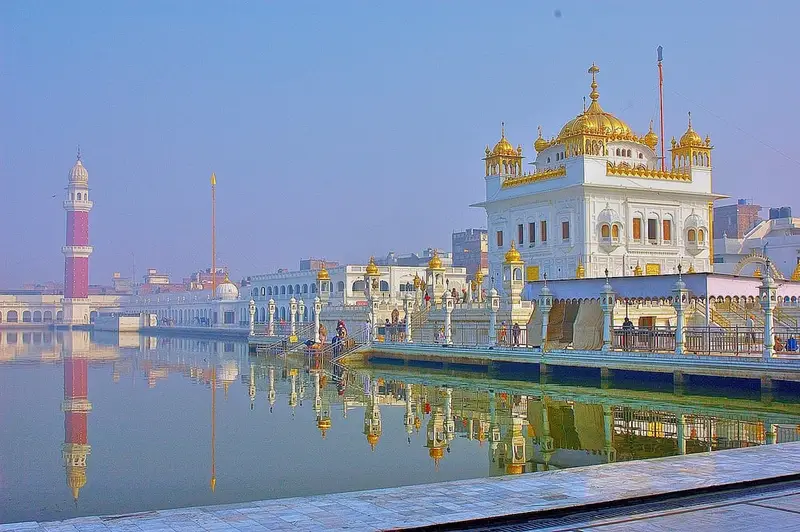

Sri Tarn Taran Sahib
1 hA gurdwara founded by Guru Arjan Dev, the fifth Sikh Guru, beside what is said to be the largest sarovar (holy tank) of any gurdwara. The temple is three storeys tall with a gold dome, and pilgrims walk round the wide tank. It is busiest on Amavas, the new moon.
Day 3 of the 3-day planKhadoor Sahib
45 minA quiet village where Guru Angad Dev, the second Sikh Guru, lived and taught for 13 years and where Guru Amar Das served him. The main gurdwara has a large white marble hall, and Gurdwara Thara Sahib next to it marks the platform where Guru Angad sat.
Day 3 of the 3-day plan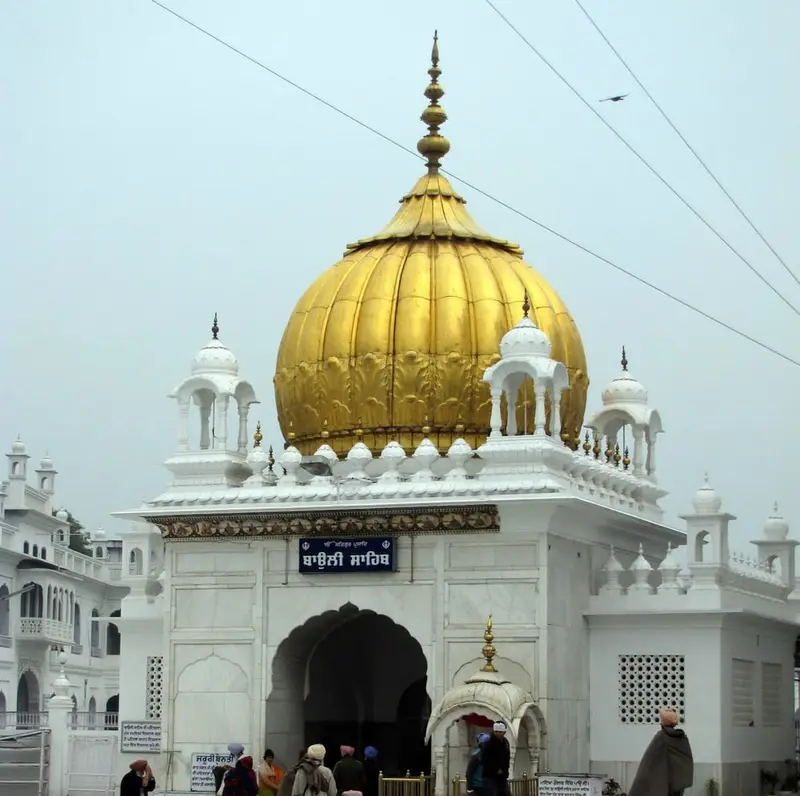

Goindwal Sahib (Baoli Sahib)
1 hA town on the Beas river founded by Guru Amar Das, the third Sikh Guru, who made it the first big centre of the Sikh faith. Its Baoli Sahib is a deep stepwell with 84 steps down to the water; pilgrims say a prayer on each step. Guru Arjan Dev, the fifth Guru, was born here.
Day 3 of the 3-day planQuestions people ask
How many days do you need for Amritsar?
One long day covers the Golden Temple, Jallianwala Bagh, the Partition Museum and the Wagah border ceremony. Two days are easier: the old city on one day, and the Wagah border with Ram Tirath and Pul Kanjari on the other. A third day takes you to the gurdwaras of Tarn Taran and Goindwal.
What are the Golden Temple timings?
The Golden Temple complex and its langar are open day and night, every day, and entry is free. The inner temple opens at about 03:00 in winter and about 02:00 in summer. At night, at about 21:45 in winter and about 22:45 in summer, the Guru Granth Sahib is carried in a palki (palanquin) to the Akal Takht; it comes back early in the morning. Both are worth seeing.
Can a cab drive up to the Golden Temple?
No. Heritage Street, from the Town Hall to the temple, is for walking only. Cabs drop at the Saragarhi multi-storey parking next to the Town Hall, about 600 m from the main gate. Jallianwala Bagh and the Partition Museum are on the same walk.
What should I wear at the Golden Temple?
Cover your head: men and women both, and scarves are handed out free at the gate. Wear clothes that cover your shoulders and knees. Leave shoes and socks at the free shoe stand and wash your feet at the entrance. No tobacco or alcohol. Photos are fine round the pool but not inside the temple.
Can tourists eat at the Golden Temple langar?
Yes. The langar is a free kitchen open to everyone, whatever their faith, day and night. You sit on the floor in rows and are served dal, a vegetable, rotis and kheer. You can also help with the cooking or washing up.
What time is the Wagah border ceremony?
Every evening, at a time that changes with the season. From 16 October 2026 it is 17:00 to 17:30; in summer (from May) it moves to about 18:00. Be through security 1.5 to 2 hours before it starts: on busy days the gates close up to an hour early. It is 29 km from the city, about 45 minutes by cab without traffic.
Is there still a handshake at the Wagah border?
No. Since May 2025 the ceremony has been shorter: the gates stay shut while the flags come down, and the soldiers of the two sides do not shake hands. The parade, the music and the crowds are still there. We found no news that this has changed in 2026.
What can I take to the Wagah border ceremony?
No bags, not even small ones, and no food. Phones, wallets and cameras in your pocket are fine. Carry a photo ID; foreigners must show their passport and have a separate queue. Entry is free and there is no booking or official VIP pass.
Is the War Heroes' Memorial worth a stop?
The Punjab State War Heroes' Memorial and Museum, on the Attari road, has a tall sword-shaped memorial and galleries on Punjab's soldiers. It is not in these plans because listed hours do not agree; add it on the way to Wagah if you have an hour.
What is Sadda Pind?
A recreated Punjabi village on the edge of Amritsar, with mud houses, folk music, crafts and Punjabi food. It is a ticketed resort sold as a day or evening package, about ₹700 to ₹900 a person, so it is not in these plans. Many people go for dinner after a day of sightseeing.
Where can I walk in the evening?
Heritage Street, from the Town Hall to the Golden Temple, is lit up at night and full of people. Hall Bazaar, from Hall Gate, is the old shopping street for phulkari, juttis and dry fruit. The Golden Temple itself is beautiful after dark, and you can stay for the palki procession at about 21:45.
When is the best time to visit Amritsar?
October to March, when days are cool; December and January can be foggy and cold at night. April to June is very hot, often over 40°C. The Golden Temple is lit with lamps on Diwali (Bandi Chhor Divas) and Guru Nanak's birthday in November, and Baisakhi on 13 or 14 April brings big crowds.