Places to visit in Khajuraho, and the order to see them
Khajuraho's temples fit in one day by cab: the Western Group, the Archaeological Museum and Chausath Yogini in the morning, then the Jain, Eastern and Southern temples. A second day adds the Raneh Falls canyon and the Adivart tribal museum. A third goes to Panna Tiger Reserve for a morning safari and Pandav Falls. The light and sound show at the Western Group is on foot in the evening.
12 placesroutes from road routing, timed against opening hours
How many days do you need?
Each plan is a real route by cab, timed against opening hours.
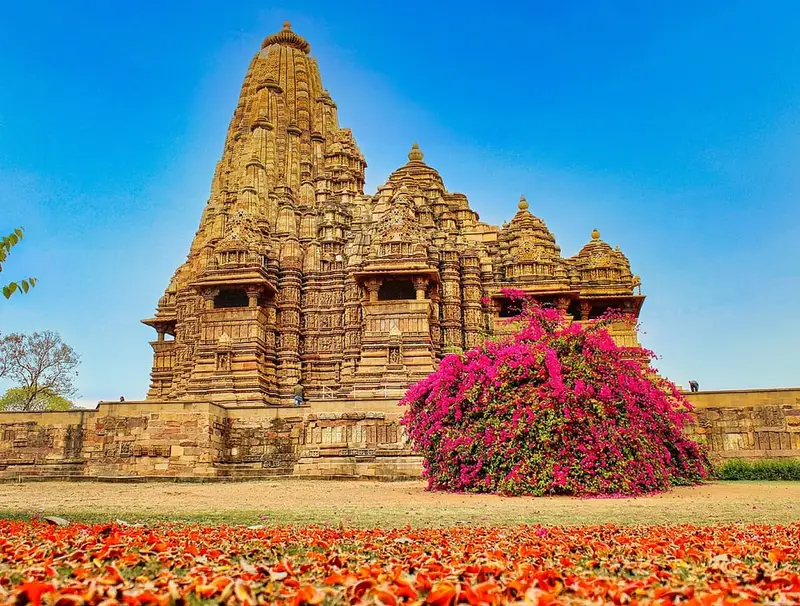
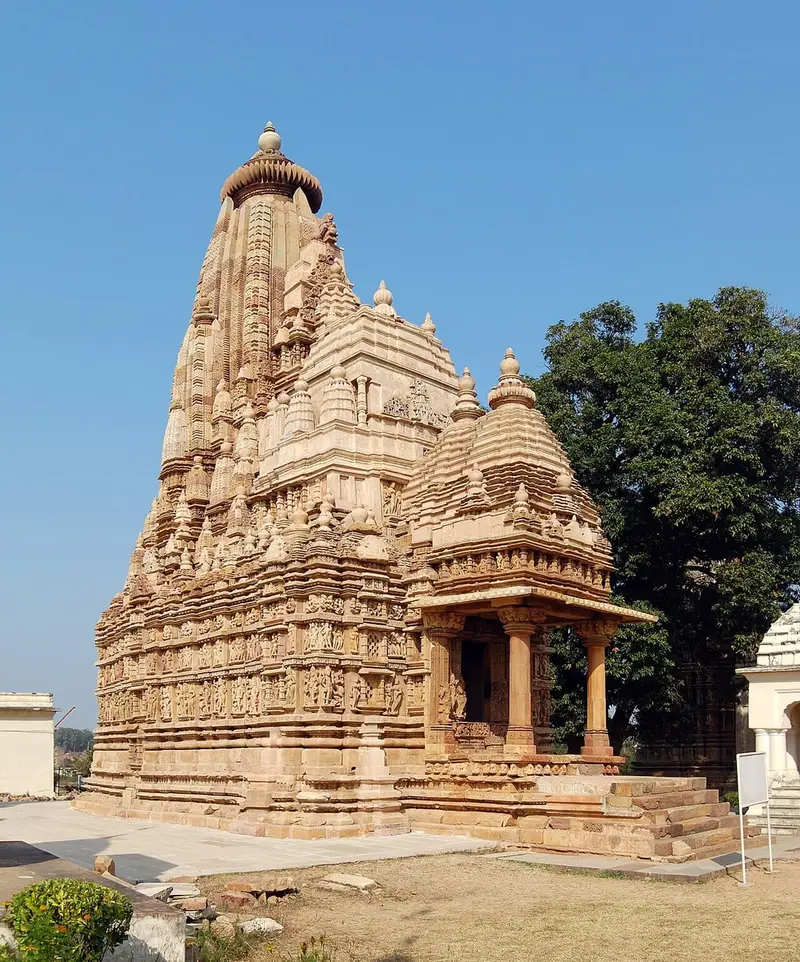
The main temple park of Khajuraho and the reason most people come. Inside a garden are the biggest temples, built by the Chandela kings about 1,000 years ago: Kandariya Mahadeva, Lakshmana, Vishwanatha, Chitragupta, Devi Jagadambi and the Varaha shrine. Every wall is covered in carved figures of gods, dancers, musicians, soldiers and couples. Matangeshwar Temple, by the gate, is the only one still in daily worship.
In the 1-day planPhoto: SpeakingArch, CC BY-SA 4.0
Archaeological Museum
45 min
Museums
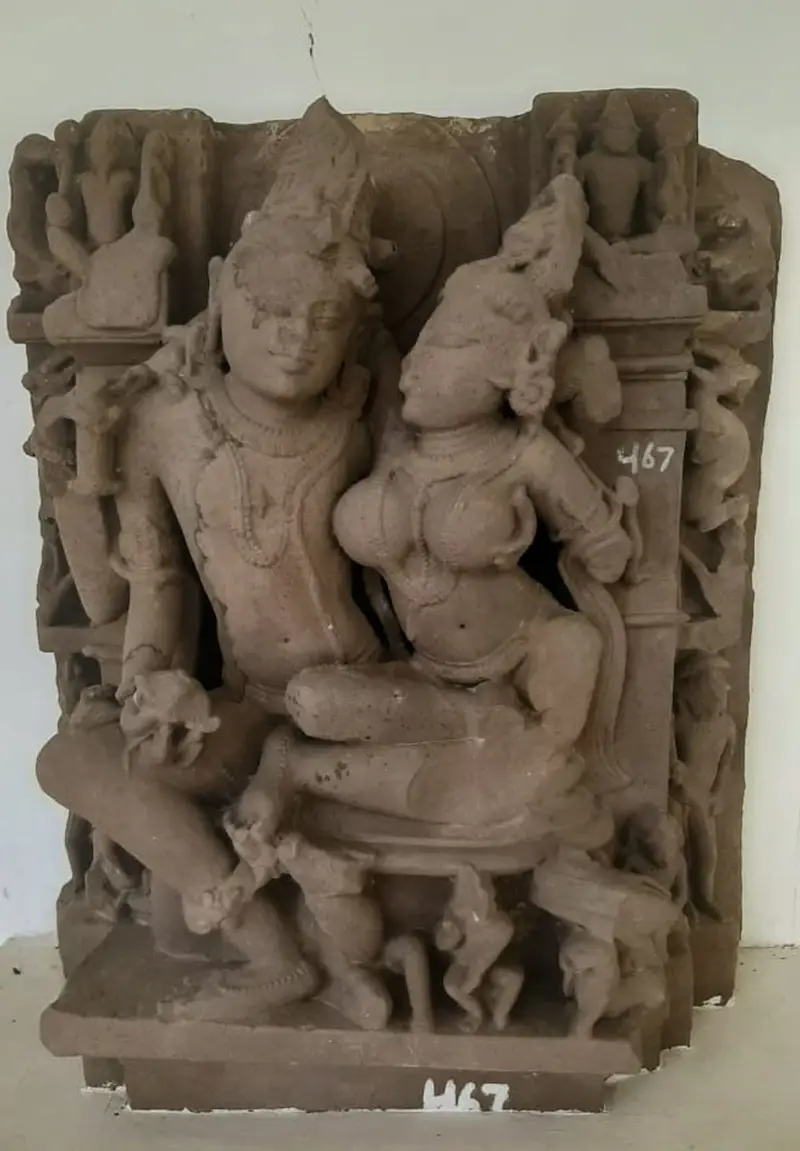
The Archaeological Survey of India's museum of Khajuraho sculpture, opposite the Western Group. It holds statues and carved panels found round the temples, including a dancing Ganesha, and they are easier to see up close here than high on a temple wall. There is also a newer gallery building, opened in 2016, about 1 km north of the temples.
In the 1-day planPhoto: Arnold Betten, Public domain
Chausath Yogini Temple
30 min
Temples
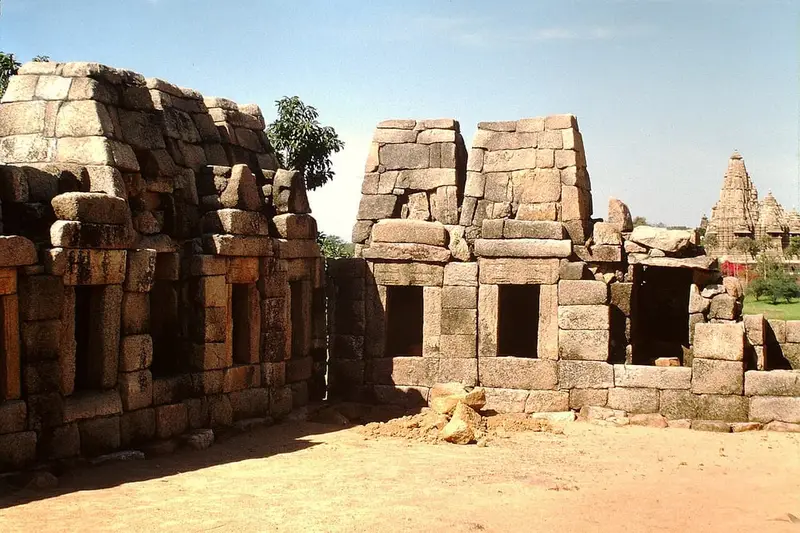
The oldest temple site in Khajuraho, older than the Western Group. It is built of rough granite, not the smooth sandstone of the later temples, and is a rectangle of small empty shrines round an open court, on a low rise above Shiv Sagar lake. There are no carvings left, but it is quiet and few people come.
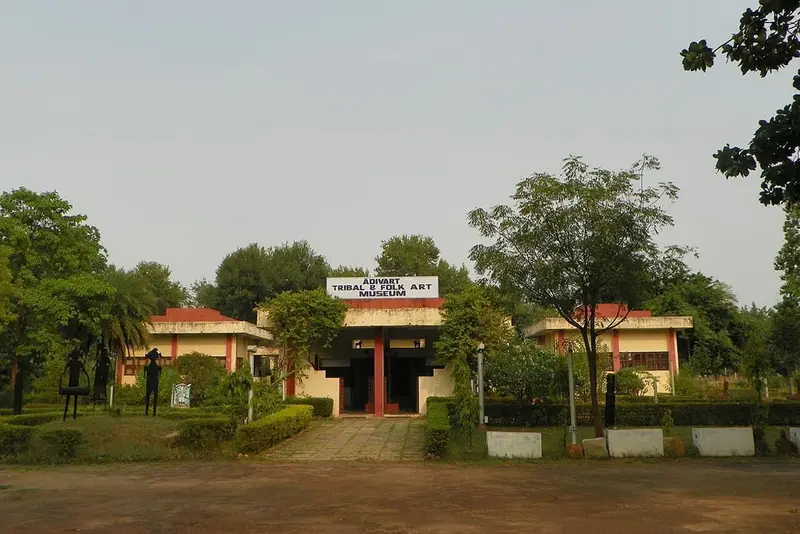
A state museum of the tribes and folk arts of Madhya Pradesh. It has full-size village houses built by the communities themselves, painted walls, masks, metal work and everyday objects, with signs in Hindi and English. A change from the temples, and it stays open into the evening.
Day 1 of the 2-day planPhoto: Marcin Białek, CC BY-SA 4.0
Jain temples (Eastern Group)
1 h
Temples
A walled compound of Jain temples that are still in use. Parshvanath is the finest, with carvings as fine as the Western Group's; Adinath stands next to it, and Shantinath holds a tall standing statue of the Tirthankara. A small Jain art museum is by the gate.
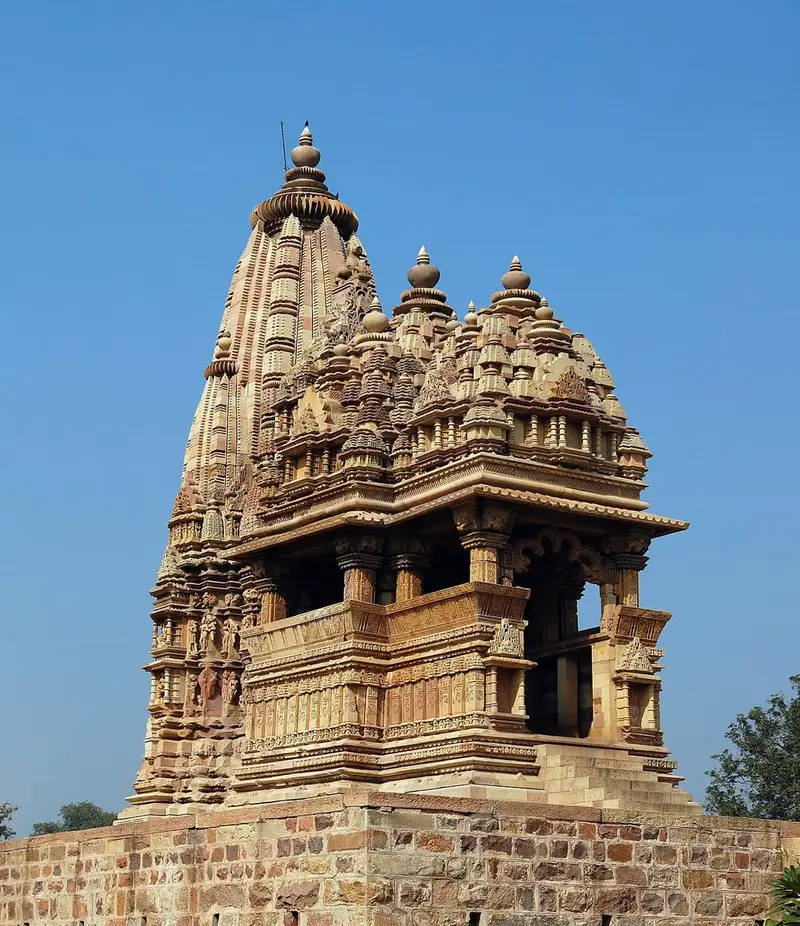
Three small temples of the Eastern Group, near the old village of Khajuraho. Javari has a tall, slim tower and a carved gateway; Vamana has figures of heavenly women on its walls; the Brahma Temple, by Ninora Tal pond, is one of the oldest here. They are free and usually quiet.
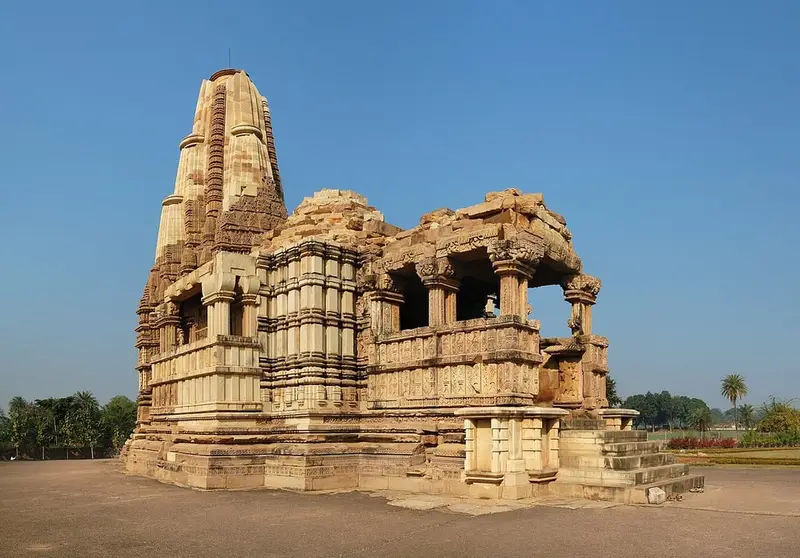
A Shiva temple of the Southern Group by the Khudar river, one of the last built at Khajuraho. Its carvings of dancers and heavenly women are crowded and lively, with jewellery cut in fine detail.
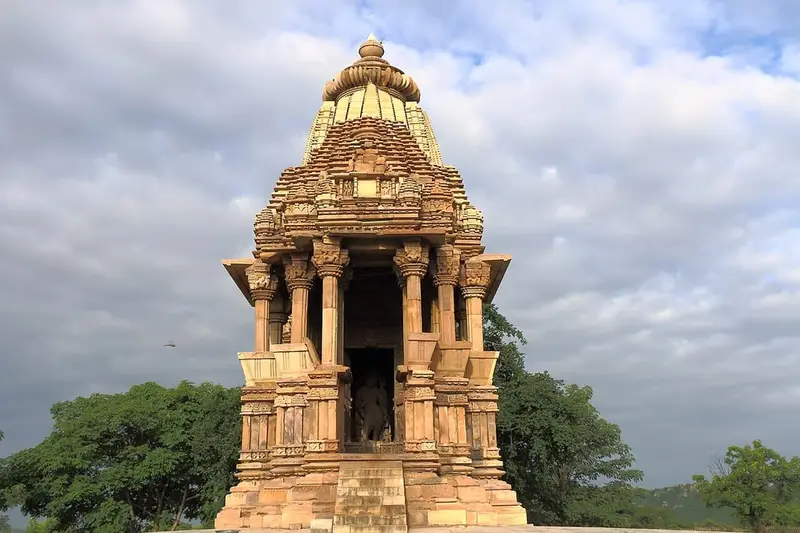
The southernmost temple of Khajuraho, in open fields. Inside stands a 2.7 m statue of Vishnu with four arms, carved from one stone. It is the one big temple here with no erotic carvings, and it faces west across the fields.
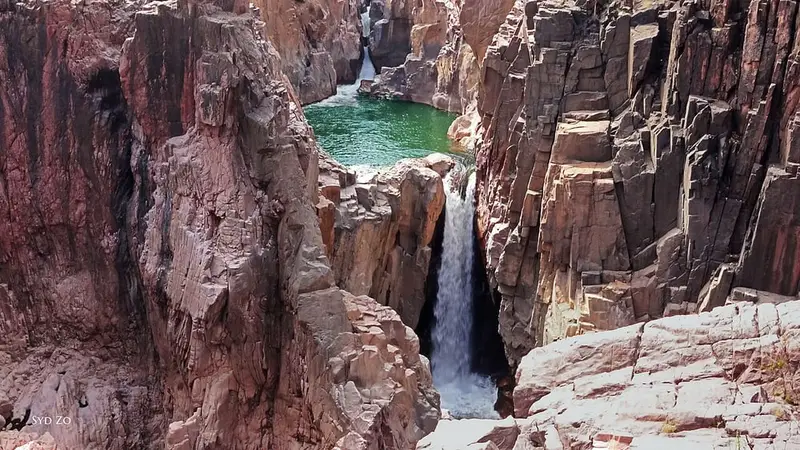
A canyon of the Ken river about 20 km east of Khajuraho, cut through red, pink and grey granite. In and just after the monsoon the river pours over the rocks in many falls; in the dry months it is a deep gorge with pools. It is inside the Ken Gharial Sanctuary, where gharials and crocodiles live in the river below.
Day 2 of the 2-day planPhoto: Sushil Panthri, CC BY-SA 4.0
Pandav Falls
1 h 15 min
Falls & wildlife
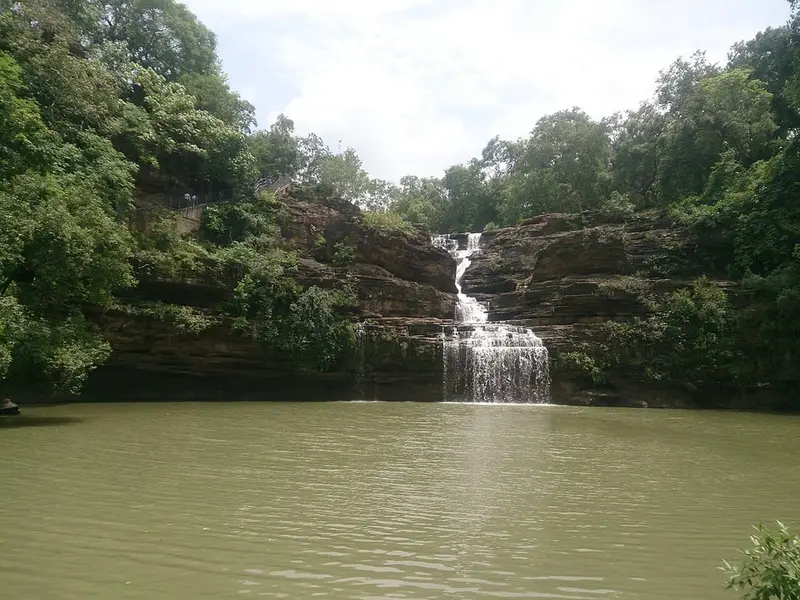
A waterfall inside Panna Tiger Reserve, about 33 km south-east of Khajuraho on the Panna road. A stream drops about 30 m into a green pool ringed by cliffs, with small caves where, the story goes, the Pandava brothers stayed in exile. Steps lead down to the pool.
Day 3 of the 3-day planPhoto: tjabeljan, CC BY 2.0
Panna Tiger Reserve safari
4 h
Falls & wildlife
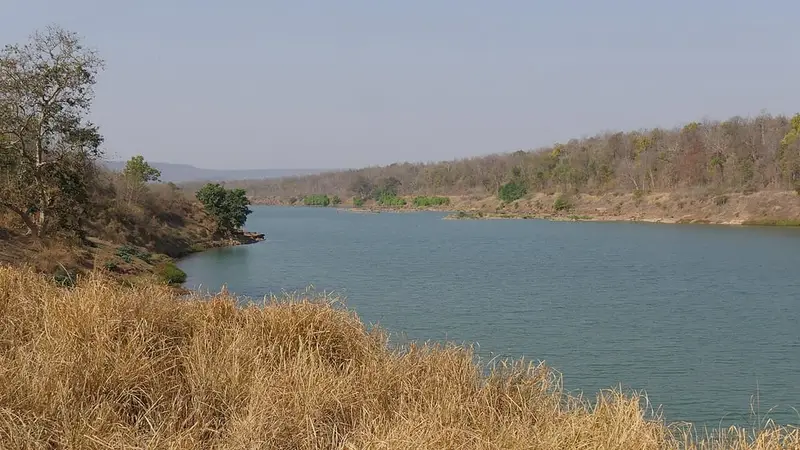
Panna Tiger Reserve covers the forests and gorges of the Ken river south-east of Khajuraho. Tigers were brought back here after 2009 and now breed again; leopards, deer, crocodiles and many birds are seen too. Safaris run from the Madla gate, about 25 km from Khajuraho.
Day 3 of the 3-day plan
Light and sound show
1 h
Evening show
An evening show in the lawns of the Western Group. Lights pick out the temples one by one while a recorded voice tells the story of the Chandela kings and how the temples were built. It runs about 50 minutes.
Not in our plans. Add it if you have time.
Questions people ask
How many days do you need for Khajuraho?+
One full day covers the three temple groups. Two days is easier: one for the Western Group and the museums, one for Raneh Falls and the Eastern and Southern temples. Add a third day for a tiger safari in Panna and Pandav Falls.
What are the Western Group of Temples timings?+
About 06:00 to 18:00, every day of the week; ticket sales stop at 17:30. The Archaeological Museum opposite is open about 10:00 to 17:00 and closed on Fridays.
What time is the light and sound show?+
Every evening at the Western Group. From October to February the English show is at 18:30 and the Hindi show at 19:40; from March to September an hour later, 19:30 and 20:40. It is not held during the dance festival.
Which temples are free?+
The Western Group is the only group with a ticket. The Jain temples, the Brahma, Javari and Vamana temples, Duladeo, Chaturbhuj and the Chausath Yogini Temple are free.
When is the Khajuraho Dance Festival?+
Every year in late February, for a week, in the evenings at the Western Group. In 2026 it ran from 20 to 26 February. Hotels fill up, so book early.
Can I go to Ajaigarh or Kalinjar Fort from Khajuraho?+
Yes, but each is a long day of its own. Ajaigarh is about 60 to 65 km away with a steep climb to the top, and Kalinjar, in Uttar Pradesh, about 100 km. They are not in these plans.
What is the best time to visit Khajuraho?+
October to March, when days are mild. April to June is very hot, so see the temples early and late. Raneh Falls has the most water from August to October, but the Panna safari is closed from July to September.