Hampi's main sights fit in one long day by cab: Virupaksha Temple and Hemakuta Hill in the morning, the Narasimha statue, then the royal centre with Hazara Rama, the Royal Enclosure and Queen's Bath, and Lotus Mahal and the Vittala Temple after lunch. A second day climbs Anjanadri Hill across the river, visits Anegundi and Pampa Sarovar, and gives Vittala its own afternoon.
21 placesroutes from road routing, timed against opening hours
How many days do you need?
Each plan is a real route by cab, timed against opening hours.
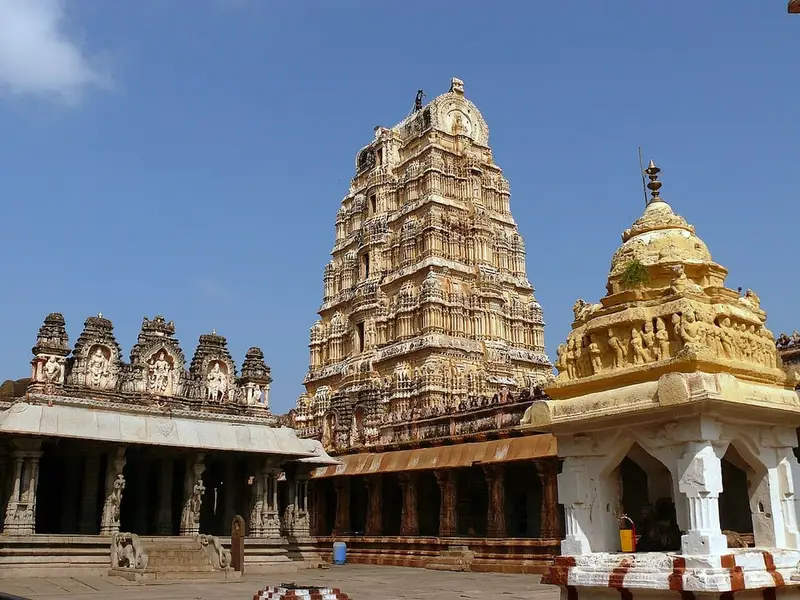
The oldest working temple in Hampi, still used every day. Its 50 m gateway tower faces the long Hampi Bazaar street, where the city's traders once sold gems and horses. Inside, a pinhole in a side hall throws an upside-down image of the tower onto the wall. The temple elephant Lakshmi used to bathe in the river in the morning; ask if the custom still runs.
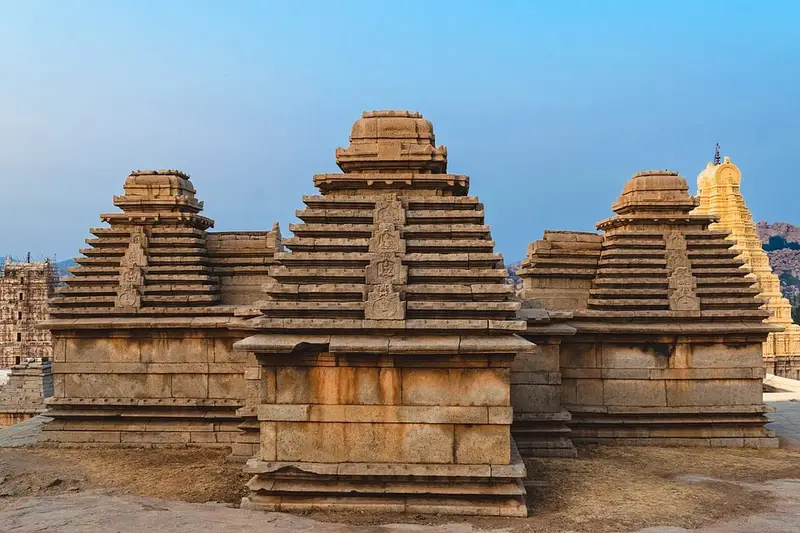
A low rocky hill just south of Virupaksha, covered in small early temples with stepped stone roofs. On its south slope sit two giant Ganesha statues carved from boulders: Sasivekalu (mustard seed) out in the open, and Kadalekalu (gram seed), 4.5 m tall, inside a pillared hall.
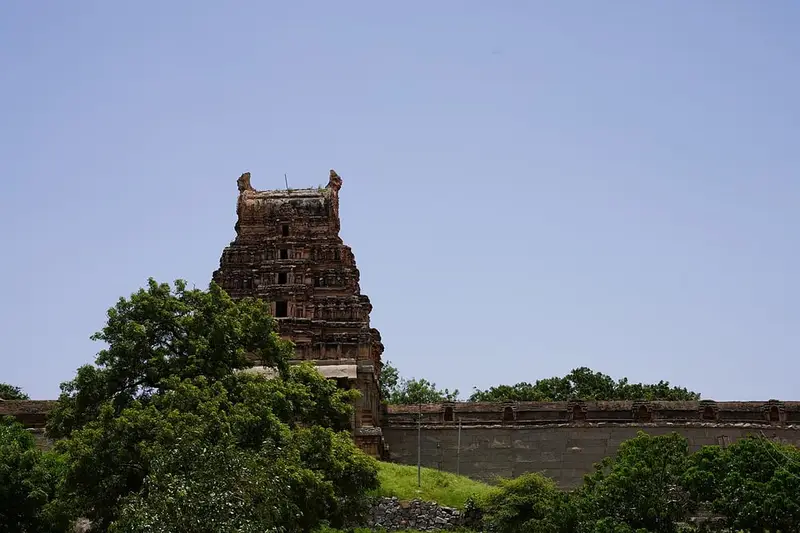
Built in 1513 by Krishnadevaraya to mark a win in Odisha, it once held a child Krishna idol brought back as a prize. The gateway has carved panels of the Vishnu avatars. The ruined market street opposite, Krishna Bazaar, runs to a large stepped tank.
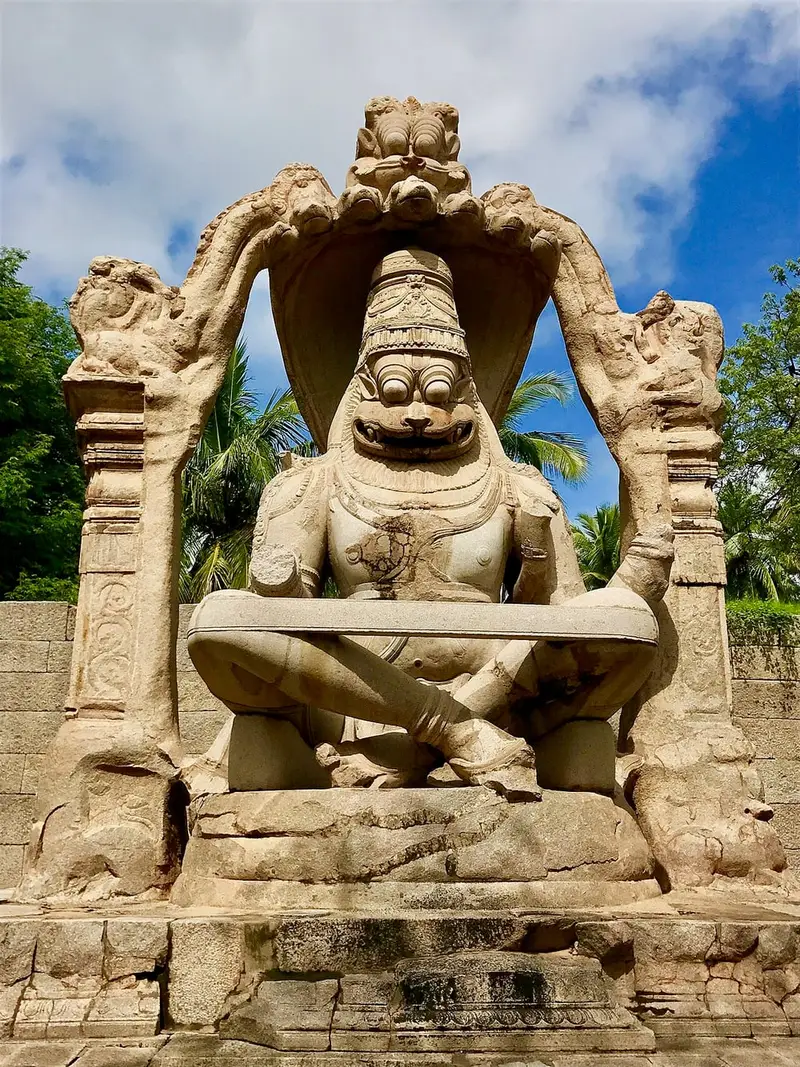
The largest statue in Hampi: Narasimha, Vishnu as half man and half lion, 6.7 m tall, carved from one boulder in 1528. Lakshmi once sat on his knee; only her hand on his back is left. Next door, Badavilinga is a 3 m Shiva linga standing in water that flows in from an old channel.
In the 1-day planPhoto: Ingo Mehling, CC BY-SA 4.0
Underground Shiva Temple
20 min
Temples
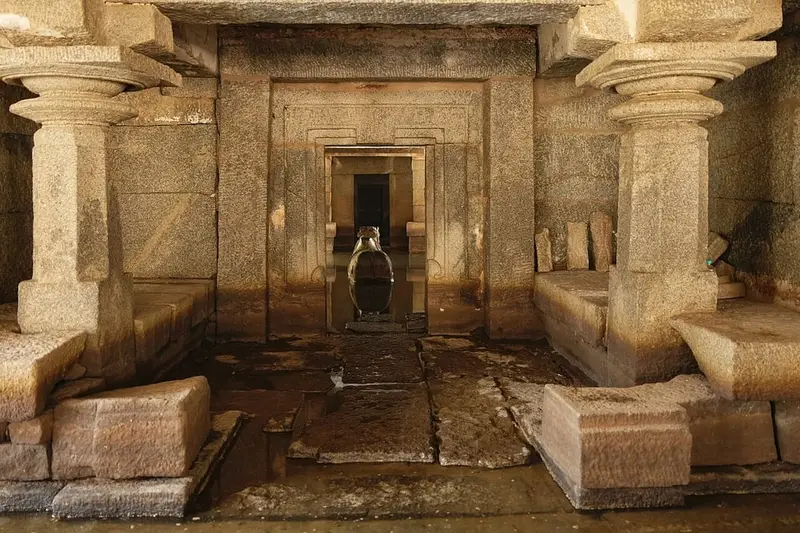
Also called Prasanna Virupaksha. It was built below ground level, so you walk down into a pillared hall. The inner rooms often hold water after the rains.
The king's private temple, inside the royal centre. Its outer walls carry long bands of carving: horses, elephants, dancers and soldiers in the Mahanavami parade, then the whole Ramayana story. Inside are four polished black pillars.
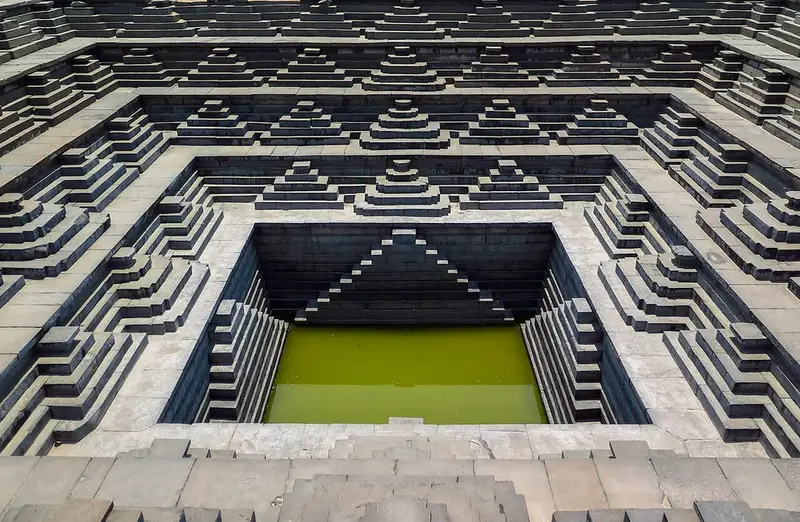
The walled heart of the palace area. Mahanavami Dibba is a tall stone platform where the king watched the nine-day Dasara festival; its sides are carved with hunts, dancers and foreign traders. Close by is the stepped tank, a perfect square of black stone steps found only in the 1980s, fed by a stone water channel.
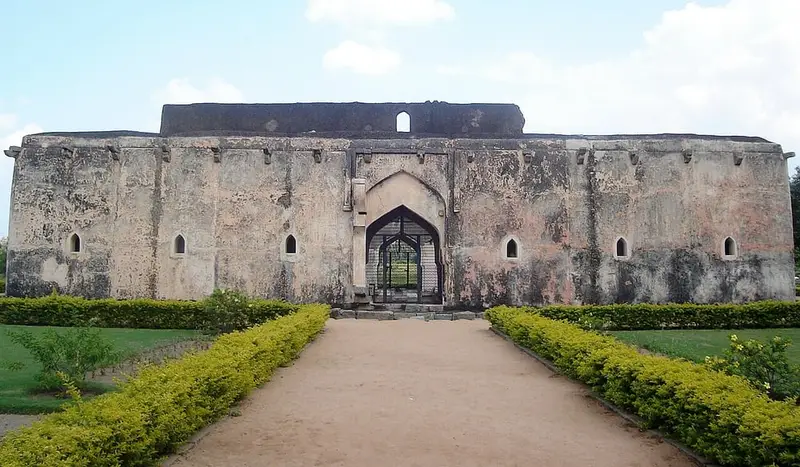
A plain square building outside with a surprise inside: a sunken pool ringed by arched corridors and balconies with carved stucco ceilings. A moat runs round the outside.
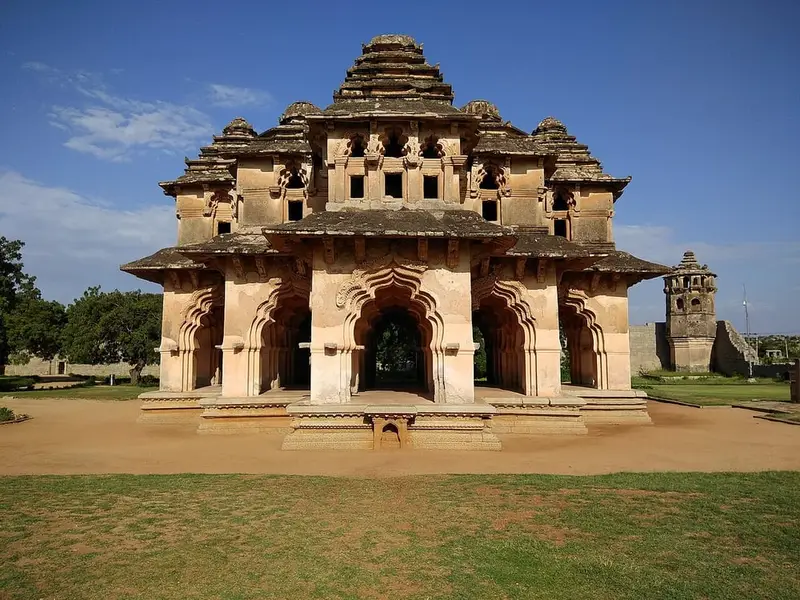
The Zenana Enclosure was the walled area for the royal women. Its best building is the Lotus Mahal, a two-storey pavilion with arches shaped like lotus petals, mixing Hindu and Islamic styles. Just outside, the Elephant Stables are a row of eleven domed rooms for the royal elephants, each dome a different shape.
In the 1-day plan
Archaeological Museum, Kamalapura
45 min
Museum
The ASI museum in Kamalapura keeps statues, hero stones, coins and weapons found in the ruins, and a large floor model of Hampi that makes the layout of the city clear.
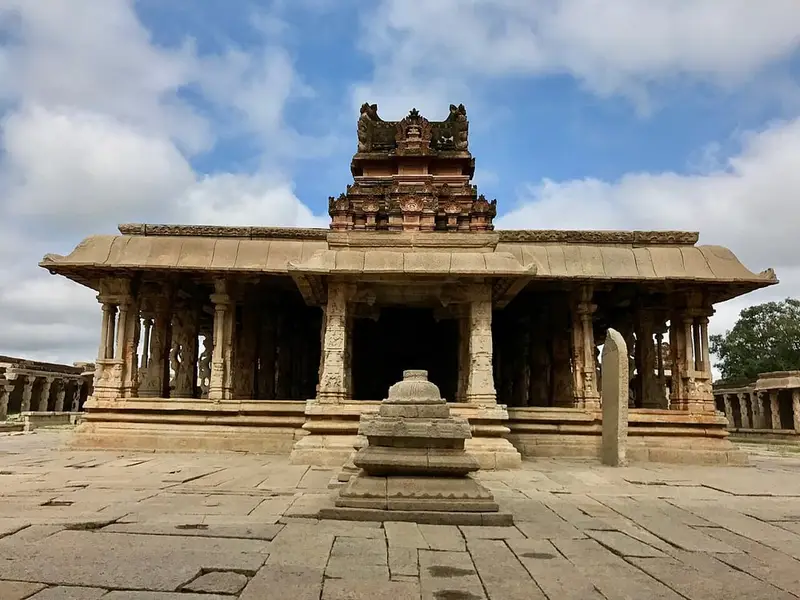
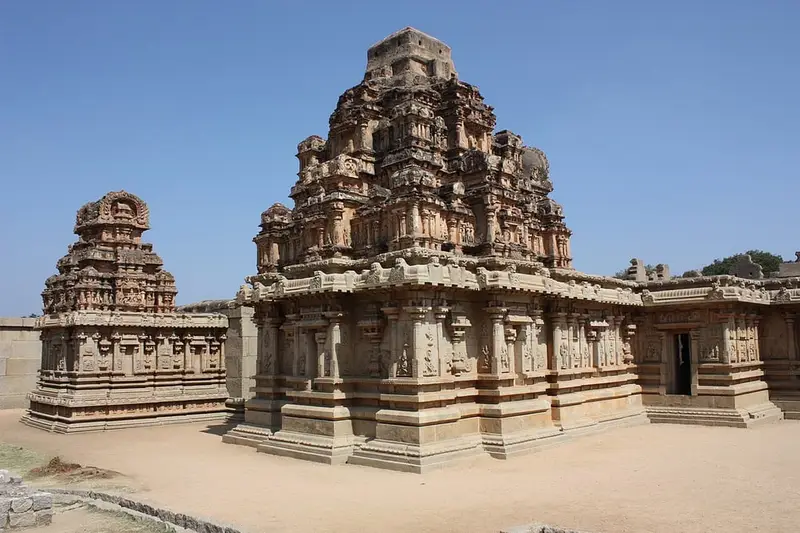
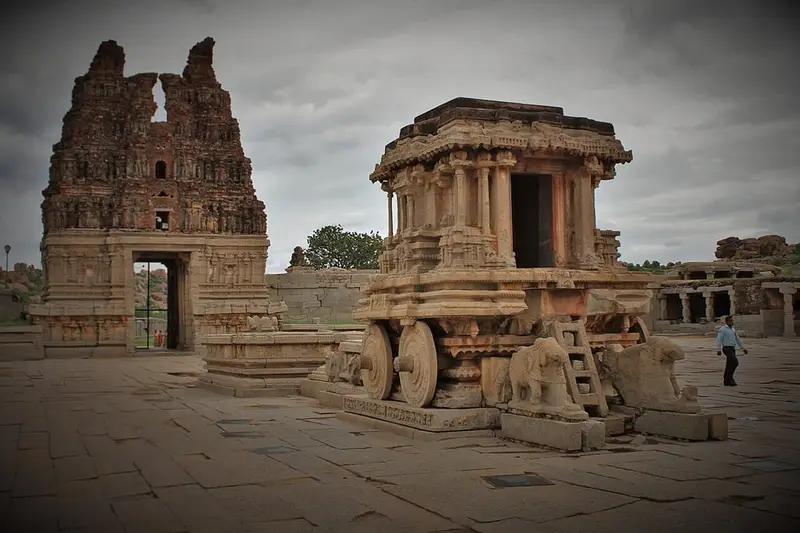
The finest temple in Hampi and the one on the ₹50 note: the Stone Chariot stands in its courtyard. The main hall has the musical pillars, thin stone columns that ring when tapped (tapping is no longer allowed). On the way in, King's Balance is a tall stone frame where the king was weighed against gold and grain for the poor.
In the 1-day planPhoto: Rupeshsarkar, CC BY-SA 4.0
Malyavanta Raghunatha Temple
45 min
Temples
A working Rama temple built round a huge boulder on Malyavanta hill, where Rama is said to have waited out the monsoon. A line of Shiva lingas is carved into the rock beside a stream behind the temple. The rocks behind it are a quieter sunset spot than Hemakuta.
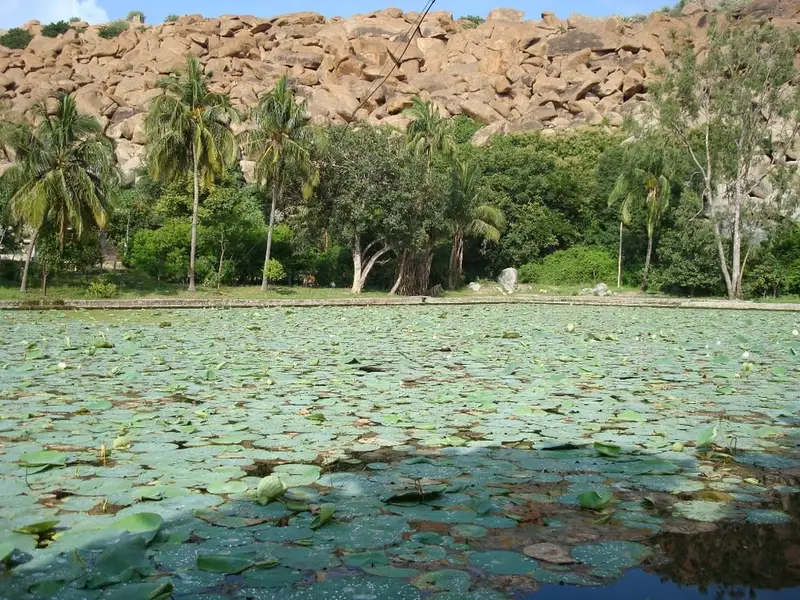
A lotus pond across the river, linked to the Ramayana: Shabari is said to have waited here for Rama. A small Lakshmi temple and Shabari's cave sit beside it.
Day 2 of the 2-day planPhoto: iMahesh, CC BY-SA 4.0
Anjanadri Hill (Hanuman temple)
1 h 45 min
Temples
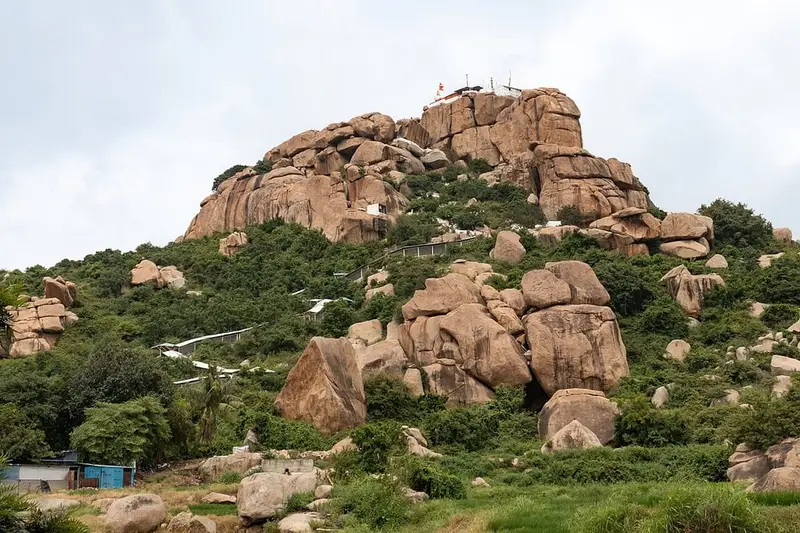
Believed to be where Hanuman was born. A whitewashed path of about 575 steps climbs to the small temple at the top, with one of the widest views in the area: boulder hills, paddy fields and the river winding through the ruins.
Day 2 of the 2-day planPhoto: Ingo Mehling, CC BY-SA 4.0
Anegundi village
45 min
Royal ruins
The village across the river that was the capital before Hampi, and is still home to the old royal family. Its small Gagan Mahal palace, old houses and a craft centre making banana-fibre baskets give a feel for village life away from the ruins.
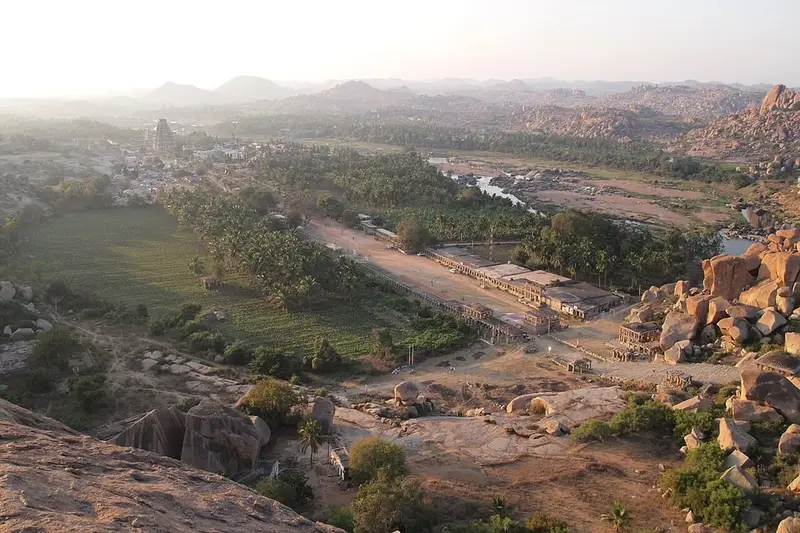
The highest point in central Hampi, with a small Veerabhadra temple on top and a view over every ruin, the river and the boulder hills. The sunrise climb is the best-known walk in Hampi.
Not in our plans. Add it if you have time.Photo: Vyacheslav Argenberg, CC BY 4.0
Achyutaraya Temple and Sule Bazaar
1 h
Temples
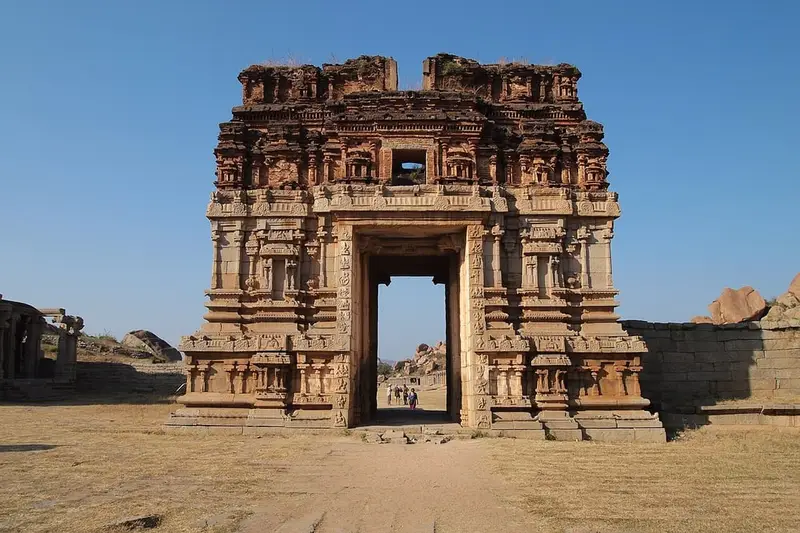
A big temple complex in a quiet valley behind Matanga Hill, with two rings of walls and a long ruined market street, Sule Bazaar, in front. Few visitors reach it.
Not in our plans. Add it if you have time.Photo: Dey.sandip, CC BY-SA 3.0
Kodandarama Temple and the coracle ride
1 h
River
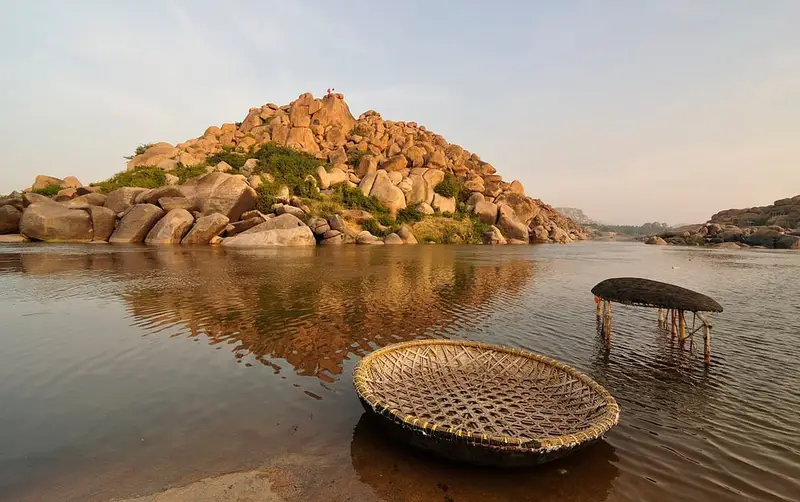
A temple on the river bank at Chakratirtha, where the Tungabhadra bends. Round coracle boats made of woven bamboo take people out on the river from here, past carvings on the rocks.
Not in our plans. Add it if you have time.Photo: Christopher Soghoian, CC BY-SA 2.0
Sanapur Lake
1 h
Hills, lakes & wildlife
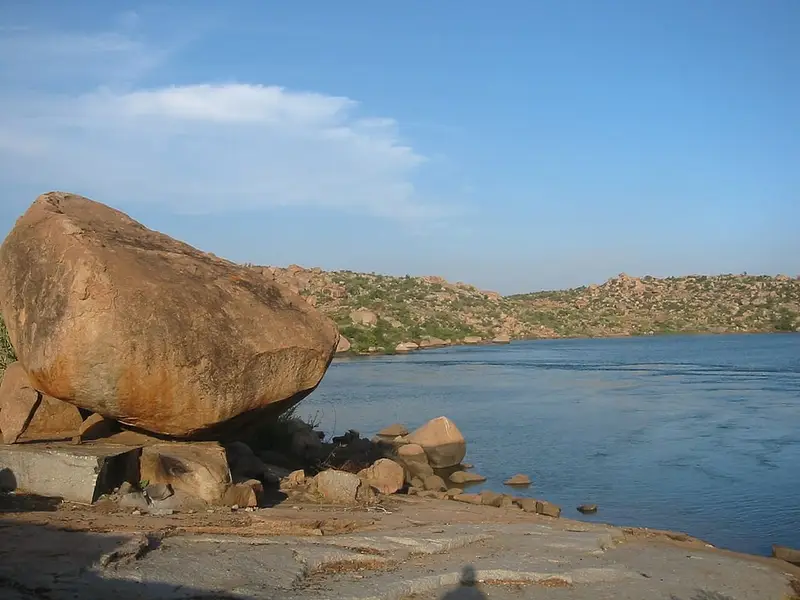
A reservoir among the boulder hills across the river, popular for coracle rides and the view.
Not in our plans. Add it if you have time.Photo: Sanyam Bahga, CC BY-SA 3.0
Tungabhadra Dam
1 h 30 min
Hills, lakes & wildlife
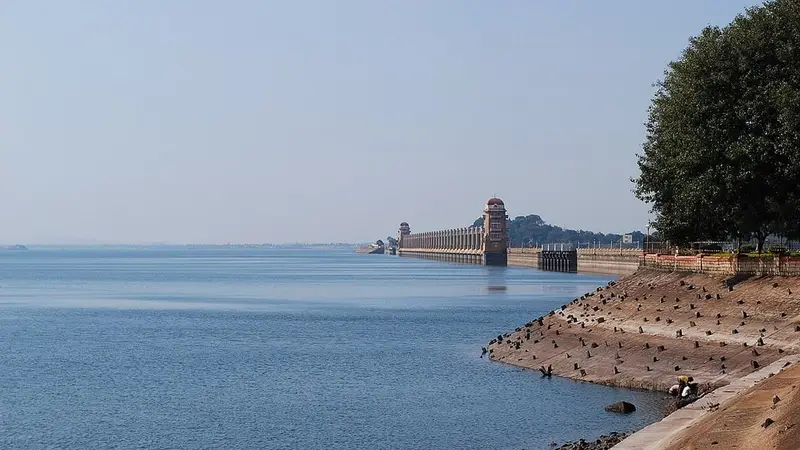
The large dam on the Tungabhadra just outside Hosapete, with gardens and a viewpoint over the reservoir.
Not in our plans. Add it if you have time.
Daroji Bear Sanctuary
2 h
Hills, lakes & wildlife
A rocky scrub sanctuary for sloth bears about 15 km south-east of Kamalapura. From a watchtower you can often see bears come to the rocks in the late afternoon, along with peacocks and, sometimes, leopards.
Not in our plans. Add it if you have time.
Questions people ask
How many days do you need for Hampi?+
One long day by cab covers the main sights: Virupaksha, Hemakuta, the Narasimha statue, the royal centre, Lotus Mahal and the Vittala Temple. Two days is easier and adds Anjanadri Hill and Anegundi across the river, with time for the sunset on Hemakuta Hill.
What are the Virupaksha Temple timings?+
About 06:00 to 12:00 and 17:00 to 21:00 every day. Sources give the midday closure as 12:00 to 16:30 or 13:00 to 17:00, so the plans come in the morning.
What are the Vittala Temple timings, and is there one ticket?+
08:30 to 17:30 every day. The ASI ticket bought at Vittala or the Zenana Enclosure covers both, and the Elephant Stables, on the same day. Most other ruins, such as Hemakuta, Hazara Rama and the Royal Enclosure, are free.
Can a cab drive up to the Vittala Temple?+
No. Private cars stop at the car park by Gejjala Mantapa, and battery buggies run the last kilometre for a small fee. When the buggy queue is long, the walk takes about 15 minutes.
Where should I stay for Hampi?+
Hampi village has homestays close to Virupaksha. Kamalapura, where these plans start, has bigger hotels by the royal centre. Hosapete, 13 km away, has the railway station and the most hotels; add about 25 minutes each way from there.
How do I get to Anegundi and Anjanadri from Hampi?+
By road the cab goes round by the Bukkasagara bridge, about 18 km from Kamalapura. The old bridge near Vittala collapsed in 2009 and was never finished. Small boats cross by Hampi in the dry months, but they stop when the dam releases water.
When is the best time to visit Hampi?+
October to February, when days are warm rather than hot. From March to May the rocks get very hot by midday, so start early. Hampi Utsav, the festival of music and dance, was held 13 to 15 February in 2026.
Is the Archaeological Museum open every day?+
No. The ASI museum in Kamalapura is open 10:00 to 17:00 and closed on Fridays. Photos are not allowed inside.
What else is there near Hampi?+
Daroji Bear Sanctuary, about 15 km away, where sloth bears often come out in the late afternoon. The Tungabhadra Dam near Hosapete, lit up in the evening. Sanapur Lake for coracle rides. Badami, Aihole and Pattadakal are about 140 km away, so they need their own trip.
Is it safe to climb Matanga Hill for sunrise?+
It is the most popular walk in Hampi, but go in a group: there have been reports of robberies on the path in the dark. Hemakuta Hill, right by the bazaar, is an easy and safe sunrise or sunset spot.